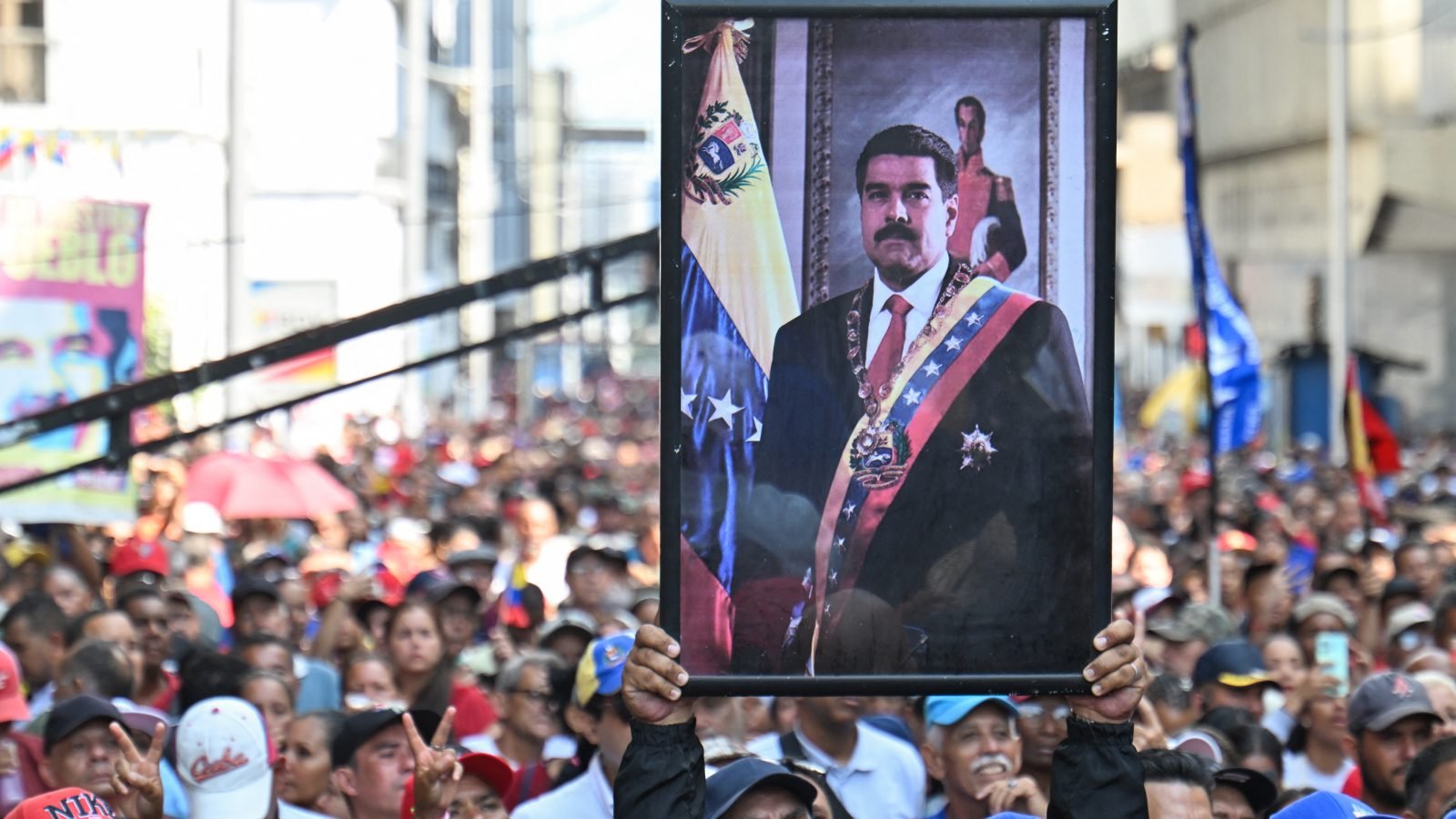
Donald Trump’s capture of Venezuelan President Nicolás Maduro has unexpectedly boosted a Latin American e-commerce company’s stock.
Shares of MercadoLibreMercadoLibreFounded in Argentina in 1999, MercadoLibre is an online marketplace that also owns Mercado Pago, a leading payment and financial services app in Mexico and Argentina.READ MORE have gained over 10% on Nasdaq between January 3 and January 6 after Maduro and his wife were captured by U.S. forces.
Investors are buoyed by hopes that the change in leadership will help stabilize the Venezuelan economy after 13 years of policy missteps, lack of economic diversification, and rampant corruption. A robust economy would, in turn, increase citizens’ appetite for online retail and digital payments.
“In early January 2026, MercadoLibre drew attention after geopolitical changes in Venezuela sparked speculation that the company could expand more fully into one of South America’s largest underdeveloped e-commerce and fintech markets,” according to Simply Wall St, a global stock analysis and investment research platform.
“Investors are now weighing whether access to Venezuela’s sizable population and potential demand for digital payments and logistics could materially enhance MercadoLibre’s long-term regional footprint and growth options.”
Founded in Argentina in 1999, MercadoLibre is an online marketplace that also owns a payment and financial services app called Mercado Pago. The company holds more than 50% of the Latin American e-commerce market, and is often compared to Amazon.
As MercadoLibre fends off stiff competition from China’s Temu and Singapore’s Shopee across Latin America, it needs more avenues for growth.
The company has been present in Venezuela since 2005, but the country has never been among its most stable or profitable markets. Venezuela is the poorest economy in the region, with almost one-tenth the population of Brazil, which is MercadoLibre’s biggest market. MercadoLibre’s three biggest markets — Brazil, Argentina, and Mexico — account for 95% of its revenue, while the other 15 markets, including Venezuela, together account for less than 5%.