Iran was ranked among the world’s rising startup ecosystems as recently as last year. A year later, it is in the middle of a conflict, and a weeks-long internet shutdown is choking off the local economy and freezing tech activity.
“We cannot do most tasks,” an Iranian engineer who works with Digikala, the country’s largest e-commerce company, told Rest of World. He requested anonymity for fear of government retaliation. “The company is trying to create a local LLM [large language model] with open-source models like DeepSeek, Qwen, or Gema, and now it cannot even update these models.”
Many of Digikala’s services, especially those dependent on artificial intelligence, have remained out of operation since the internet blackout began on January 8, he said. The Amazon-like company, which offers free, same-day delivery of consumer goods, was once among the Middle East’s largest e-commerce companies, with around 750,000 unique visitors a day and an estimated valuation of $150 million.
Iran isn’t alone. From Tehran to Kyiv, young tech companies and workers are paying the price for conflicts that don’t just silence dissent but also disrupt the internet economy. Tech workers from these countries have been forced to flee, and once-booming startup industries have been reduced to fragile ecosystems built around survival.
At least 11 countries witnessed conflict-related internet shutdowns in 2024, according to #KeepitOn, a coalition of more than 300 civil society groups led by digital rights group Access Now. The number of such shutdowns rose to 103 in 2024 from 74 in the previous year.
The tech startup industry has found itself jumping out of the frying pan into the fire.”
In Sudan, the civil war that began in 2023 severely damaged telecom infrastructure, a crisis that continues to cripple local startups.
Nina Saeed, founder of Sudanese fintech Cashi, now runs what she calls a “light footprint” operation from Dubai, with on-ground teams constantly adjusting to shifting threats.
“There continues to be a lot of disruption to trade into the economy, and we continue to struggle with huge inflation and devaluation of the currency,” Saeed told Rest of World. “There continues to be a risk of the theater of war expanding and cities falling, drones attacking infrastructure. … So you’re reluctant to invest in growth in new parts of the country and even in existing parts.”
Russia’s invasion of Ukraine showed how quickly connectivity can become a battlefield. The war began with a cyberattack targeting satellite broadband in Ukraine, crippling civilian access and battering an ecosystem that produced successful startups such as Grammarly, GitLab, and People.ai.
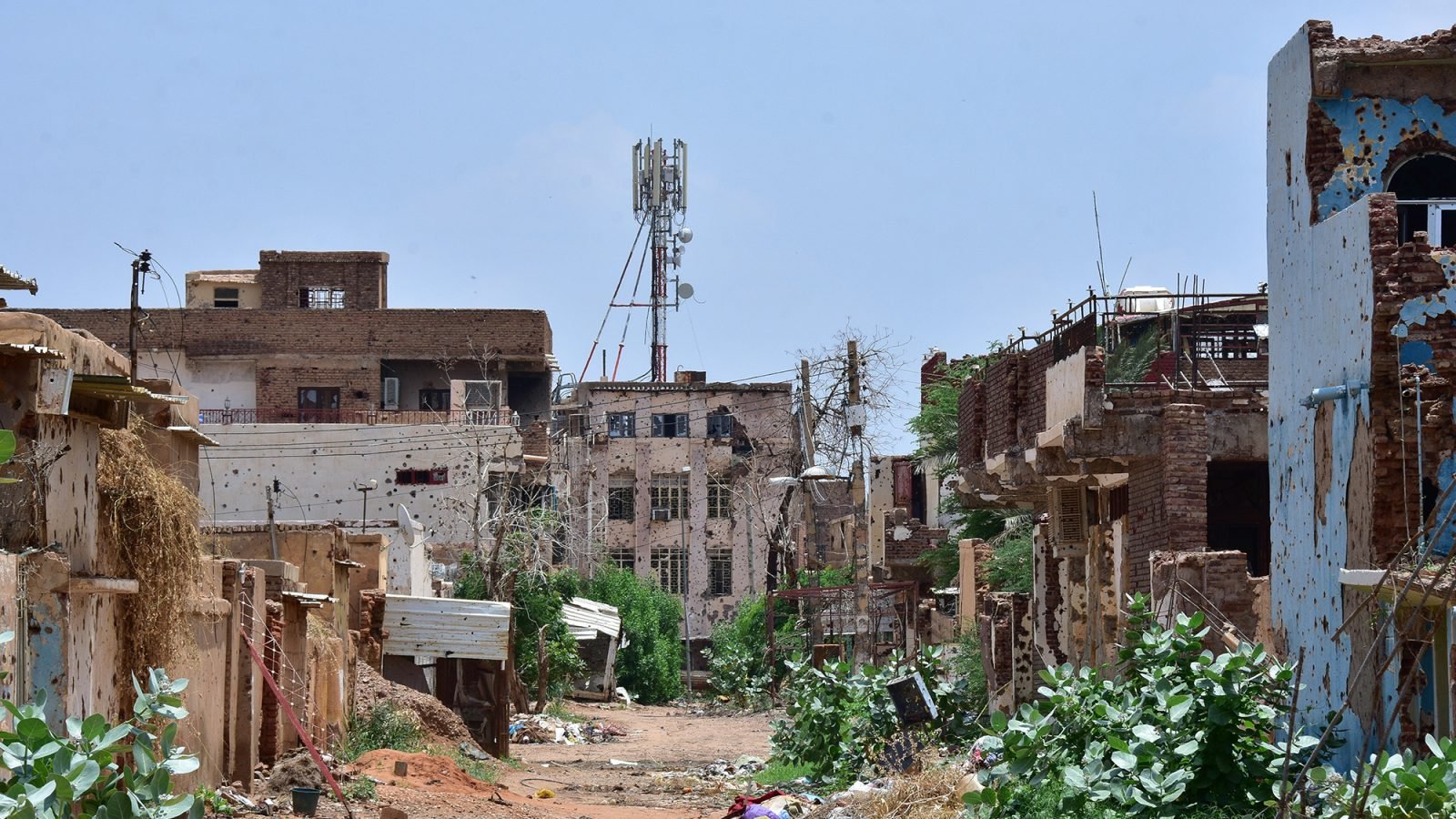
In Kyiv suburbs like Bucha and Irpin, Russian forces reportedly searched homes for smartphones and laptops, fearing real-time reporting. When digital silencing didn’t hold, troops targeted 4G towers, plunging occupied areas into blackouts. In Mariupol, relentless bombing flattened connectivity infrastructure, and missile strikes continued to disrupt networks across the country nearly four years later.
“Amid the conflict, Ukrainian companies have been trying to keep up with the evolving implications of war, keeping their employees safe, outsourcing operations, and ensuring that the work continues,” consulting firm Global Data said. “Owing to the pandemic and the war, the tech startup industry has found itself jumping out of the frying pan into the fire.”
In Syria, 14 years of civil war — paired with decades of sanctions — left the country with crumbling telecom infrastructure, regular power outages, and poor internet speeds. The country will need at least $216 billion to reconstruct, according to the World Bank.
“Syria was disconnected from the world for 15 years. And in that time, the world made a leap of 50 years,” Abdulsalam Haykal, Syria’s minister of communications and information technology, told Rest of World in an interview last year. “Unfortunately, Syria today ranks very low both in broadband connectivity and mobile connectivity — in both, we are in the bottom 10%.”
Most companies are not ready to work with someone in Iran due to sanctions.”
Among his top priorities, Haykal said, was digital infrastructure. He has launched Syria’s “digital Silk Road” project, under which a 4,500-kilometer (2,800-mile) network of fiber-optic lines and submarine cables will be built to turn the country into a data corridor.
Wars don’t just destroy servers and telecom towers. They also trigger a brain drain that can take years to reverse.
Ukraine saw a massive exodus of its tech talent during the months following the invasion. As many as 65,000 Ukrainian tech professionals now live outside the country, according to the incubator Lviv IT Cluster.
Sudan’s startup ecosystem has also been forced into distributed survival mode, with founders and teams scattered across borders.
“Our operations are deliberately distributed. Teams are spread across safer Sudanese states and key regional hubs where diaspora communities go in and out,” Ahmed Elmurtada, managing partner at 294startups, a Sudanese-led venture building firm, told Rest of World. “We rely heavily on hybrid in-person and remote setups, cloud infrastructure, parallel backups for data and finance, and delegated authority so decisions do not bottleneck in one geography. Contingency planning is no longer an annual exercise. It is embedded into weekly operations.”
For many workers, though, leaving is not an option.
The Iranian engineer said he has been looking for work opportunities abroad, but hasn’t found an employer willing to absorb the cost and complexity of hiring someone in Iran.
“This situation in Iran is not happening for the first time. It happened three years ago, also six years ago, and many more times. It could slow the progress in my career when we don’t have [working internet] connections,” he said. “I cannot find a serious position to hire with a relocation package or for remote jobs. Most companies are not ready to work with someone in Iran due to sanctions.”