By Felicia J. Persaud
News Americas, NEW YORK, NY, Sat. Feb. 7, 2026: In ‘Sinners,’ director Ryan Coogler uses vampirism as more than a horror spectacle. The film’s vampire mythology operates as a layered metaphor – one that probes white supremacy, cultural extraction and the seductive dangers of assimilation, particularly for those navigating proximity to power, while remaining marked as “other.”
At the center of this metaphor is Mary, a white-passing woman in the Jim Crow South who becomes a vampire. Her transformation reflects a grim bargain: escape the immediate violence inflicted on Black women by aligning with the very system that feeds on the Black community. Passing offers protection, but only at the cost of becoming complicit – no longer prey, but predator.
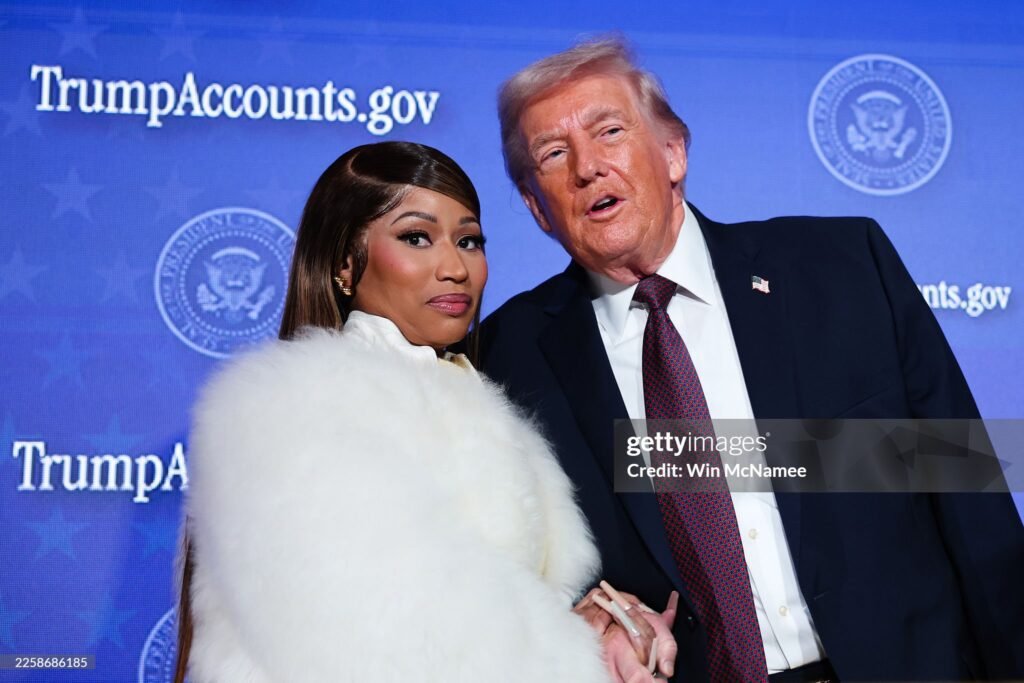
That metaphor came rushing back to me last week while watching Trinidad and Tobago-born immigrant and rapper, Nicki Minaj, publicly embrace MAGA politics, declaring herself the president’s “number one fan.” The image was jarring to me as a Caribbean immigrant – not simply because of partisan alignment, but because it came days after Alex Pretti was killed in a snowy Minneapolis street and weeks after Renee Good was shot dead by federal immigration agents protesting immigrant raids.
Minaj was once a self-described undocumented immigrant. In a widely shared 2018 post, she condemned family separations at the U.S.-Mexico border, writing that she herself entered the United States without legal status as a child.

“I can’t imagine the horror of being in a strange place & having my parents stripped away from me at the age of 5,” she wrote at the time, pleading for compassion toward detained children during the first Trump administration.
That voice now feels distant.
What happened between 2018 and 2026? How does someone move from public empathy for immigrant children to smiling alongside a political movement that is actively dismantling constitutional protections, terrorizing immigrant communities, and normalizing state violence?
The answer may lie in power – and who it ultimately serves.
Under the Trump administration, wealth has become a fast track to immunity. The so-called “Trump Gold Card” offers U.S. residency to foreign nationals willing to pay a $15,000 DHS processing fee and contribute $1 million. A forthcoming Platinum version reportedly raises that price to $5 million, granting extended U.S. stays without taxation on foreign income. The message is blunt: borders harden for the vulnerable, but dissolve for the wealthy.
Minaj, now a green card holder, does not appear to need such a program but who knows?. Her enthusiastic claim that she was given a Trump gold card and is now applying for US citizenship aligns with a movement built on exclusion. It raises a deeper question: when proximity to power offers safety, does solidarity become optional?
Reports that Minaj has pledged hundreds of thousands of dollars to support Trump-backed tax-advantaged investment accounts for newborns – framed as generosity toward her fans – only complicate the picture. Charity does not cancel complicity. Philanthropy does not absolve political harm.
In ‘Sinners,’ vampirism represents the loss of cultural memory and moral grounding. Survival is promised, but at the price of self-erasure. The vampire no longer remembers who they were – or who they once stood with.
Minaj’s political transformation mirrors that arc. An immigrant woman, born in the Caribbean region, who once spoke as a child of migration, now appears willing to overlook policies designed to erase Black history, criminalize black, brown, and white bodies, and redefine belonging through wealth.
That is the danger Coogler warns us about. Not monsters in the shadows, but assimilation so complete, it forgets its origins – and feeds on those left behind.
In ‘Sinners,’ the vampire’s greatest weapon is not violence, but amnesia. It forgets where it came from, who it once stood beside, and who is still being hunted. That kind of forgetting may offer comfort and protection, but history shows it is never consequence-free.
The warning for Nicki Minaj – and for those in Black and Brown communities trading solidarity for status – is simple: wealth may buy access, and loyalty may buy time, but neither buys exemption. Systems built on exclusion eventually consume everyone they decide does not belong.
Felicia J. Persaud is the founder and publisher of NewsAmericasNow.com, the only daily syndicated newswire and digital platform dedicated exclusively to Caribbean Diaspora and Black immigrant news across the Americas.