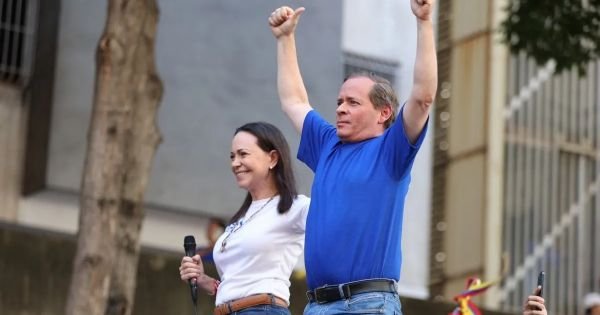
Venezuela frees Juan Pablo Guanipa and members of María Corina Machado’s inner circle
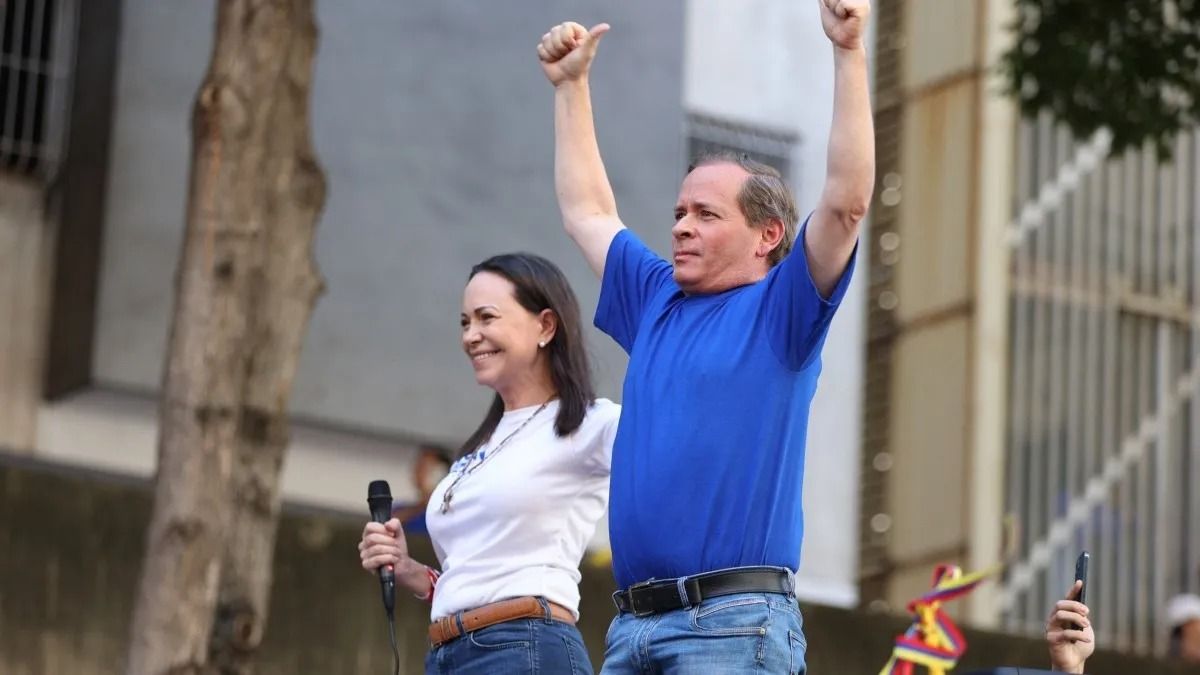
Guanipa posted a video holding his release document and said: “There is much to talk about regarding Venezuela’s present and future, always with the truth ahead.”
Opposition leader Juan Pablo Guanipa and several close collaborators of anti-government figure María Corina Machado were released from detention in Venezuela on Sunday, in a new round of politically sensitive releases that rights groups say must be measured not only by numbers but also by whether detainees regain full civil and political rights.
Guanipa posted a video holding his release document and said: “There is much to talk about regarding Venezuela’s present and future, always with the truth ahead.” Minutes later, Machado said she had spoken with him after his release and shared an image of a video call, adding: “Already making plans to see each other in Venezuela and travel the whole country together.”
Freddy Superlano, a prominent figure from the opposition party Voluntad Popular, was also freed, along with Perkins Rocha—an attorney linked to Machado’s political movement—and university professor Jesús Armas, a key organizer in the opposition’s 2024 election mobilization effort. Other reported releases include, among others, Venezuela-Spanish activist Catalina Ramos, María Oropeza, Dignora Hernández, Luis Tarbay, Albany Colmenares and Nikoll Arteaga.
Rights group Foro Penal said at least 35 people were released on Sunday. The organization’s running count points to several hundred releases since early January, while warning that hundreds remain detained for political reasons and that official figures have not always matched independently verified totals.
#AHORA | Juan Pablo Guanipa sale a las calles de Caracas y da declaraciones:
“¡Venezuela tiene derecho a ser un país libre!”. pic.twitter.com/NdH8SbiIsp
— Orlando Avendaño (@OrlvndoA) February 8, 2026
Several freed leaders quickly returned to public view. In Caracas, Jesús Armas told supporters: “Today, stronger than ever, we say they did not break us or bend us,” urging continued political pressure. Guanipa, speaking separately, called for “reconciliation,” but only “starting from recognition of the truth.”
The releases come as the government-backed National Assembly moves forward with an amnesty bill. The opposition coalition PUD has denounced what it calls “serious omissions,” including exclusions of detainees, lack of safeguards for exiles, and the failure to repeal laws it views as part of a repressive legal framework. It also warned that leaving implementation to the current prosecutor’s office and court system risks turning amnesty into a discretionary tool rather than a rights-based remedy.