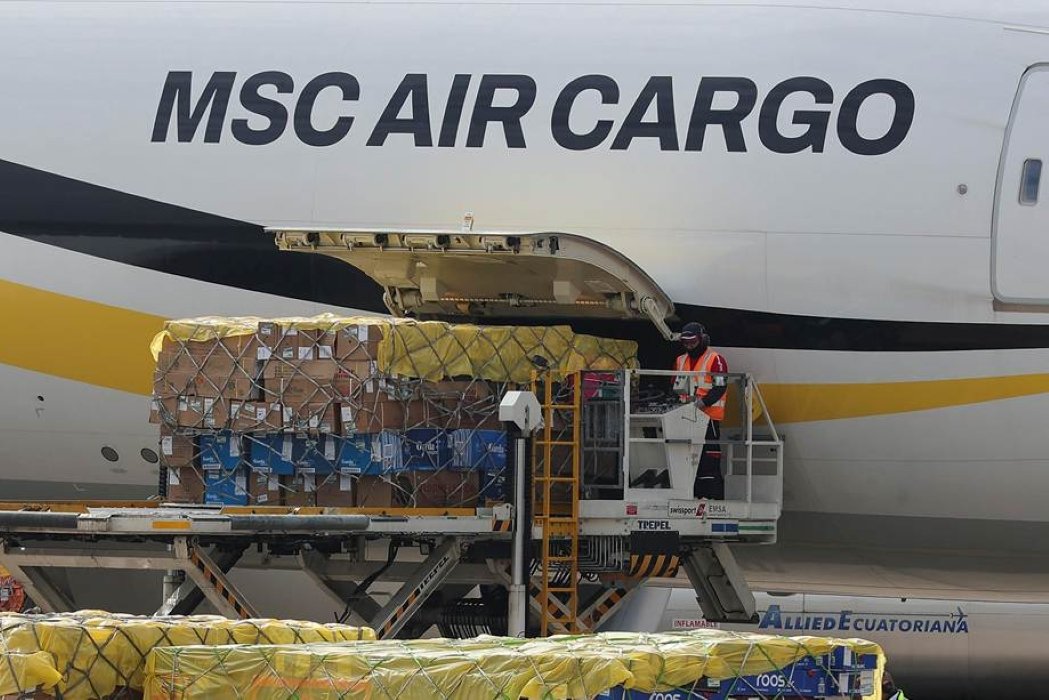
In Ecuador’s high Andes, rose farms surge toward Valentine’s Day, pushing millions of stems from cold greenhouses to global storefronts. Workers sort buds by health and color as cargo flights multiply, even while new U.S. tariffs threaten export earnings and payroll stability.
A Rose Button in Cayambe, Then a Long Flight Out
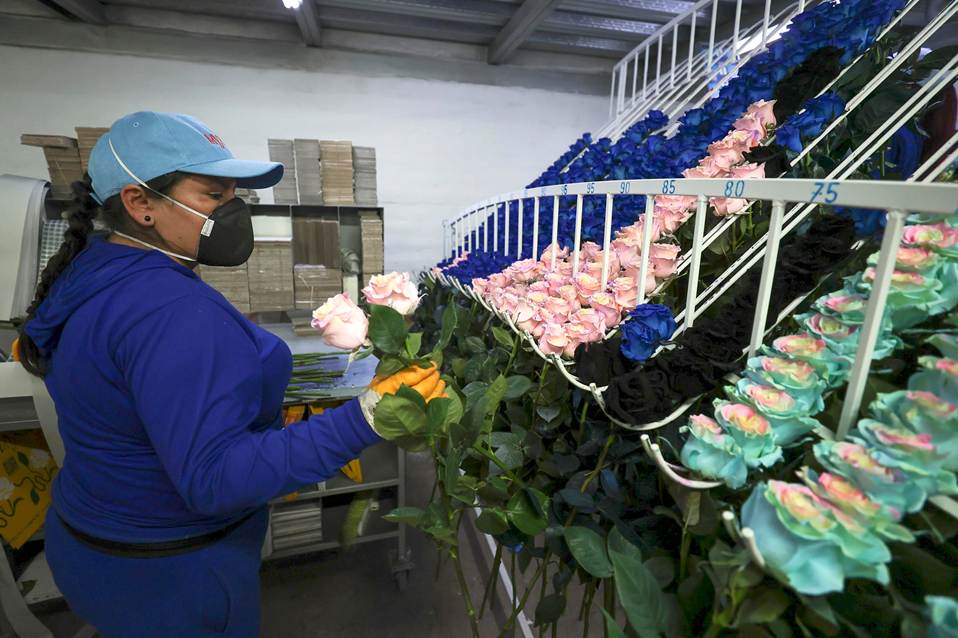
Lizbeth’s day is measured in small inspections. A rose bud, held close, turned slightly, checked for the faint signs that ruin a shipment later: disease, bruising, any mark that will only darken after hours in boxes and cold. Around her, hundreds of hands repeat the same careful choreography, planting, cultivating, harvesting, packing, moving. The scene is quiet but not calm. When Valentine’s Day approaches, the movement accelerates.
She has been on the farm for eight months, and even now she cannot list all the varieties she sees. The quantity is its own language. In Cayambe, near Quito, she and other workers verify that buds “don’t have any disease, that they aren’t mistreated,” before roses are gathered into bundles of up to twenty-five stems. This routine, though simple, is vital for maintaining the industry’s high standards and the quality that buyers expect, fostering respect for the workers’ dedication.
Ecuador has become the world’s third-largest exporter of flowers, behind the Netherlands and Colombia, sending millions of roses from the Andean cold into countries where they will be received as warm proof of affection. The farms sit at altitude, and the notes credit that height, along with luminosity and temperature, for the brightness and quality that buyers want. In the greenhouses of Mystic Flowers, specialists cultivate dozens of varieties described as unique worldwide, selecting for what the international market demands: long stems, firm petals, intense color, and the ability to travel thousands of kilometers without losing freshness.
“For us, the roses are something simple because we see them daily, but when they arrive in other countries, I think it’s a joy,” Lizbeth told EFE, speaking from the farm where the roses begin their quick chain outward, loaded onto trucks, driven to the airport, and flown into the retail world of the United States, Europe, Russia, and even China.
What this does, every year, is compress Ecuador’s flower economy into a narrow corridor of days, revealing how logistics and policy directly impact its economic importance and stability.

The Valentine Surge Meets a Tariff Wall
The flower sector in Ecuador spans 6,200 hectares of plantations and employs 120,000 people. Valentine’s Day accounts for thirty percent of annual sales. Those numbers are steady enough to feel like a foundation, and yet the season itself is fragile. It depends on timing that cannot be recovered once missed, and on costs that can shift faster than any farm can retool.
Alejandro Martínez, executive president of the national association of flower producers and exporters, Expoflores, expects export volume for Valentine’s to rise from thirty-seven thousand tons in two thousand twenty-five to about thirty-nine thousand. The increase sounds like momentum. But Martínez also expects revenue between two hundred seventy-four and two hundred seventy-six million dollars, below the two hundred eighty-two million recorded in two thousand twenty-five.
He attributes the decline in part to a 15 percent tariff imposed by Donald Trump, added to the 6.8 percent rate already applied to Ecuador’s flower exports to the United States, illustrating how tariffs threaten export earnings and industry stability.
On the farm floor, those numbers show up indirectly, as pressure, not in speeches or slogans, but in the quiet insistence that each bundle must be perfect because the margin for error is thinner. In an export economy, quality is not only pride. It is a key to survival, ensuring Ecuador’s flowers remain competitive and trusted worldwide.
The notes also place Ecuador’s role inside a broader duopoly of Valentine supply. Colombia and Ecuador dominate the global market for this one holiday, feeding the United States and Europe with hundreds of millions of stems, driven by high-altitude conditions and year-round growing seasons calibrated to peak just before February fourteen. Ecuador is known for large-headed roses. Colombia, the second-largest exporter, ships more than 500 million flowers for the Valentine season, with most of its annual production exported. In this shared corridor, a policy change in Washington does not stay in Washington. It moves, like cold air, into greenhouses and pay stubs.
Cargo Flights, Cold Chains, and the Human Heart in a Box
At Quito’s Mariscal Sucre airport, the Valentine season looks like an aerial assembly line. Ramón Miró, president of Quiport, the corporation that runs the airport, expects exports to rise around six percent. “Which is spectacular because two thousand twenty-five was already a record year,” he told EFE.
The previous season, nearly twenty-nine thousand tons left the terminal in five hundred thirty-four flights. From January twenty to February one alone, the airport had already moved more than seventeen thousand tons in three hundred thirty-two cargo aircraft operated by sixteen companies, mainly headed to Miami and Amsterdam, where shipments are distributed onward.
That dependence on air freight and cold chains is not a detail; it is the core of the industry, showing how logistics and policy directly influence the industry’s survival and economic significance.
Joan, thirty-three, assembles between twenty-six and forty packages of roses per hour on the farm. He describes it as “exciting” to know that what is a bud in his hands will become a bouquet in a few hours in New York or Paris, because giving roses feels like “giving the heart.” In a season shaped by aircraft schedules and tariff rates, that speed and care are crucial, underscoring the industry’s resilience and commitment to delivering meaning across borders.
In the end, Ecuador’s Valentine rush is a story about speed and care living in the same room. It is about hands that keep moving even as the policy winds change overhead. And it is about a country that has learned to grow a global symbol at altitude, then race it down the mountain and into the sky, hoping the market still recognizes what the flower is supposed to mean.
Also Read:
Brazilian Startup Detects Water Leaks, Saving Billions of Liters and Earning Global Recognition