In Chile’s Aysén region, Gabriel Boric used a late presidential trip to push long-term public policy for remote territory. As he prepares to hand over power on March eleven, locals weigh upgrades against old isolation and centralism.
A Gravel Road and a Long Memory
The scene is the Carretera Austral, where gravel meets asphalt, and the wind carries that clean, sharp cold that makes your cheeks sting. You can hear it in the tires, too, that small drumroll of stones under a moving vehicle, the reminder that here, distance is not an abstraction. It is a daily calculation.
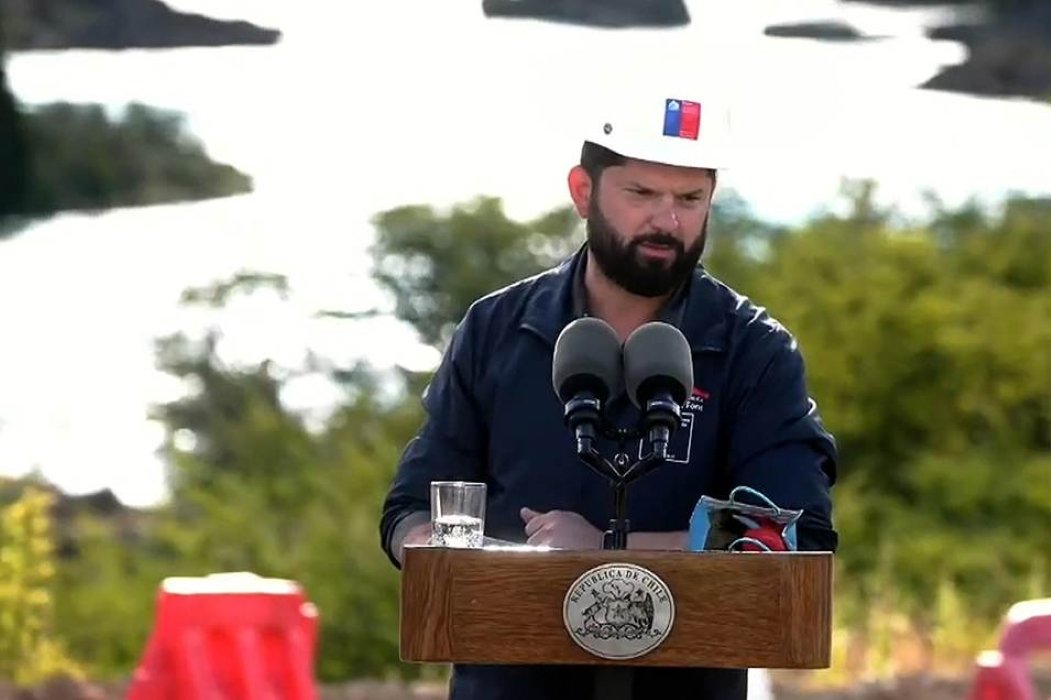
Between fast rivers, pristine lakes, and glacier fields, President Gabriel Boric arrived this week to defend what he called public policies designed for the long haul in Chile’s most isolated, sparsely populated zones. He urged the country not to postpone them and to pursue development without treating remoteness as an afterthought.
Aysén is one of the least populated regions in Chile, with just over 100,000 residents, and one of the country’s most coveted tourist destinations. The Andes here break into abrupt massifs, glacial valleys, and fjords. Beauty is abundant. Services are not. The trouble is that even in a place marketed as a destination, people still live on the other side of a logistics problem.
Boric traveled along the route to inaugurate road improvements and a hospital, and to deliver resources to local police. He took time to admire the scenery before speaking. He described himself as “deslumbrado” and “sobrecogido,” words that land differently when you are standing in a region that has spent decades asking to be seen.
From the Cochrane commune, he put the problem in plain language that residents have used for years. “El Estado de Chile tiene una deuda con la conectividad de Aysén, debe ser la región con menos conectividad de Chile, la que tiene menos kilómetros pavimentados del país”, he told EFE.
The wager here is that pouring concrete and building clinics can still be a democratic act in a country where geography has often decided whose problems become national priorities.
Where Tourism Meets Basic Services
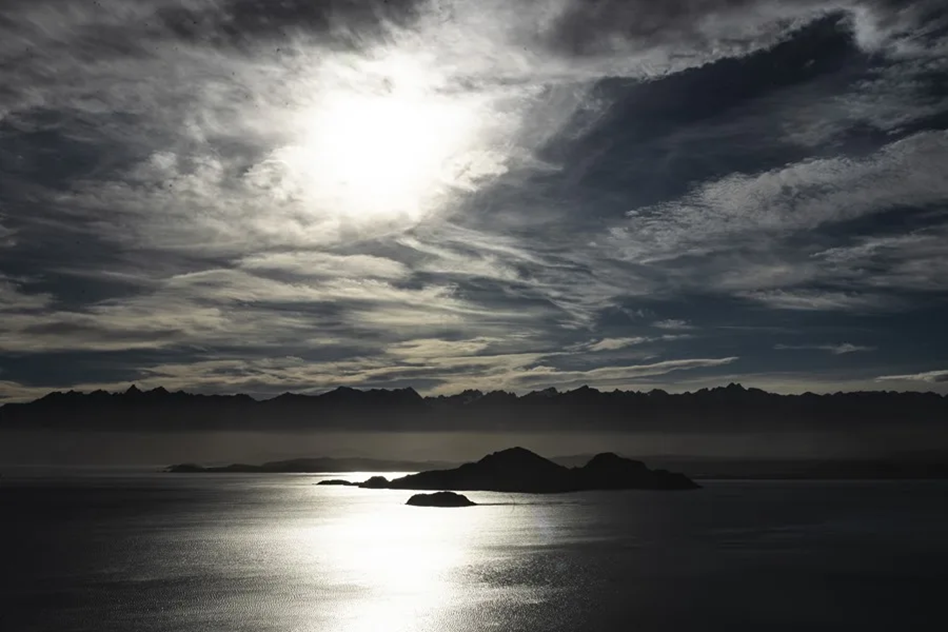
One of the treasures along this corridor is Lake General Carrera, the largest lake in Chile and the second largest in South America, known for its turquoise color and the Marble Chapels, natural caves and tunnels in blue and white tones. Its deep waters cut an irregular shoreline, with small localities set apart from one another, places like Puerto Río Ibáñez and Chile Chico near the border with Argentina.
The lake’s fame brings visitors. But visitors do not pave roads, staff health posts, or shorten an emergency trip.
Beyond connectivity, residents in this part of Patagonia have long demanded stronger infrastructure and essential public services. In a territory defined by isolation, those things can shape quality of life in ways hard to explain from a capital city. A repaired stretch of road is not only a convenience. It is time saved, supplies arriving, and a medical referral that happens before it is too late. Repetition matters here: distance, distance, distance. These efforts show respect for local needs and acknowledge their importance.
Boric, visiting the zone for the second time as president, defended his record by listing actions taken during his term: reactivating stalled works, paving roads, building bridges, improving access to drinking water, investing in air, port, and lake connectivity, and constructing better health and education infrastructure. It reads like a government checklist, but it also maps onto what people in remote Chile tend to measure first, whether the state shows up in the places where it is easiest to disappear.
Centralism, Sovereignty, and Who Counts
Boric comes from Magallanes, the southernmost region of the country and the American continent, and served as a deputy there for eight years. He has positioned himself, unlike Chile’s capital-born presidents before him, as an opponent of the deep centralism built into the Chilean state.
“When politics is done with a centralist logic, only from Santiago, you lose sight of the importance that the extreme zones of our country have, both in generating resources and in sovereignty and the well-being of its people,” he told EFE.
His presidency made that argument symbolic at times, including a visit to the South Pole in January two thousand twenty five, described as historic, where he promoted scientific research and reinforced Chile’s role as a gateway to Antarctica. The point was not tourism. It was presence, knowledge, and the state’s claim to take its farthest territories seriously. This demonstrates respect for remote regions and their strategic importance.
In Puerto Río Ibáñez, the last stop of his three-day trip, Boric signed the Plan for Extreme Zones for Aysén, aimed at injecting permanent resources into the region. The plan builds on a commitment he made upon entering La Moneda on March eleven, two thousand twenty two, when he promised to keep these initiatives as permanent laws, even though they began as extraordinary measures.
He closed with a line that doubles as a warning to his successor and to the country watching from safer distances. “Those of us who come from extreme regions know that people build and uphold the nation in the most inhospitable, most remote territories of our land, and they are worth just as much as any other citizen”, he told EFE.
A road can be a ribbon of asphalt. It can also be a verdict on belonging.
Also Read:
Chile Mega-Fires Turn Heat, Plantations, and Planning into a Test