Bogotá, Colombia – Colombian President Gustavo Petro claimed that he “escaped being killed” while on his way to an official visit to the northern Córdoba province on Tuesday.
The South American leader said armed actors planned to shoot down his helicopter, which was forced to fly over the sea for four hours while authorities secured the landing area.
The alleged attempt comes amid a polarized election season overshadowed by political violence, including political assassinations and kidnappings.
During a public cabinet meeting (Consejo de Ministros) in Montería, the capital of Córdoba, Petro stated that intelligence warned him of an increase in movement by local and transnational crime organizations planning to eliminate him and his family before the end of his presidential term.
“Last night I couldn’t land because I was informed that the helicopter I was traveling in with my daughters was going to be shot at. They didn’t even turn on the lights where I was supposed to land,” he said.
The president directly accused mafias and narcotrafficking groups of targeting him in an effort to destabilize the government and promote violence around the country.
Petro also maintained that the assassination plot was driven by “foreign” economic interests.
“It’s not the first time they have tried, but this time we have clear evidence that foreign money has financed this operation,” said the President during the meeting.
In his speech, the Colombian leader also said authorities are investigating a plot to plant narcotics inside one of his official vehicles, adding that he had fired a police general and other officials suspected of involvement.
“They are preparing a setup to put cocaine in one of my official cars and say the president is a drug trafficker,” confirmed Petro, arguing that the objective is to discredit him.
In response to the threats, the National Police and the National Protection Unit (UNP) have activated a new ‘Level 1’ security protocol for Petro’s movements, especially when traveling through Colombia’s conflict zones.
Violence, tensions, and elections countdown
Gustavo Petro, the first leftist to be elected president in Colombia, has alleged several assassination plots against him since taking office in August 2022. On multiple occasions, he has claimed to be the target of criminal organizations, both within Colombia and abroad, describing a persistent “death threat” linked to his political agenda.
Colombia is also approaching a critical electoral cycle, with congressional elections scheduled for March 8, 2026, and the presidential first round on May 31.
Threats from illegal armed groups, violence against communtiy leaders, restrictions on human mobility, and violations of press freedom are threatening the electoral process, according to a recent report by the Electoral Observation Mission (MOE), an independent election watchdog.
The study highlights that the number of regions at risk due to the coincidence of fraud and violence has risen by 29.7% since the 2022 elections.
“For the 2026 national elections, there are 170 municipalities with some level of electoral risk where indicative factors of fraud and violence coincide in the country. Of these, 81 are at extreme risk, 51 at high risk, and 38 at medium risk,” wrote MOE National Director, Alejandra Barrios.
Candidates from various political parties have also expressed fears of being targeted, following the death of Senator and presidential candidate Miguel Uribe Turbay, who was shot during a public campaign rally in Bogotá in June 2025.
In addition to the alleged assassination attempt on Petro, two other events in recent days have highlighted the increasingly dangerous electoral climate. On February 5, gunmen opened fire on Senator Jairo Castellanos’ caravan in the Arauca region. Although the senator was not in the vehicles at the time, the attack killed two of his bodyguards and the three members of his campaign staff were kidnapped but later released.
In a statement, the ELN guerrilla group assumed responsibility for the attack, stating that the senator’s vehicle ignored their checkpoints and lamenting the violence.
Senator Aida Quilcué was also kidnapped in Cauca on Tuesday, adding to existing concerns about the dangers faced by politicians in Colombia.
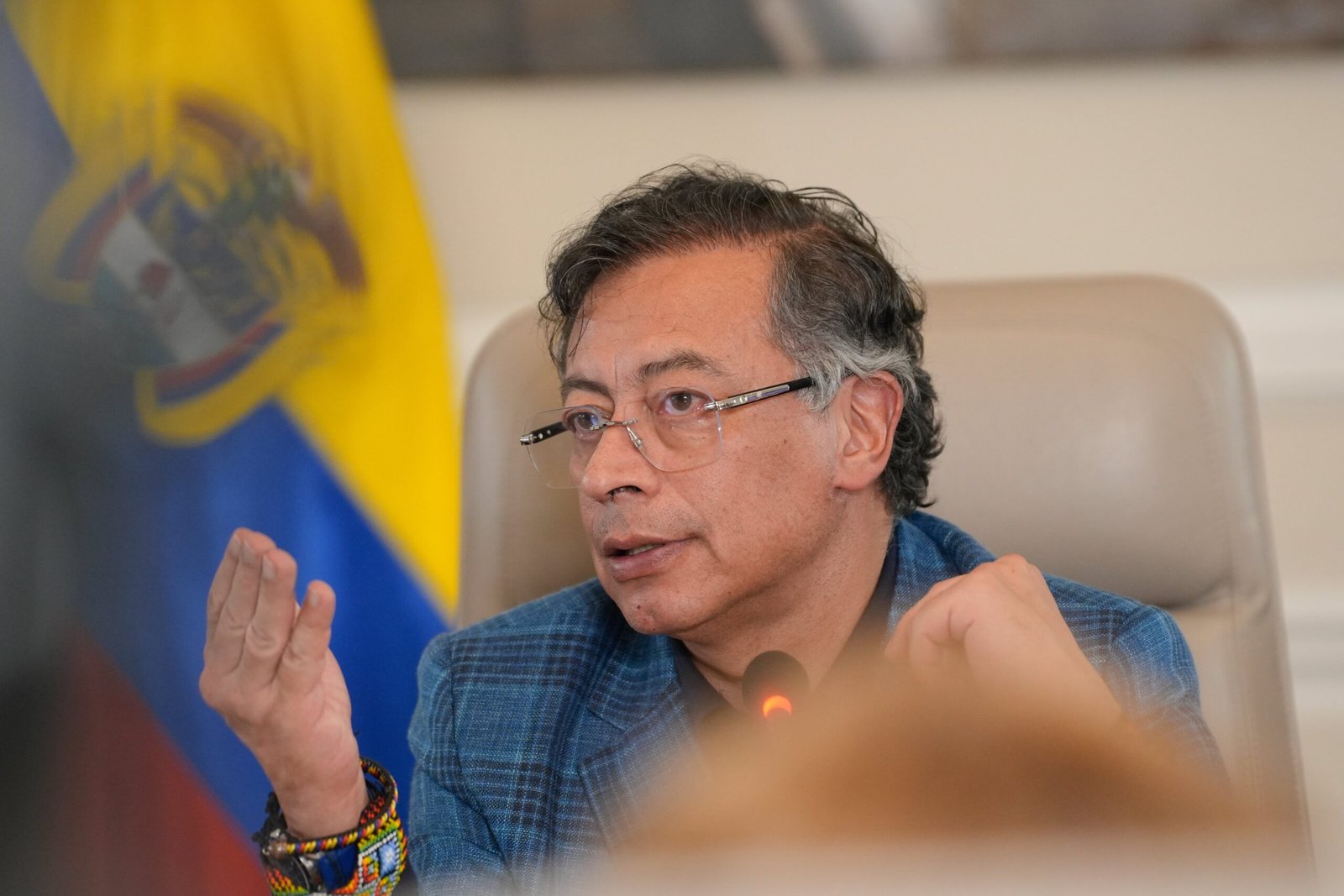
Featured image description: President Gustavo Petro at a cabinet meeting, October 22, 2025.
Featured image credit: @InfoPresidencia via X.