
Like most people, I first heard the term “AI agent” early last year, when a Chinese startup called Manus announced it had built the world’s first general-purpose one. Unlike chatbots that simply answer questions, agents promise something bigger: the ability to reason, plan, remember — and take action on your behalf.
Since then, nearly every AI company has claimed to be building one. Yet for most people, AI agents still feel distant: locked behind invitation codes and subscriptions, and aimed largely at office work rather than everyday life.
That gap is what both American and Chinese AI companies are trying to close. In the U.S., OpenAI and Google are inching toward agents while grappling with security risks and access limits across platforms. But in China, AlibabaAlibabaAlibaba, founded in 1999 by Chinese entrepreneur Jack Ma, is one of the most prominent global e-commerce companies that operates platforms like AliExpress, Taobao, and Tmall.READ MORE was able to take things a step ahead.
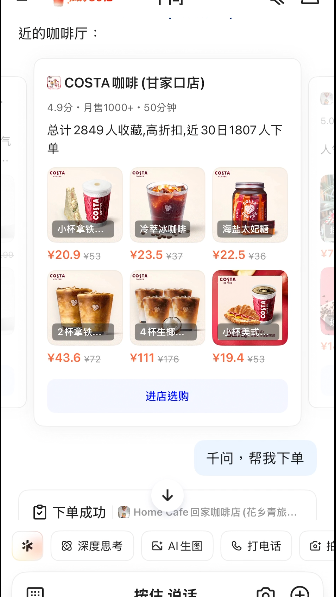
A few weeks ago, it upgraded its Qwen chatbot into an AI agent, marketing it as a personal assistant that can plan itineraries, book tickets, order food, and make payments.
A built-in e-commerce empire
What Alibaba has — and its American counterparts largely don’t — is an e-commerce empire that already includes shopping, food delivery, ride-hailing, maps, and travel. Those apps hold users’ credit card details, passport numbers, and live locations. With a single tap granting Qwen access across that ecosystem, Alibaba is offering a version of handling life that can be more frictionless. The timing is key for the tech company, as Qwen trails rivals like the AI apps made by ByteDance, DeepSeek, and Tencent in daily active users.
Ahead of the Lunar New Year, Alibaba pushed the product hard. The company pledged 3 billion yuan ($431 million) to promote Qwen, offering bubble tea delivered for as little as 0.01 yuan to every new user.
I tried to join the rush from outside China by sending bubble tea to a friend. I never got to the confirmation button. The app buckled under demand, replying that “too many users” were joining the giveaway, while Chinese media reported photos of delivery drivers crowding bubble tea shops over the weekend because of the surge of Qwen orders.
So I tried out its other functions. I asked Qwen to plan my Lunar New Year holiday, when I will be traveling from Hong Kong to Shenzhen — find the most convenient route and book a hot-pot dinner. It suggested rail options but not my preferred direct bus, likely because those tickets aren’t sold on any Alibaba apps. The same logic applied to hot pot: Its suggestions optimized for proximity, but I instinctively opened my usual restaurant app to compare reviews — I wasn’t ready to trust Qwen’s judgment on soup bases. In the end, I made the reservation myself, choosing taste over convenience.
For small, low-stakes tasks — like ordering bubble tea — an agent makes sense. But once decisions involve money, logistics, or personal preferences that are hard to fully explain, I found myself wanting options, not answers.
AI wardrobe support
The moment Qwen genuinely surprised me was unexpectedly intimate: helping me choose a Lunar New Year outfit. After analyzing photos of my wardrobe, it noticed my preference for neutral tones instead of festive red. Qwen reassured me I didn’t need to buy anything new, and suggested a “soft, chic” look — with a reminder that I already owned a red bag for tradition. I followed its advice, packed the outfit, and felt it made my life easier.
That left me wondering what AI agents are really for. For reassurance, experimentation, and low-pressure decisions, they can feel helpful — even delightful. For bigger choices, I still trust myself more. Convenience alone doesn’t outweigh the pleasure and reassurance from planning, comparing, and deciding for myself.
The real bottleneck for AI agents may be trust. Until they can convince users they’re acting not just on our behalf but in our best interests, I don’t mind pressing a few extra buttons to stay in control.