Nine years after fleeing Venezuela, firefighter Thony López became essential in Santo Domingo after the Jet Set nightclub collapse. His work blended rescue with emergency psychology, exposing gaps in disaster protocols and the role of migrant brigades across the Americas.
When the Noise Became Dust
In the hours after the Jet Set discotheque collapsed on April 8, 2025, the work was physical first. Concrete. Twisted metal. The tight, breath-held geometry of rubble. It was also human, in the most immediate sense, because the catastrophe left two hundred thirty-six dead and more than a hundred injured. Every decision inside that wreckage carried a weight that did not fade when the sirens did.
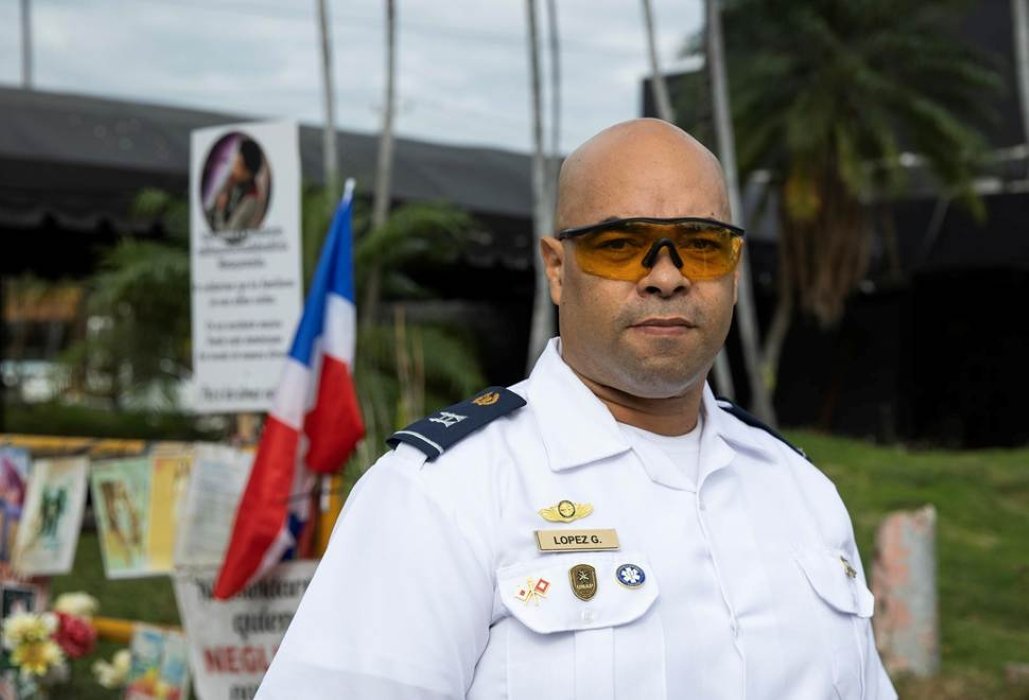
Thony López, a Venezuelan firefighter who arrived in the Dominican Republic nine years ago, marked by the crisis back home, describes that rescue as the event that has affected him most. The sensory memory is not glamour or shock, but dust and strain, the kind that coats your mouth and makes voices sound farther away than they are. He was there as part of the Santo Domingo firefighters, doing rescue work and also, in public retellings, something less visible: emotional containment for victims.
That second role became sharper after the first day, when many volunteers from different countries showed up, and then the help thinned out. López kept working in the rubble when the crowd effect dissolved, and the long emergency started to look like what it really is, a marathon of attention and nerves.
He said he came to the Dominican Republic after watching what was happening in Venezuela and deciding to leave, like many Venezuelans, to give his family security. “I arrived in the Dominican Republic after seeing what was happening in Venezuela, and because of that, I decided to leave the country, like many Venezuelans, to give security to my family,” he told EFE.
The trouble is that migration stories are often told as endings or escapes. His reads like a transfer of skills across borders, followed by a test, under the worst conditions, of whether the receiving country is prepared to use those skills effectively.
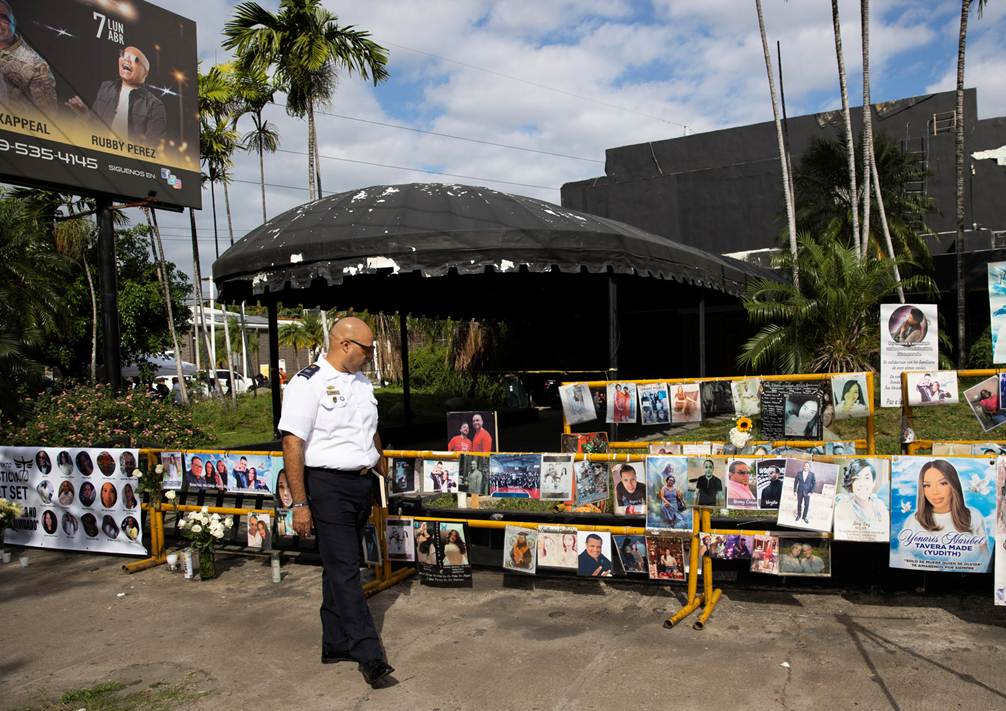
The Rescue You Cannot Photograph.
López says his vocation began with his father, also a firefighter, who passed the profession down to him. In Venezuela, he belonged to rescue groups and citizen security teams. Still, he left due to the difficult situation his family and he faced. In the Dominican Republic, he says the vocation continued, and his professional background helped him integrate into the Santo Domingo fire department.
“When I arrived here, my vocation continued. Whatever country we are in, vocation remains part of us,” he told EFE. He specializes in emergency psychology, and Jet Set became the place where that specialization stopped being a credential and turned into a necessity.
He reflected there that even in a catastrophe, victims have dignity. That is a moral statement, but it is also operational. It changes how you speak to people, how you move around bodies, how you treat families who are waiting, how you treat fellow rescuers who are running on adrenaline until they suddenly are not.
“The psychology of emergency is as vital as rescuing people. It is vital, because we need to protect and address what has to do with the psychic health of victims and rescuers,” he told EFE.
What this does is push the public conversation beyond heroism and toward systems. Emergency response is often measured in speed, equipment, and extraction. López is arguing for protocol, for training, for a language of care that can be repeated under pressure. He says the experience led him and his team to understand that emergencies should be humanized and that everything related to psychological first aid needs to be properly protocolized for interventions in any event.
The wager here is whether governments and institutions treat that as optional. In practice, psychological first aid is not an add-on. It shapes outcomes, including whether survivors return to daily life with support or with silence, and whether responders carry trauma home without tools to process it.
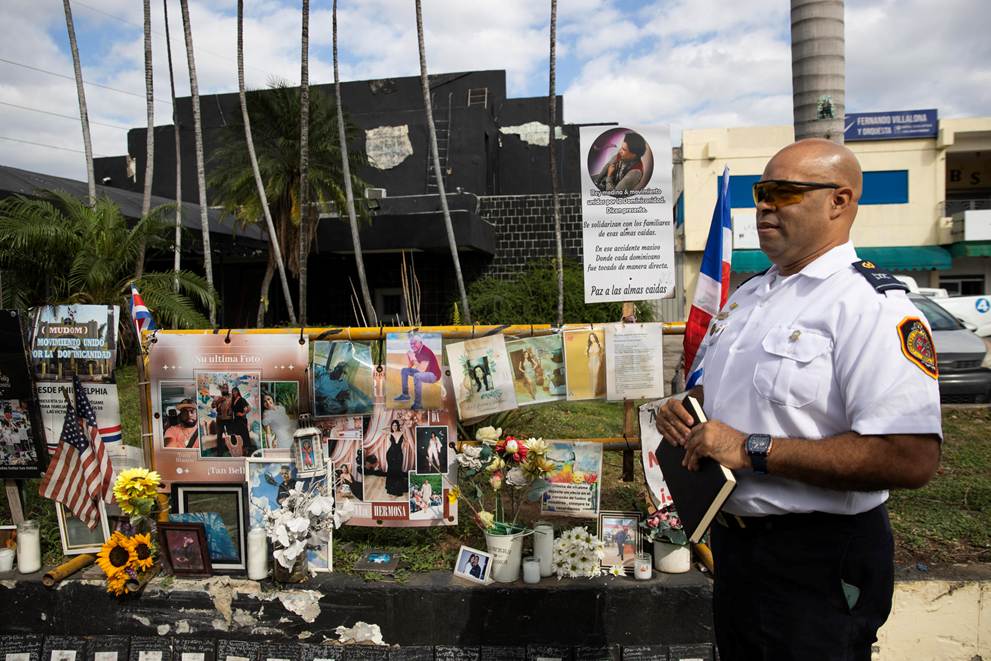
A Brigade Built From Exodus
After the rescue, López was contacted by the Legión Internacional Brigada Venezuela, a network formed by Venezuelan firefighters living in multiple countries. The organization is not only focused on catastrophes and major events, but also on emotional care for the firefighters and emergency workers themselves.
That focus connects directly to López’s point. It also reveals a larger reality across Latin America and the Caribbean: migration has created transnational pools of expertise that move faster than institutions do.
The Legión was founded in Lima in 2018 after its commander general, Venezuelan Richard Perales Gerdel, arrived in Peru amid the Venezuelan exodus. According to United Nations data cited in the notes, about 7.9 million people have left Venezuela in search of protection and a better life. Most, about 6.7 million, have been taken in by other Latin American and Caribbean countries.
Perales says the Legión emerged to support Venezuelan migrants in emergencies. Still, so they could contribute in any emergency, wherever they were. “It was created to support Venezuelan migrants in emergencies and disasters, but also so they could contribute in any emergency situation in the country where they were,” he told EFE. He said the organization includes doctors, nurses, lawyers, engineers, rescue personnel, and even police officers.
Over time, the membership widened beyond Venezuelans to include people of other nationalities, reaching a total of six hundred members. Perales said the organization consolidated in 2022 as it expanded across Latin America and Europe to offer integrated cooperation with allied fire departments during disasters. From Lima, he described activations in Spain tied to the devastating dana in October 2024, and more recent activations linked to wildfires in Chile. He said the network also operates in countries including Canada, the United States, Mexico, Panama, Colombia, Bolivia, Argentina, and Uruguay.
The policy dispute, then, is not abstract. It is about coordination and legitimacy. How do states integrate migrant expertise into official response without turning it into informal labor they can rely on when convenient and ignore when not? How do they build shared standards for safety, training, and psychological first aid when responders may belong to both a national department and an international volunteer network?
Jet Set, in López’s telling, was the place where those questions stopped being theoretical. It was where dust and grief made the limits of protocol visible, and where a Venezuelan firefighter, shaped by one crisis, found himself inside another, insisting that dignity is not only a value. It is a procedure.
Also Read:
Venezuelan Herrera Show Turns Women’s Art Power Into Wearable Politics