Buenos Aires, Argentina – Argentina’s largest union umbrella organization, the General Confederation of Labor (CGT), yesterday announced it would stage a 24-hour general strike in response to a planned national labor reform.
The CGT said it will initiate the strike when the lower house begins to debate the sweeping labor law championed by right-wing President Javier Milei, expected to happen on Thursday, February 19.
The bill, which received upper house approval last Thursday, aims to make the country’s labor force more flexible by reducing workers’ right to strike, capping severance pay, and extending the working day, measures that have drawn condemnation from unions.
While the CGT did not declare an official date for the strike, several syndicates announced plans to strike and protest this Thursday.
“Resignation does not make history. This Thursday, we must bring all of Argentina to a standstill!” wrote Rodolfo Aguiar, head of the State Workers Association, a powerful union.
Argentine transport syndicates also said they would adhere to the strike, threatening to paralyze transport in Buenos Aires on Thursday.
Milei argues the labor reforms are needed to resurrect Argentina’s long stagnant economy and says they will benefit business owners and also help end informal work. An estimated 40% of Argentines are employed in the informal sector.
But the government has faced staunch opposition from both leftist parties and unions. They say the bill will deal a blow to workers’ rights, forcing them to work longer hours with fewer benefits.
Milei’s ‘La Libertad Avanza’ or ‘Freedom Advances’ party was forced to amend the bill to pass it through the senate last week. Notably, the government watered down measures specifically targeting unions, including ditching their proposal to axe mandatory union contributions by workers.
But the CGT remains opposed to the bill over its plans to slash severance packages, extend the maximum working day from eight to twelve hours, permit payment in kind (goods and services), and restrict the right to strike.
Milei defended the reforms in a post on X Monday, writing: “Holiday? What’s that? We work every day. The only way to get ahead is through capitalism, saving, and hard work.”
In Buenos Aires, workers and business owners are divided on the reform.
Luis Alberto García, a Venezuelan Uber driver who fled to Argentina seven years ago, believes the reform will help avoid a similar inflationary crisis that drove him from his home country.
“We’ve seen this happen before in Venezuela. Socialism drove the country into the ground. I think the reform will help improve the economy for everyone,” García told Argentina Reports.
But others say the problem is not labor regulation, but inflation.
“If the currency is at rock bottom, how can we change the employment situation? First, we need to control prices,” said Gonzalo Cruz, a shop owner in La Boca.
He added that he believes it is impossible to reform the economy without people changing their behavior, blaming the country’s chronic crisis on dishonesty.
“The law doesn’t matter if there is no morality, if workers lie to their bosses and the bosses exploit their workers,” added Cruz.
After decades of failed reforms, it may take more than a change in the law to fix Argentina’s economy.
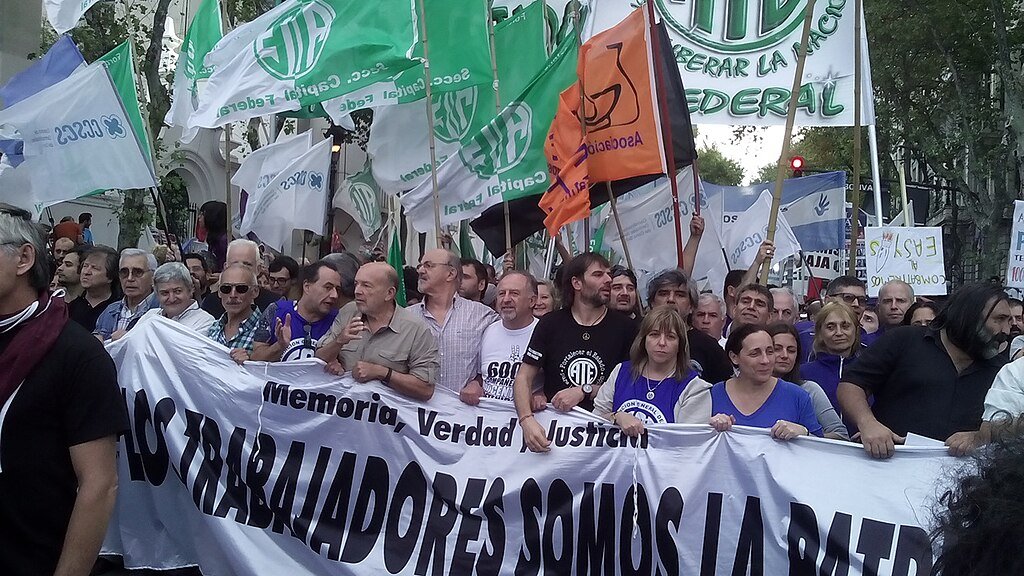
Featured image description: Workers marching in the Day of Remembrance for Truth and Justice in Argentina on March 24, 2016.
Featured image credit: Mapep via Wikimedia Commons