Nine months into its big push for cryptocurrency payments, Bhutan isn’t finding many takers for its plans.
Last May, Bhutan became the first country to launch a nationwide crypto payment network for tourists. Visitors to the Himalayan kingdom could pay for their visas, flights, hotels, and meals in more than 100 cryptocurrencies via Binance. Within the first month of its launch, over 1,000 merchants signed up to receive payments in crypto.
Almost a year on, though, nothing much has changed on the ground.
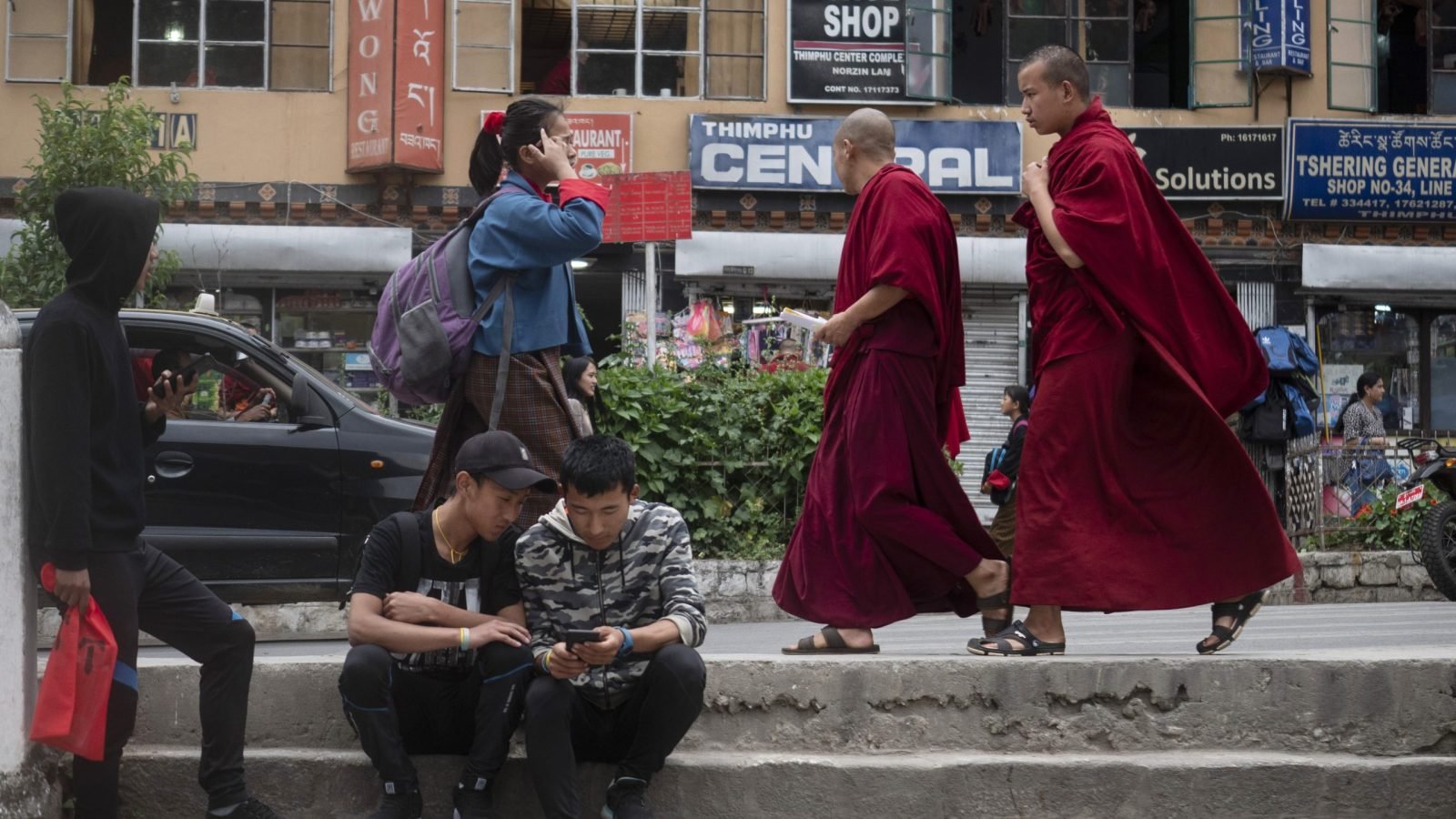
In Thimphu, the QR codes displayed by local businesses to receive crypto payments gather dust. Several merchants have never had any customers opt for them.
“It has been four to five months, but no customer has used it until now,” Sonam Dorji, who works at Lotus Peak Enterprise, a handicraft store on the premises of the Le Meridien hotel, told Rest of World. “No one knows that we accept cryptocurrency and Binance Pay.”


Experts and locals said the government’s push for cryptocurrency is driven by its own massive bitcoin reserves, and doesn’t account for structural hurdles like power shortage and low literacy, which make the transition unlikely.
“Mining bitcoin gives [Bhutan] a currency to purchase imports that it didn’t have before, so I understand why the political establishment in the country wants to go for digital payments,” Jay Zagorsky, a professor at Boston University’s Questrom School of Business, told Rest of World. “However, just because the central bank is pushing Bhutan society toward digital payments does not make it sensible.”
Zagorsky is the author of The Power of Cash: Why Using Paper Money is Good For You and Society. The book argues that preserving physical money is essential to protect individual privacy, curb overspending, and prevent the economic exclusion of the world’s most vulnerable populations.
The director of Bhutan’s Department of Tourism, Damcho Rinzin, and DK Bank CEO Ugyen Tenzin did not respond to Rest of World’s request for interviews or comment.
The Bhutanese government started mining bitcoin in 2019. Abundant rivers and mountainous terrain make hydroelectric power plentiful in the kingdom, and domestic consumption is low given its population of less than a million people. Bhutan uses the surplus electricity generated from renewable sources to power its crypto mining operations.
In October 2024, Bhutan’s bitcoin reserves touched $1.4 billion, making it the biggest state-backed green-mined reserve in the world. Other countries with larger government reserves, like the U.S. and China, acquired bitcoin through purchases or asset seizures — or, in Ukraine’s case, donations.
Countries with shaky infrastructures and low rates of literacy are not the best places for introducing new types of legal tender.”
Bhutan’s infrastructure, however, does not support widespread adoption of cryptocurrencies for transactions. One-third of Bhutanese people are not literate — a necessary criterion to navigate digital payments, Zagorsky said.
The country also suffers from an unstable power supply, which can make digital payments challenging. The typical customer deals with power cuts 19 times a year, due to causes that are only under the power companies’ control, according to a government report. One-fifth of businesses in Bhutan own or share a ground generator, World Bank data shows.
“Using crypto as legal tender means items like bitcoin need to be accepted by all types of businesses, from large to very small, at all times for any debt,” Zagorsky said. “Countries with shaky infrastructures and low rates of literacy are not the best places for introducing new types of legal tender, especially when other small countries like El Salvador, who have tried it, did not see the experiment succeed.”
In 2021, El Salvador became the first country to make bitcoin legal tender — a decision it walked back in 2025 when the International Monetary Fund had to bail out the tanking economy.
The Central African Republic, which had made bitcoin legal tender in April 2022, also reversed the decision within a year after significant pressure from the IMF and World Bank. Compared to the Latin American country, it saw barely any adoption among its citizens, given low internet penetration and frequent power outages.
In one of Thimphu’s oldest eateries, Ambient Cafe, owner Junnu Chhetri told Rest of World her establishment doesn’t keep track of the daily usage of Binance. She said some guests — mostly foreigners — have used it.
Experts say Bhutan isn’t necessarily heading in the same direction as El Salvador and the Central African Republic. The current system instantly converts crypto payments to ngultrum for merchants. It’s more of a gateway than a store of value, reducing risk and volatility.
“Initially, there was talk about expanding crypto payments to other sectors, but in practice, I haven’t seen this happen in any significant way yet,” Ugyen Dendup, the co-founder of Bhutan’s first AI startup NoMindBhutan, told Rest of World. “At the market or business level, tourism is the only sector where this conversation is visible, and even there, adoption remains limited.
”Dendup said there’s nothing clearly written or formalized on paper regarding crypto laws or regulations in Bhutan. “It exists in a kind of gray area: Some people push for it, some are cautious, and enforcement or guidance isn’t very clear,” he said. “Because of this, it’s hard to say whether Bhutan is moving toward making bitcoin legal tender.”