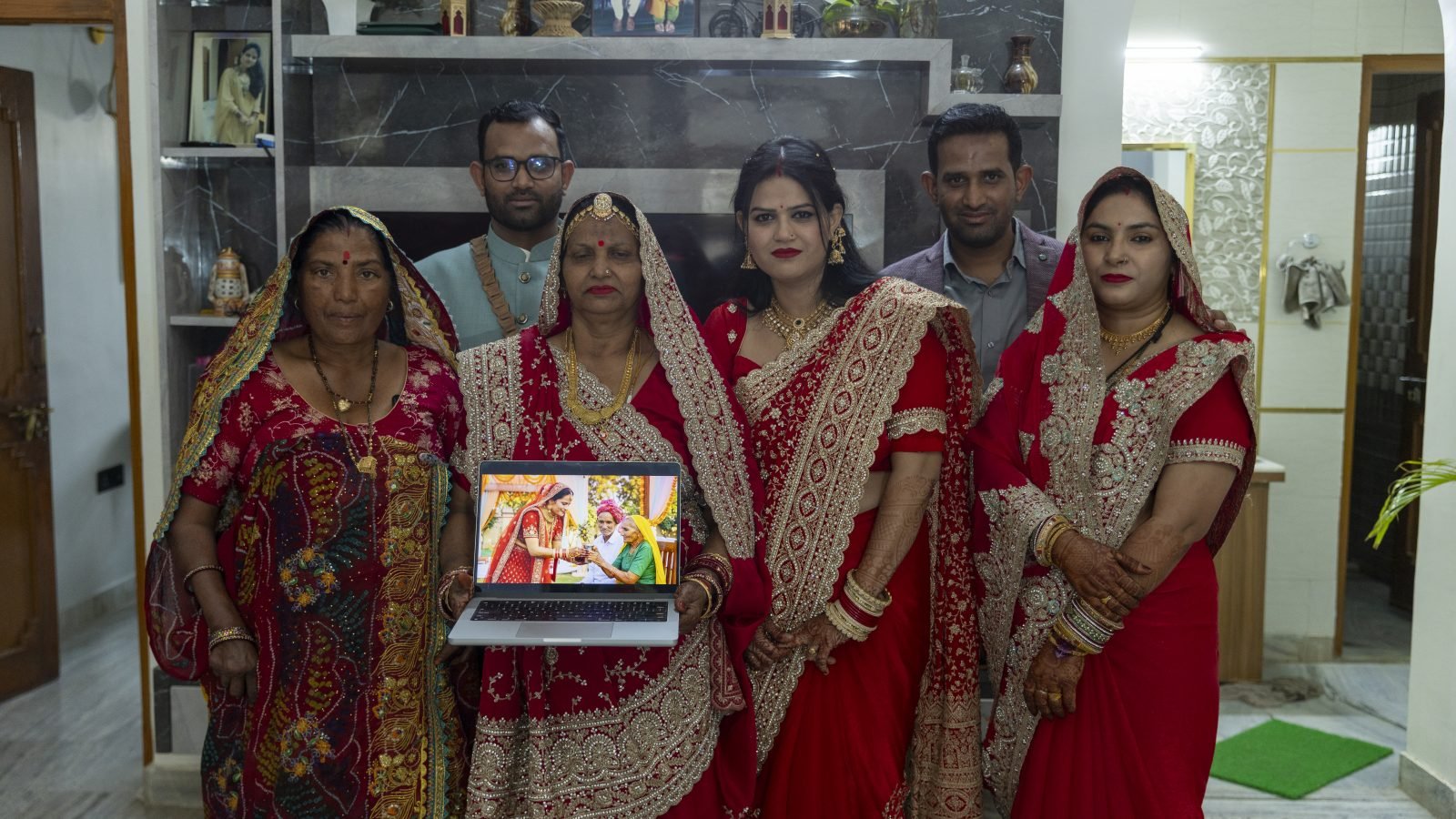
When the lights dimmed at Jaideep Sharma’s wedding reception in the north Indian city of Ajmer, guests expected to see a cheesy montage of the young couple in various attractive locations. Instead, they saw Sharma’s father — dead for more than a year — on the screen, smiling and blessing the newlyweds.
The video was created using artificial intelligence by a local creator Sharma found on Instagram. Using pictures of Sharma’s father, the creator produced a minute-long video in about a week, and charged about 50,000 rupees ($600), Sharma told Rest of World. It was worth it, he said.
“It was like a bombardment of emotions for everyone,” said the 33-year-old garment trader, who felt his father’s absence keenly at his wedding. “He was like a central force in the entire family. So when the video played, everyone was very happy and emotional at the same time.”

Sharma is among a growing number of Indians discovering the power of AI deepfakes to resurrect dead family members, create voice clones of the departed, and add absent guests to family celebrations. AI tools such as OpenAI’s Sora, Google’s Nano Banana, and Midjourney have made it easier to create images and videos that can fool even experts. Cashing in are entrepreneurs in small towns and cities, who have learned how to use these tools from YouTube tutorials and online forums.
Like Akhil Vinayak, a film buff, who posts deepfake videos of popular dead actors on Instagram for fun. A client in the south Indian city of Thiruvananthapuram approached him with an unusual request: Could he create a deepfake video of her dead mother-in-law blessing her baby?
“She wanted to surprise her husband,” the 29-year-old told Rest of World. “Her mother-in-law had passed away before the baby was born.”
Vinayak created a video showing the dead woman stepping down from heaven and visiting her son, then holding the baby she hadn’t met. The client was thrilled, and sent Vinayak a recording of the family’s stunned reaction. That video has more than 1 million likes on Instagram.
Such uses — and reactions — stand in sharp contrast to the growing pushback to AI-generated videos and voice clones, which are most commonly used for harassment, extortion, financial scams, political misinformation, and election manipulation.
For Vinayak’s clients, though, the deepfakes are not just practical but also deeply emotional, he said. Vinayak uses open-source models like Stable Diffusion and editing systems such as Adobe Premiere Pro to create them, charging about 18,000 rupees ($200) on average for minute-long videos.
-
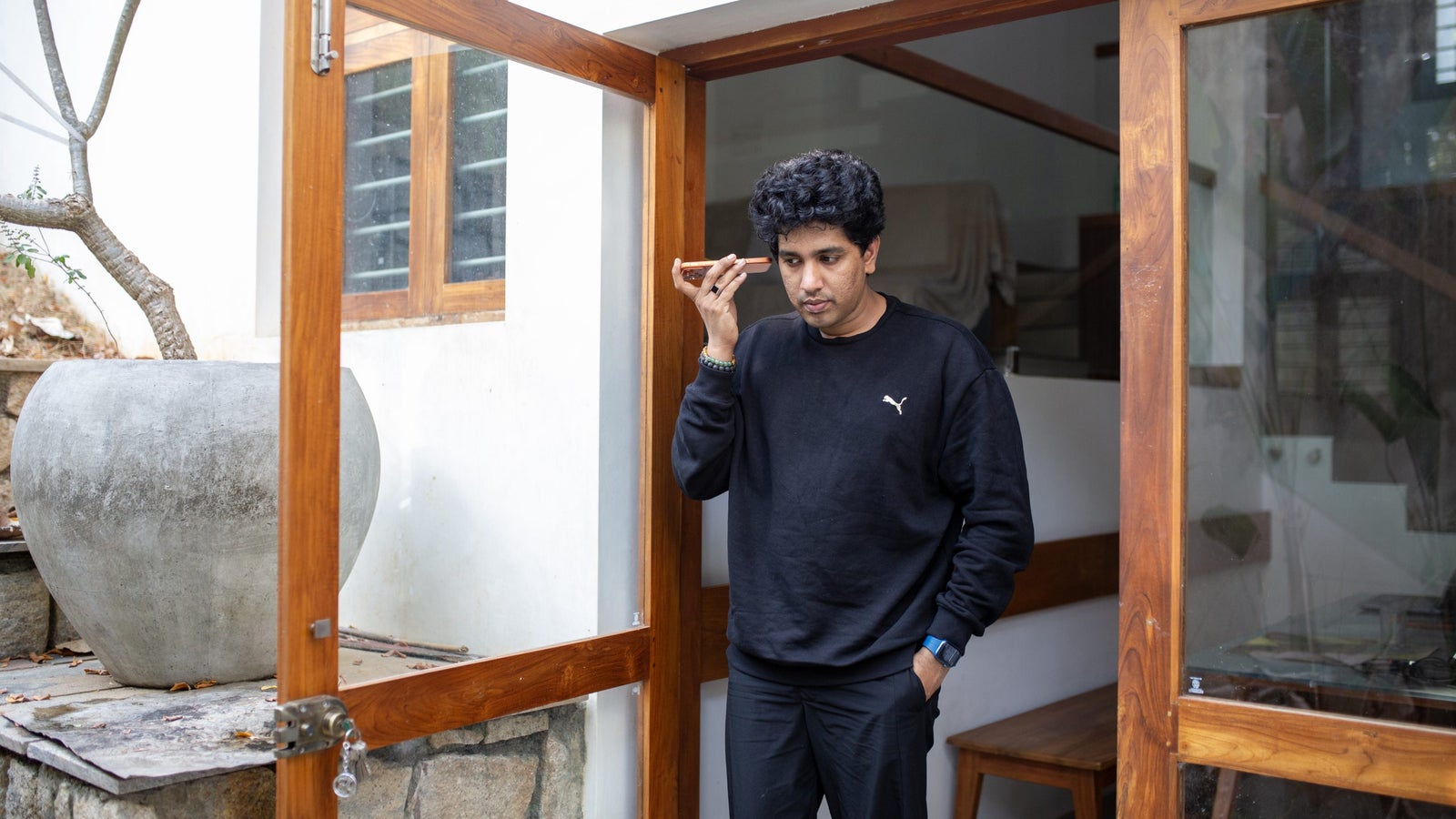
Akhil Vinayak listens to a client’s voice message at his home in Thiruvananthapuram, India. Vinayak’s studio Kanavu Kadha produces AI videos.
Joe Paul Cyriac for Rest of World
-
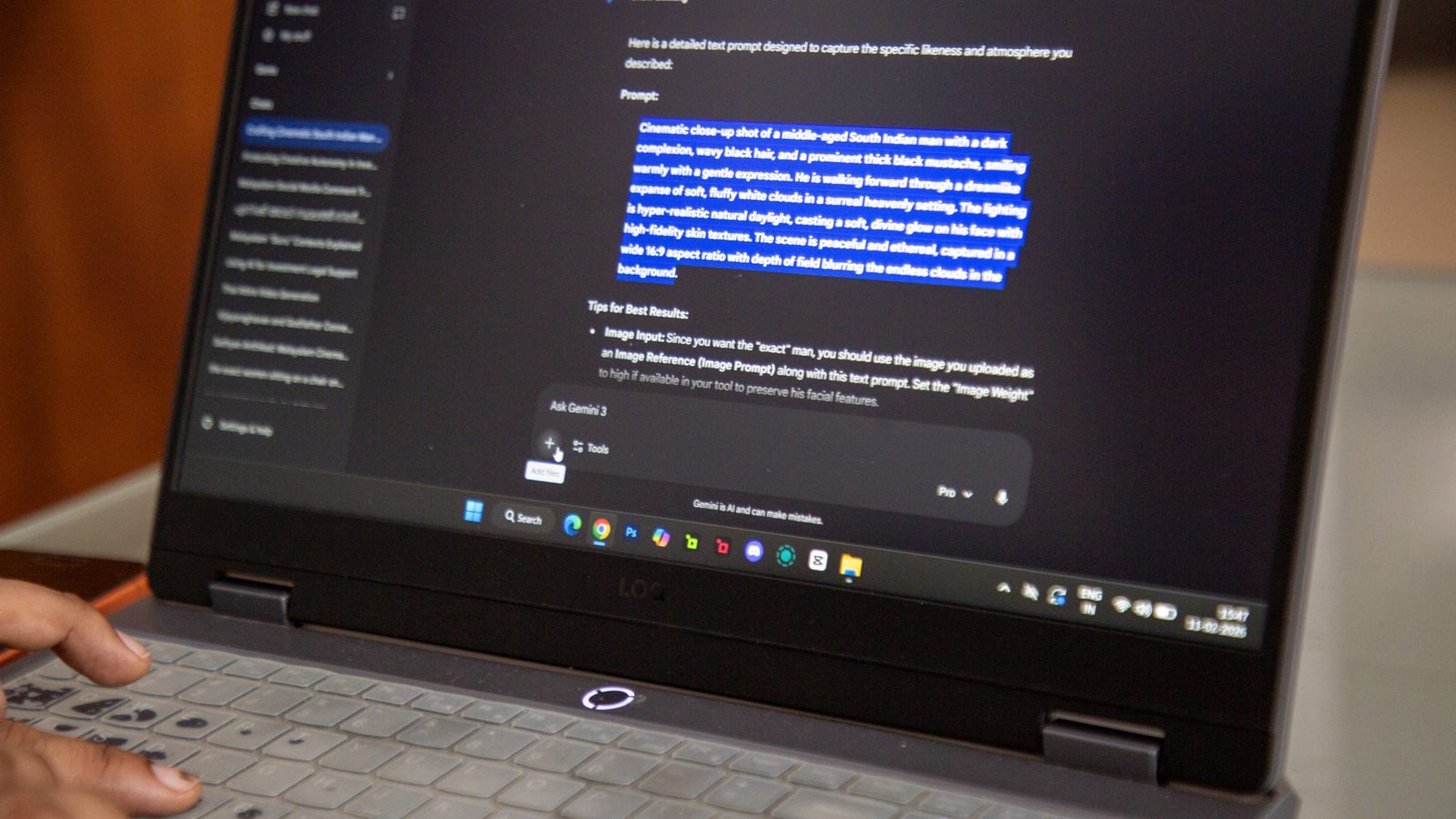
Vinayak uses AI tools such as Google Gemini and Nano Banana in his studio. -
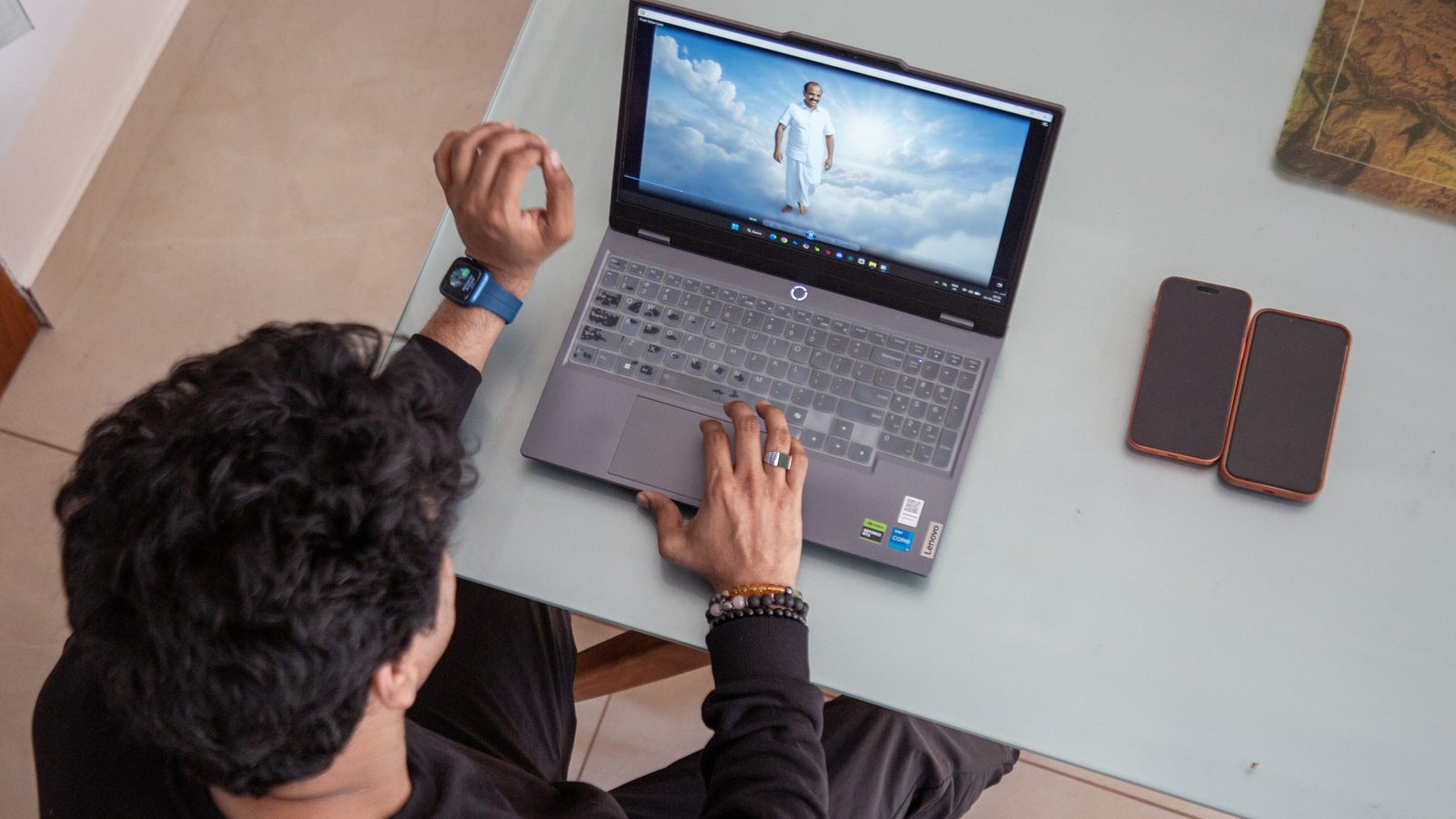
Vinayak reviews an AI-generated video recreating a deceased individual.
They can be a challenge when clients have only old, damaged, or black-and-white photos of the person they wish to recreate, he said. It also requires an effort to get to know the person they are recreating.
“We have to work with the client to know about them and their behavior to create their closest online version,” said Vinayak, who now has a five-member team at his firm Kanavu Kadha, which means “stories from dreams.” He plans to launch an AI film institute.
Some creators are aware that deepfakes may not be the best way for their clients to deal with grief. Divyendra Singh Jadoun, who taught himself to use Photoshop, video editing, and generative AI tools during the Covid-19 lockdowns, has a thriving business creating AI-generated content. He began by posting “what if” parody videos on Instagram. Then came a message from a woman asking if he could recreate her deceased father for a family gathering.
Jadoun, who is based in the north Indian town of Pushkar, created a short video from the photos, videos, and audio clips the client had sent him, he told Rest of World. He now runs The Indian Deepfaker, an outfit that creates “hyper realistic deepfakes” including those of politicians, and what he calls grief tech — AI-generated avatars of dead people that can speak, text, and even video-chat in real time.
“Being able to talk to someone who is no longer alive, even in a limited way, is deeply meaningful,” Jadoun said. That AI avatars of the dead might “take people into a deep depression” is something he is aware of. “I make sure I convey to them that they should not get too attached, as they are not real,” he said.
India is among the world’s largest markets for generative AI platforms, and for AI-generated videos and voice clones. Several celebrities have sued YouTube and Google for hosting deepfake videos, and the government’s new rules to curb the flood of deepfakes go into effect on February 20. They require all AI-generated content to be clearly labeled, and place new obligations on platforms to remove such content within hours when directed to.
But in small towns, deepfakes are helping meet vital cultural needs, Bhaskar Malu, a Delhi-based behavioral scientist, told Rest of World.
“In cultures like ours, where social rituals demand physical, or at least symbolic presence, especially during weddings and funerals, AI-generated stand-ins are a response to real emotional pressures,” he said. Deepfakes can help with dealing with the loss in the short term, but they also create “an artificial reality,” where the dead are “alive and dead at the same time in your mind,” he said. The long-term effects are unclear. “Technology should be a partner, not a substitute for human connection and emotional reckoning,” Malu said.
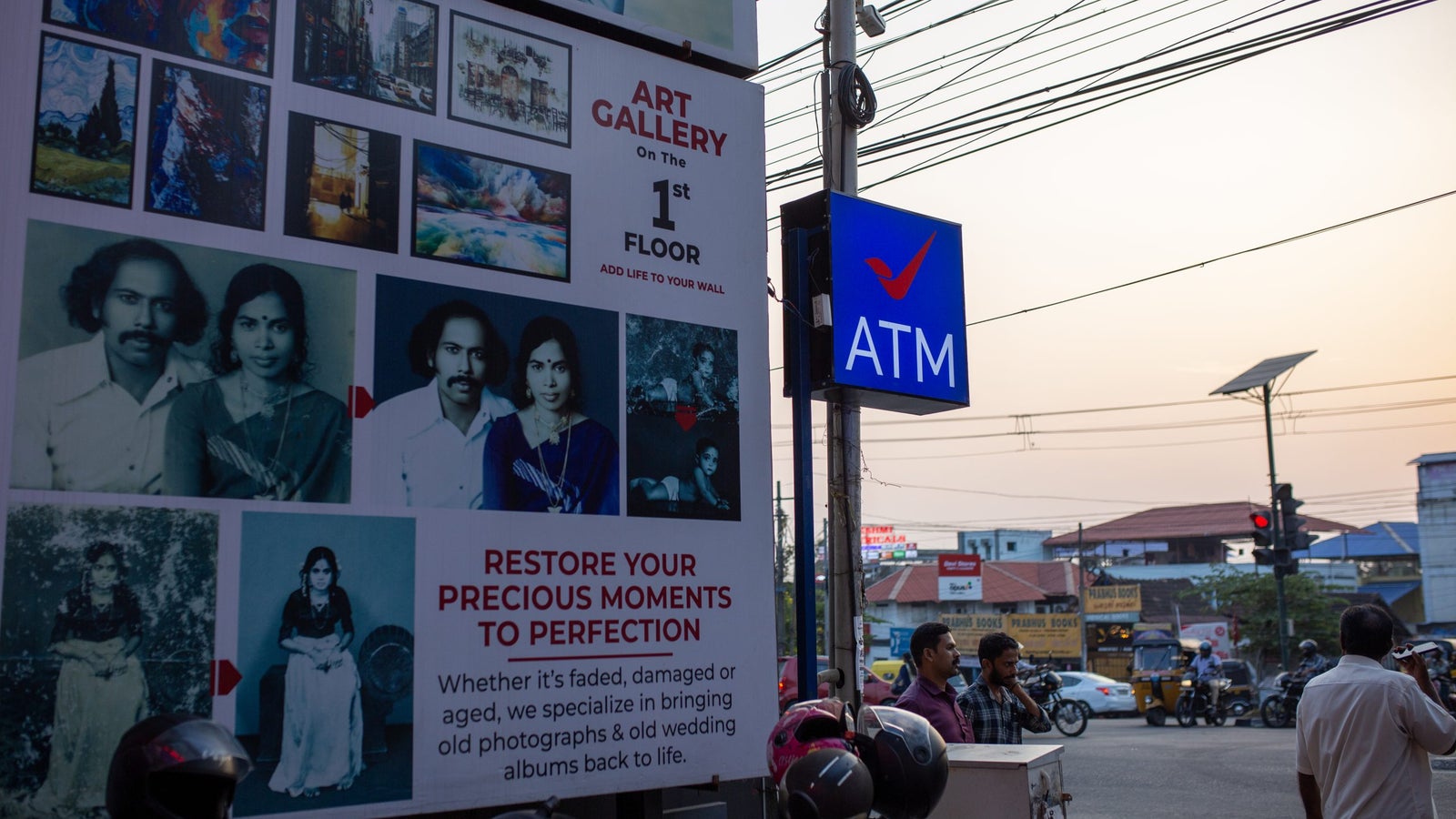
Joe Paul for Rest of World
An advertisement for photo restoration services outside a photo studio in Thiruvananthapuram, India.
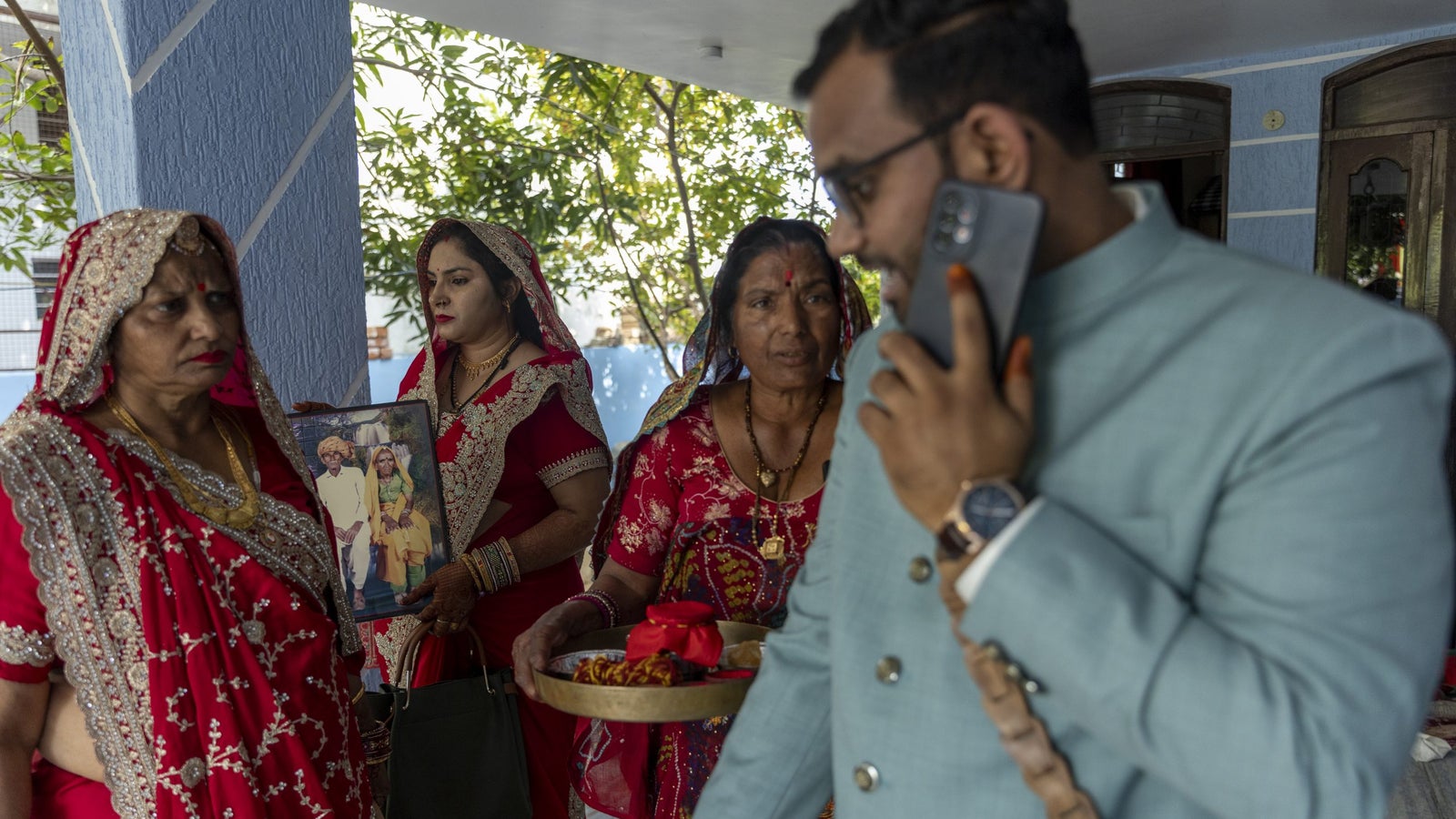
Ishan Tanka for Rest of World
A groom speaking on the phone with his family. He had ordered an AI video featuring loved ones who were not present at his wedding.
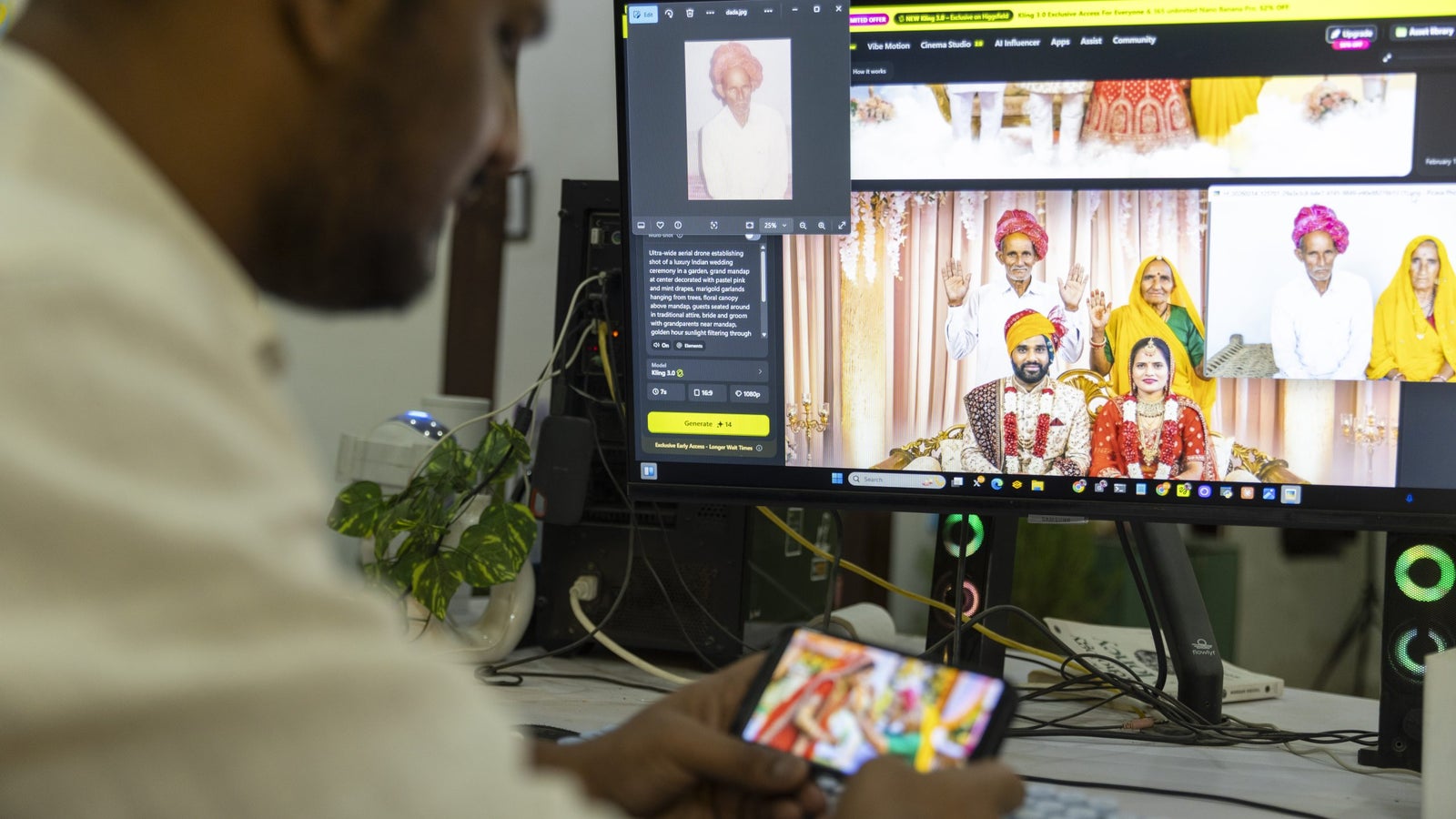
Ishan Tanka for Rest of World
The generation of an AI video for a wedding in Ajmer, India.
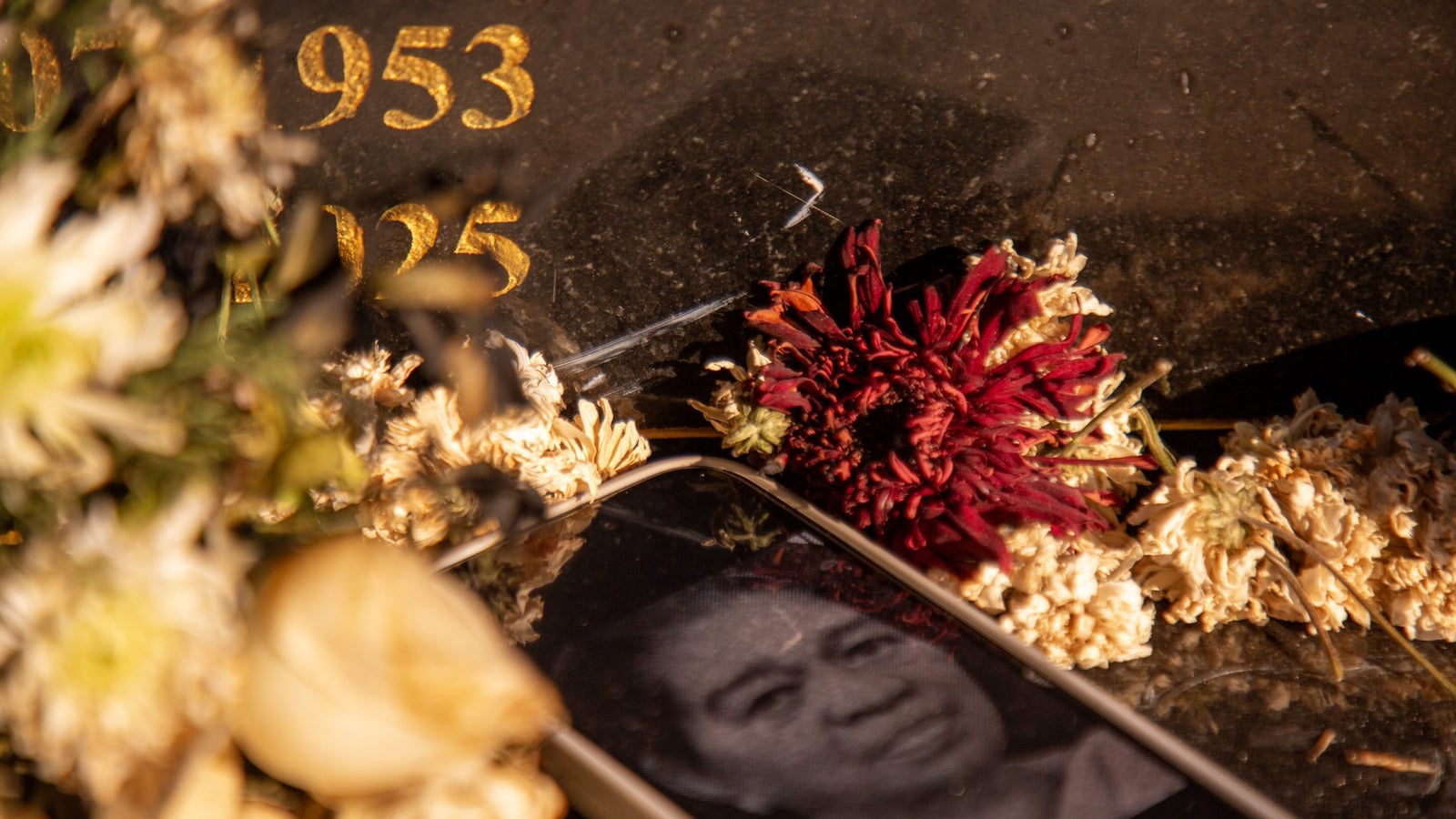
Joe Paul for Rest of World
A mobile phone placed among flowers at a cemetery in Thiruvananthapuram, India.
A growing number of people say they are in a relationship with their AI chatbots, with some getting engaged to or marrying the AI characters they create on ChatGPT, Character.ai, Replika, and other platforms. As the debate around deepfakes — like the sexualized images produced by X’s Grok chatbot — continues, in wedding halls and living rooms in India, AI-generated avatars are quietly lodging themselves into ceremonies and rituals that have long insisted on presence.
For the creators, the AI technology is a way to earn an income by offering a service, much like wedding photographers and videographers do. For clients, the technology makes it easier to manage social expectations, avoid uncomfortable questions about absent relatives, and maintain continuity during rituals where presence carries deep symbolic weight.
Besides the money to be made, Jadoun values creating something that is cherished. The woman who asked for a video of her dead father thanked him when he sent her the deepfake: It was the “best thing” anyone had given her, she said.