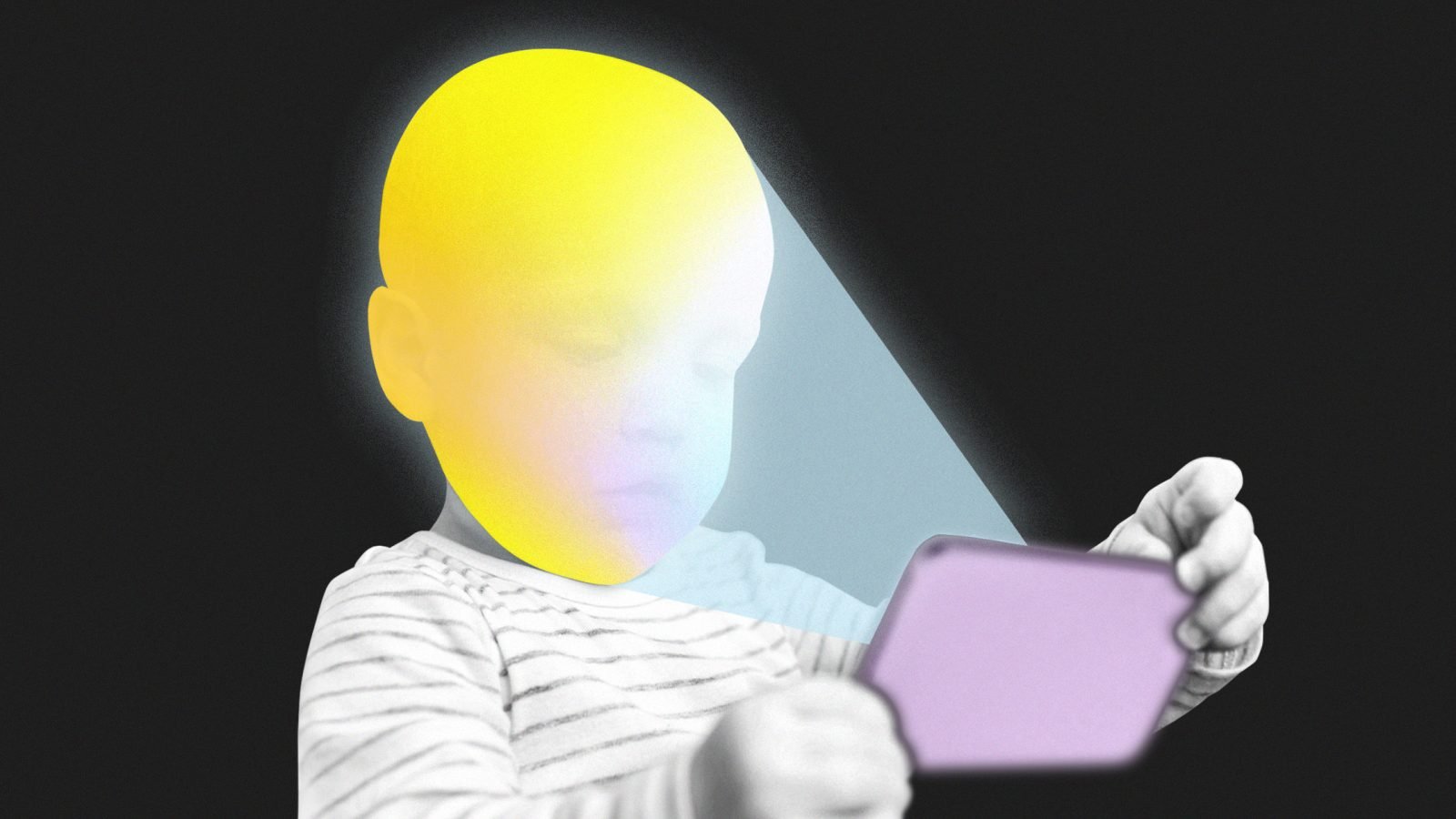
Fourteen-year-old Carolina has been on Roblox since she was 10, chatting and playing with other gamers on the platform. When the site rolled out mandatory age checks at the start of the year, Carolina was afraid she would lose access to some of her friends and group chats. She needn’t have worried — the software determined she was 16 or 17.
“Without any makeup, I did what the app asked: turned my head this way and that for the photo,” Carolina, who lives in São Paulo, told Rest of World. “The app said I was 16 to 17 years old. I was able to go back to my chats.”
Roblox is among the growing number of social media platforms installing age checks as governments around the world act to keep young users off social media sites and limit their access to content deemed inappropriate. The most commonly used methods include verification with a government-issued identity; estimation through biometrics such as facial recognition; and inferring the age of the user from their online behavior.
The methods are not foolproof. Facial recognition technology is known to be less accurate for women and people of color. On Roblox, the age check is meant to restrict who users can chat with. The 16 to 17 age group, which Carolina was assessed as belonging to, can chat with users in their group, as well as the ones immediately above and below theirs, or those in the 13–15 and 18–20 age groups. Being able to chat with older users exposes her to the risk of harassment and abuse — something California-based Roblox has come under scrutiny for. Of its more than 100 million daily users, nearly 40% are under the age of 13, some estimates show.
Age-verification technologies are not infallible. … Minors are using increasingly sophisticated techniques, including VPNs and AI-generated deepfakes or selfies.”
As a new child safety law comes into effect in Brazil from March, requiring platforms providing gambling, pornography, and other such content to verify ages, users are learning to circumvent the tech, Simone Lahorgue Nunes, founding partner at law firm Lahorgue Advogadas Associadas in Rio de Janeiro, told Rest of World.
“Age-verification technologies are not infallible,” she said. “Minors are using increasingly sophisticated techniques, including VPNs [virtual private networks] and AI-generated deepfakes or selfies. Conversely, overly stringent measures may drive underage users toward the dark web or services hosted in so-called digital havens, thereby exacerbating the very risks such regulation seeks to mitigate.”
Circumventing age verification doesn’t even need much sophistication. In a subreddit on bypassing the Roblox checks, users recommend fake IDs and AI-generated photos. “I used a fake ID of [Joseph] Stalin and it got accepted,” one user wrote. Another user posted a video on X that showed a crude face painted on a thumb going through the age check on Roblox and being assessed to be 13 to 15 years old.
The age check process “is designed for accuracy,” Roblox said in the statement announcing the rollout. The technology has been “tested and certified by third-party laboratories,” and the company constantly evaluates user behavior to determine if someone is “significantly older or younger than expected,” it said. TikTok’s new age checks use a combination of profile data, content analysis, and behavior to infer whether an account belongs to an underage user.
Since Australia last year barred those under 16 years from social media platforms such as Facebook, Instagram, X, and TikTok, at least a dozen countries including Malaysia, Spain, France, and the U.K. have said they are planning similar rules. The chief economic adviser in India, one of the biggest markets for social media companies, has also made a recommendation for such a law.
Effective child safety online doesn’t require identifying every internet user. … Platform design choices around recommendation algorithms, data harvesting practices, and addictive features cause far more harm than anonymous access to information.”
With the focus on technology, there isn’t enough discussion around how these measures can disproportionately harm minorities and others who lack documentation or prefer anonymity online, Shivangi Narayan, who teaches sociology at the Thapar School of Liberal Arts and Sciences in Patiala, India, told Rest of World.
“Age verification would end anonymous accounts and anonymity on the internet as we know it,” Narayan said. “It is a potent tool to kill dissent and end the last vestige of protection that a lot of marginalized identities have online — people who cannot express themselves fully on social media because they could be harassed, trolled, become a victim of hate speech or in extreme circumstances, even killed.”
Privacy campaigners are also worried that the identification documents and biometric data used to determine a user’s age could be compromised, exploited, sold, or used for surveillance.
Last year, San Francisco-based Discord said the government photo IDs of about 70,000 users worldwide had been exposed through a third-party vendor. The compromised data included their names, email addresses, contact information, and payment history. Earlier this month, Discord — with over 200 million monthly active users — said it was rolling out “enhanced teen safety features” for users over the age of 13. These include deleting identity documents submitted for verification “quickly — in most cases, immediately after age confirmation.”
Some countries are opting for their own age verification systems rather than U.S.-based Jumio or Yoti from the U.K. Malaysia has its own technology, and Brazil plans to build one. India’s Signzy and Accura Scan have several global clients.
The focus on age checks diverts attention away from the more pressing concerns around social media platforms, Apar Gupta, founder-director of Internet Freedom Foundation, a digital rights organization in India, told Rest of World.
“Effective child safety online doesn’t require identifying every internet user,” he said. “Platform design choices around recommendation algorithms, data harvesting practices, and addictive features cause far more harm than anonymous access to information.”
In Malaysia, where the government has said it will soon introduce a law to restrict under-16s from accessing social media platforms, long-time Discord user Adam is concerned about the security of its facial recognition requirement, he told Rest of World.
“If your face is compromised, you can’t replace it,” the 17-year-old said. “Imagine having your biometric identity exposed forever.”
Leave a Reply
You must be logged in to post a comment.