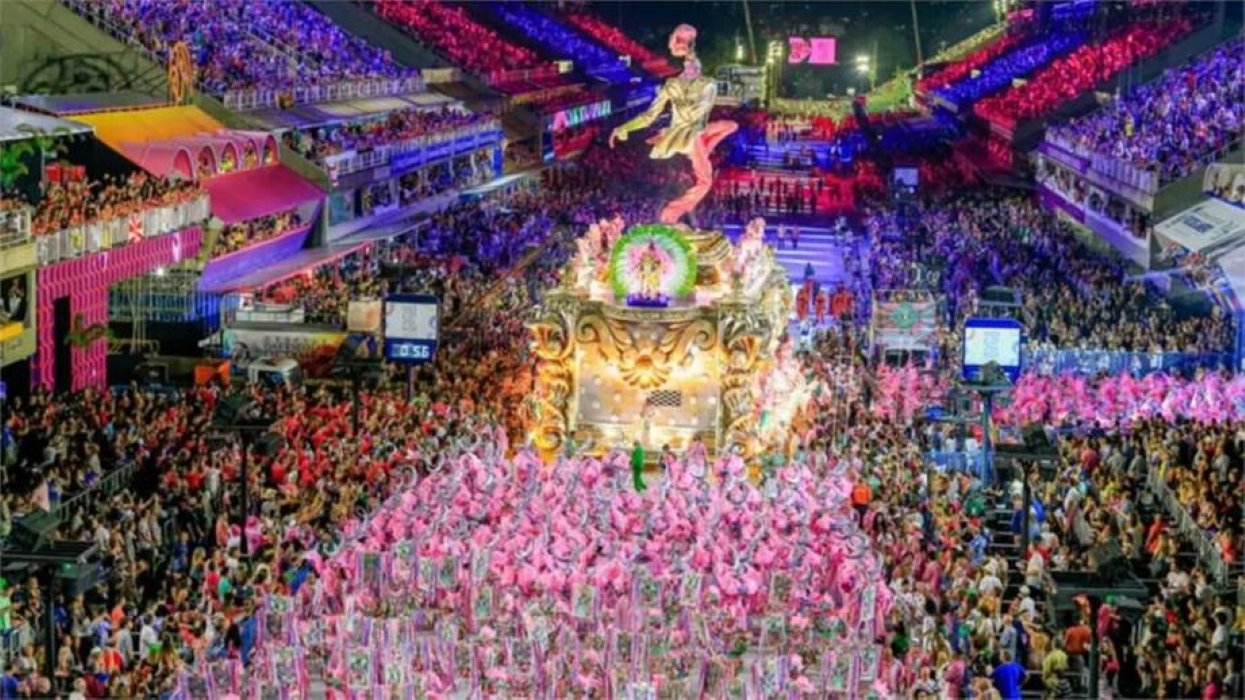
On Rio’s last official carnival day, street blocos pulled in crowds again, including thousands of foreigners who danced imperfectly, sang traditional marchinhas in rough Portuguese, and blended into the city’s most democratic party. Tourism officials expect record numbers.
Flamengo’s Moving Stage and the Tourist Who Keeps Smiling
By midday, the heat feels heavy on your shoulders. In Flamengo, the crowd still presses in because that’s what you do on the last day. You follow the music, accept the sweat, and get used to the idea that personal space doesn’t really exist.
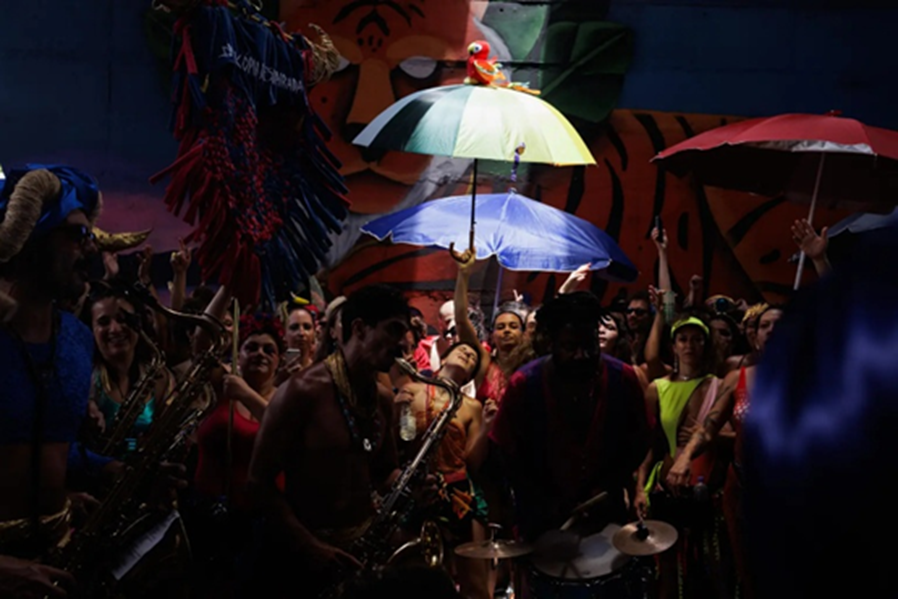
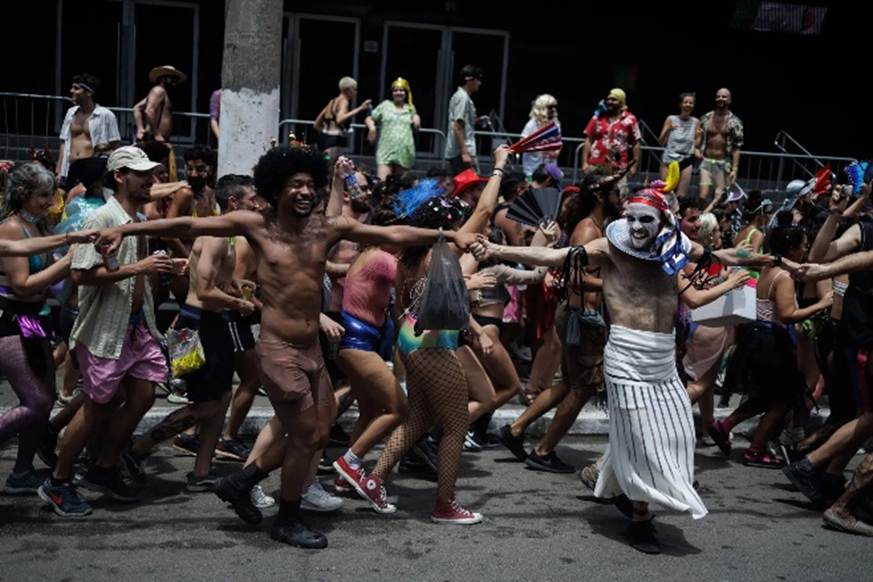
Cachorro Cansado moves through the streets with musicians on a truck turned into a mobile stage with sound, rolling forward like a slow, loud wave. People move along with it, not gracefully but that doesn’t matter. The steps are made up as they go, and the timing doesn’t have to be perfect. The goal is just to stay in the flow.
Then you hear it, scattered through the mass of bodies. Voices that do not sound local. A burst of a foreign phrase, then a pivot into rudimentary Portuguese. The marchinhas, the traditional carnival melodies, pull everyone into the same chorus, even if the words are crooked.
This was the scene last Tuesday, the last day of Rio de Janeiro’s carnival, when street blocos again attracted huge crowds, including a noticeable number of foreigners. Many struggle with the language and move with a certain dance clumsiness, but they mix into the party and enjoy it as Brazilians do.
The problem is that people often think of carnival as something to watch. That’s true in the Sambadrome. But out here on the streets, it’s more like the weather. It surrounds you and asks you to join in. It has a way of making outsiders feel like they belong, at least for a song.
Young Travelers and the Shock of Something That Feels Unrepeatable
Younger foreigners are the most consistent revelers, and EFE saw plenty of them at Cachorro Cansado, including visitors from across Europe and North America. They arrive in groups, drawn by the promise of beaches and nightlife, and then they stay for the part that cannot be captured in a postcard.
Two Austrian visitors, Lilly and Lizzie, said they had never been to Rio. They had been in the city for 10 days, taking in the beaches, the carioca life, and the carnival in its early phase. They agreed that the party is unique and has good vibes.
“It is something you cannot find anywhere else. It is overwhelming,” Lizzie, a twenty-eight-year-old ecologist, told EFE.
Overwhelming is the right word, and not just because of the crowd. It is overwhelming in the way it resets your social instincts. People who would never normally speak to each other are suddenly sharing the same refrain. People who do not know the language still find the beat. People who are self-conscious at first start moving anyway because nobody is grading them.
There’s a simple truth here: if you stand near a chorus long enough, you’ll start singing along, even if you only know half the words. That’s how belonging works here. It’s not given, it’s earned.
Another detail stands out. Most partygoers are locals or domestic tourists, but you can clearly see the foreigners. Their joy feels different, with words from their home countries popping up in the middle of songs. Then, almost without thinking, they switch back to Portuguese, even if it’s simple, because the marchinha calls for it.
This turns the bloco into a live example of soft power. Not the official kind measured by agreements or speeches, but the kind that comes from cultural confidence. Rio doesn’t ask visitors to become Brazilian. It just invites them to sing.
Older Visitors and the Quiet Tourism Debate Beneath the Glitter
It is not only the young chasing this experience.
Tracy Hale and her husband, a retired American couple, have been traveling around South America for five months and have been in Rio since last week. They said they feel ecstatic about the carnival.
“It is the best,” Tracy told EFE with a wide smile.
Her smile says it all. In the heat, in the midday crush, in a crowd that keeps moving because the truck keeps moving. Though described as much older, she still has the energy to sing and dance for hours despite the intense heat and packed crowd around the bloco.
That detail complicates the stereotype that carnival is only for the young, or only for the athletic, or only for those who understand every lyric. It also hints at a broader policy question that hovers around events like this, even when the party tries to pretend it is only a party.
How can a city handle so many visitors while keeping a street festival open and free? How does it welcome foreigners without turning the neighborhood block into a commercial product?
Cachorro Cansado itself is described as a traditional neighborhood parade that has grown year after year since it was founded in a Flamengo bar in nineteen seventy five. Now it is a fiftieth anniversary block, carrying decades of local history while also attracting visitors who did not grow up with it.
The hope is that this can grow without falling apart. That a tradition started in a bar can survive becoming a big attraction.
Tourism officials are keeping track, as usual. Embratur, Brazil’s international tourism agency, expects about three hundred thousand foreign tourists in Rio during the carnival season, which ends next weekend. That number is a twelve percent increase over the same period in 2025, setting a new record for the city.
Those numbers sit alongside another enormous estimate in the notes: around eight million people, residents and tourists combined, enjoy carnival in Rio. Most of them will do it with more than 460 street blocos scheduled across 37 days of fun in the city.
That is not just cultural trivia. It is logistics, economics, and identity. It is also a reminder that Rio’s carnival is not a single event but a long calendar, with a formal end and a practical extension. The notes say the blocos run through next weekend, even though carnival itself, as such, says goodbye until next year on Wednesday.
So last Tuesday in Flamengo, watching foreigners sing marchinhas in rough Portuguese, you could feel two endings at once: the official closing and the determined continuation.
The street does not abruptly turn off. It tapers. It lingers. It echoes.
And if you listen closely, you can still hear it in the mix of voices, the local and the foreign braided together, all of them trying to hit the same chorus before the truck rolls on.
Also Read:
Brazil Carnival Clowns Enter Hospital Halls and Shift the Atmosphere