The Trump administration is reportedly close to announcing an economic deal with Cuba, according to USA Today.
Sources “with knowledge of the administration’s plans” told the U.S. daily newspaper that the planned deal could loosen travel restrictions for Americans going to the island, allow the current leadership (including Raúl Castro and current President Miguel Díaz-Canel) a political exit strategy (as well as continued residence on the island) and involve agreements on “[Cuban] ports, energy and tourism”.
Since the military operation to remove Cuba’s ally and Venezuelan President Nicolás Maduro from power, the Trump administration has employed a campaign of maximum economic and political pressure against Cuba, cutting off foreign oil imports to the nation and declaring the Cuban government an “unusual and extraordinary threat” to the United States.
The Trump policies were a mere exacerbation of pre-existing economic and political American sanctions against the island; the U.S. has maintained an economic embargo against Cuba since 1962 and considers Cuba a state sponsor of terrorism.
The prospect of an economic deal between Havana and Washington has long been a possibility: U.S. Secretary of State Marco Rubio has previously suggested that the U.S. may ease pressure on Cuba if the government introduces reforms to liberalize the economy.
There have also been reports that Central Intelligence Agency (CIA) agents had been negotiating with Colonel Alejandro Castro Espín, the son of Raúl Castro and nephew of Cuban revolutionary leader Fidel Castro, in Mexico about a transition on the island that would see economic, as opposed to political, change.
According to ABC, the proposed transition would involve allowing American companies to do business in key sectors of the Cuban economy, such as energy, tourism, banking and telecommunications. In return, the U.S. would lift their economic embargo against the island, which has lasted more than six decades.
The nature of the potential imminent economic deal seems, so far, to resemble that of the reported negotiation in Mexico.
Although there has been no official confirmation of these particular negotiations, the Trump and Díaz-Canel administrations appear to have been engaged in some form of dialogue for weeks at least.
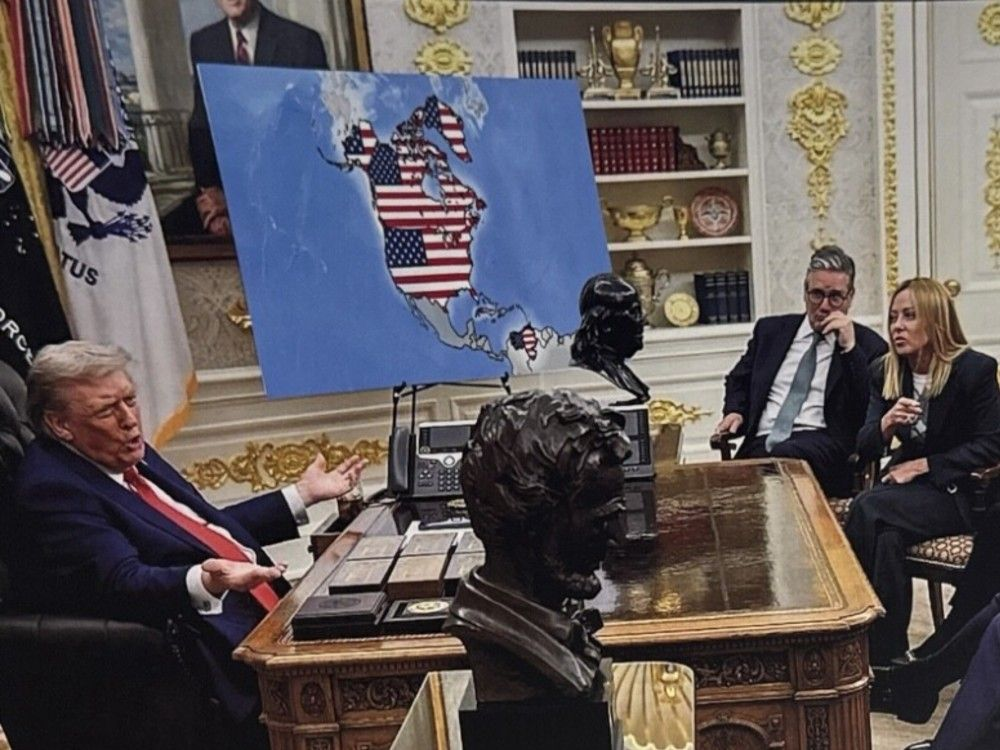
A doctored image released by Trump to social media depicting the U.S. President showing a map of an expanded U.S. – which includes the territory of Canada, Greenland and Venezuela – to a meeting of European leaders in the Oval Office. Image Source: National Post via X
Dr Robert Burrell, a Senior Research Fellow with the Global and National Security Institute and conflict specialist at the University of South Florida and U.S. veteran, spoke to Latin America Reports about the various possibilities for a settlement between the U.S. and Cuba.
“I do not anticipate a U.S. military intervention in Cuba. A free and democratic Cuba has little to offer in terms of economic benefits to the United States, and I think the Trump administration will view U.S. blood and treasure as not worth the cost”, Burrell argued.
Instead, the conflict specialist suggested that “the last business roundtable he [President Trump] had to support Venezuelan oil production would serve as a model for a similar effort with Cuba”.
At that particular roundtable meeting, which was attended by over a dozen oil executives and the press, Trump attempted to leverage the Maduro operation and America’s consequent political influence over Venezuela to convince oil giants to invest in the South American country.
Although Maduro’s former Vice President Delcy Rodríguez remains in power, the U.S. now holds enormous sway over the Venezuelan economy through management of all bank accounts that hold royalty, tax and dividend payments from Venezuelan oil production.
This formula of negotiating preferential access to a former adversary’s economy whilst enforcing limited political change could be replicated by the Trump administration in Cuba.
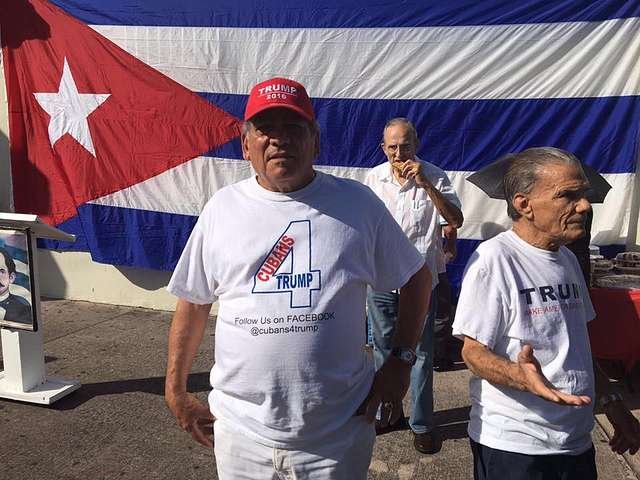
Featured Image: Members of Cubans4Trump, a grassroots coalition of Cuban-American supporters of Donald Trump, celebrate his first inauguration in 2017
Image Credit: Voice of America via picryl
License: Creative Commons Licenses