Falklands, Uruguayan scientists join UK project to study biodiversity on the Islands’ sandy beaches
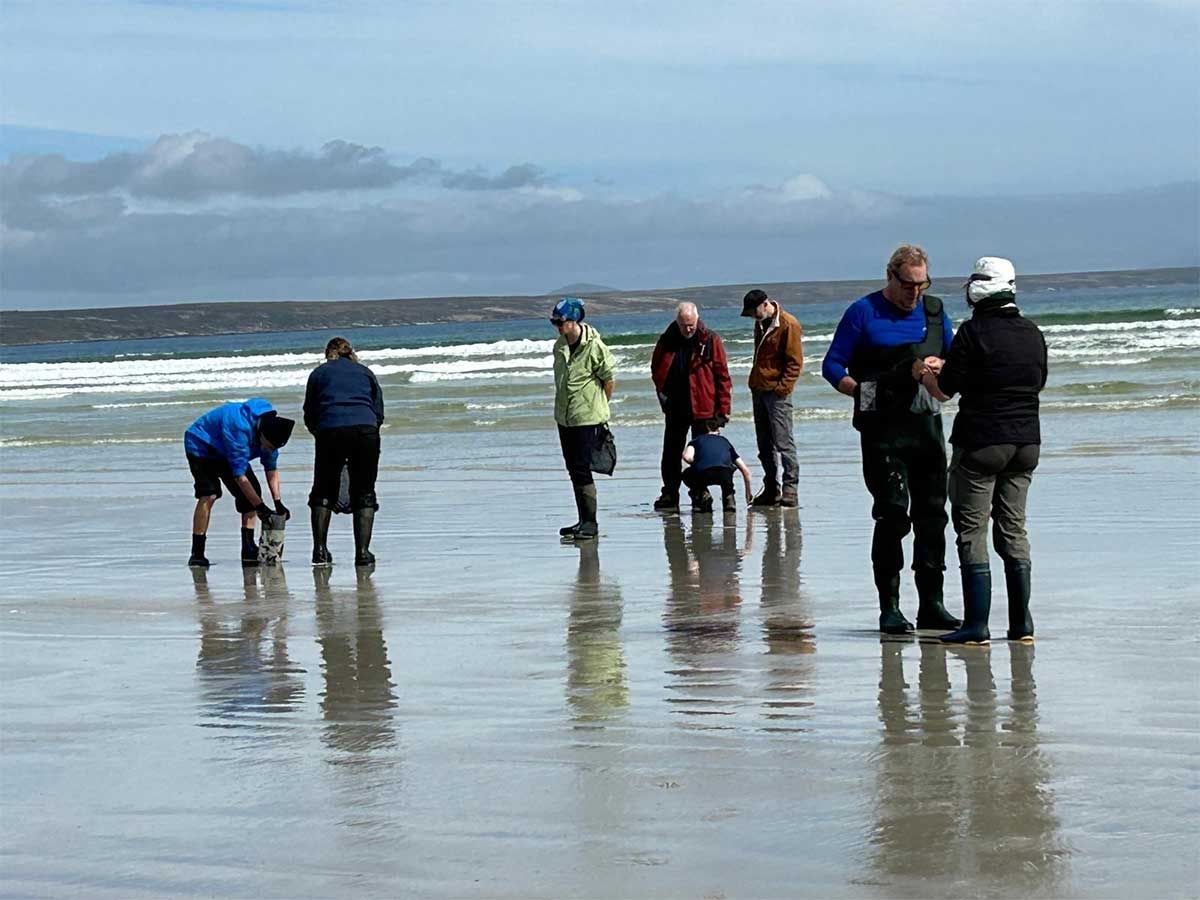
The team of researchers from the Uruguayan Faculty os Sciences working an collecting samples in Falklands’ sand beaches
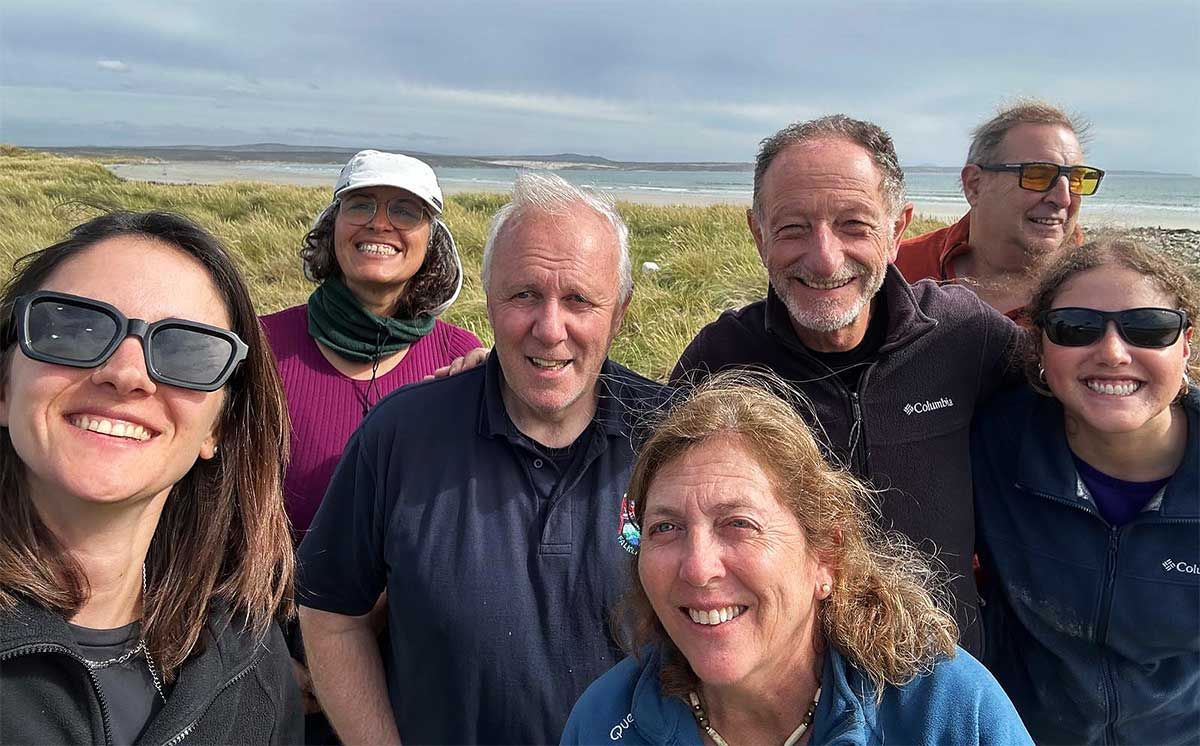
MLA Lewis Clifton, who spent time with the team as a guide and was impressed by the work displayed by the Uruguayans
A team of researchers from the Marine Sciences Laboratory at the Faculty of Sciences of the Uruguayan national university (Universidad de la República) is working in the Falkland Islands on the UK sponsored project “Biodiversity Assessment of Sandy Beaches in the Falkland Islands”.
The international project is financed by the Biodiversity Challenge Funds, from the Darwin Plus local and includes the Falkland Islands based SAERI (South Atlantic Environment Research Institute), and the European Shallow Marine Surveys Group.
The aim of the project is to find out how humans and wildlife affect the ecosystems in the sandy beaches. For the Falklands the role penguins, (symbol of the Islands), have to play in the research and in the ecosystems is crucial.
The Uruguayan team of researchers is headed by Professor Omar Defeo, a Pew scholar, who is a global expert in effects of human activities on invertebrate populations and communities such as benthonic macro-fauna, in coastal systems such as beaches, dunes and dune-beach interactions.
Likewise in the development of co-management practices to improve the ecological knowledge and management of harvested fish species, giving special emphasis to the role played by markets, climate change and governance as critical drivers affecting fisheries sustainability and biodiversity conservation.
Dr. Defeo’s team belongs to the Uruguayan University Laboratory of Marine Sciences and includes Dr. Diego Lercari: Aggregate Professor; Dra. Eleonora Celentano: Assistant Professor; M.Sc. Anita de Alava: Assistant Professor; Dra. Noelia Gobel: Postdoctoral research; Lic. Sofía Bausero-Jorcin: PhD student and Lic. Julieta Olalde: PhD Student.
The Laboratory of Marine Sciences addresses issues such as Environmental impact assessment in coastal marine ecosystems; Structure and functioning of coastal ecosystems, with emphasis on sandy beaches; Fisheries assessment and management integrating ecological and socio-economic dimensions under an ecosystem approach, informed by the social-ecological systems framework.
The team’s work was very much praised by Falklands’ MLA Lewis Clifton who outlined the incredible week of fieldwork displayed.
“The team has made the most of some very kind Falkland Islands weather, completing an impressive sum of fieldwork across East Falkland. Survey sites last week included: Bertha’s Beach, Yorke Bay, Volunteer Point (three beaches), Long Beach, Eliza Cove, Rookery Bay, Surf Bay and several beaches along the coast near Cape Pembroke.
“In between all that time on the sand, the team has spent hours in the lab processing sea water and sediment samples. It’s been an amazing start to the project. This week focuses on further laboratory work and preparing the necessary permits to transport samples back to their home university in Uruguay for detailed analysis. A massive well done to the team for such a strong start, we’re excited to see what the next phase brings!”