Cuba’s oil shortage has escalated beyond a local crisis in Havana, revealing how fear of President Trump, migration pressures, rightward political shifts, and the decline of revolutionary prestige are actively reshaping Latin America’s diplomacy, alliances, and political imagination.
The End of the Revolutionary Exception
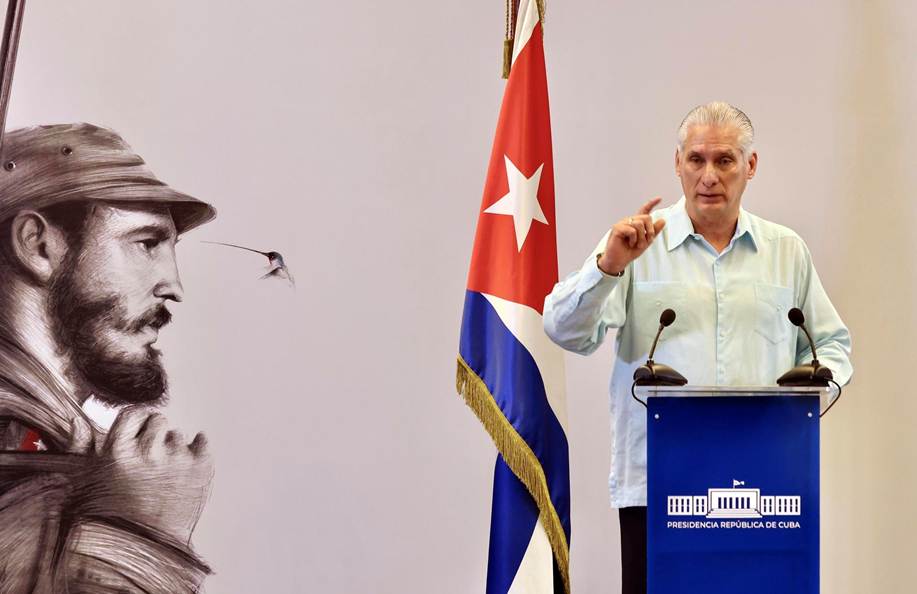
For decades, Cuba held a unique position in Latin America’s political imagination. It was more than a government or an island; it was a symbol present in debates, murals, student gatherings, diplomatic speeches, and private grievances. Even opponents of the Cuban system often acknowledged its stern dignity and resilience in the face of pressure from Washington. Fidel Castro and the guerrillas who emerged from the mountains became part of the region’s modern mythology, credited with reducing illiteracy, expanding public healthcare, and increasing life expectancy.
This former aura is now diminishing amid the harsher reality of scarcity.
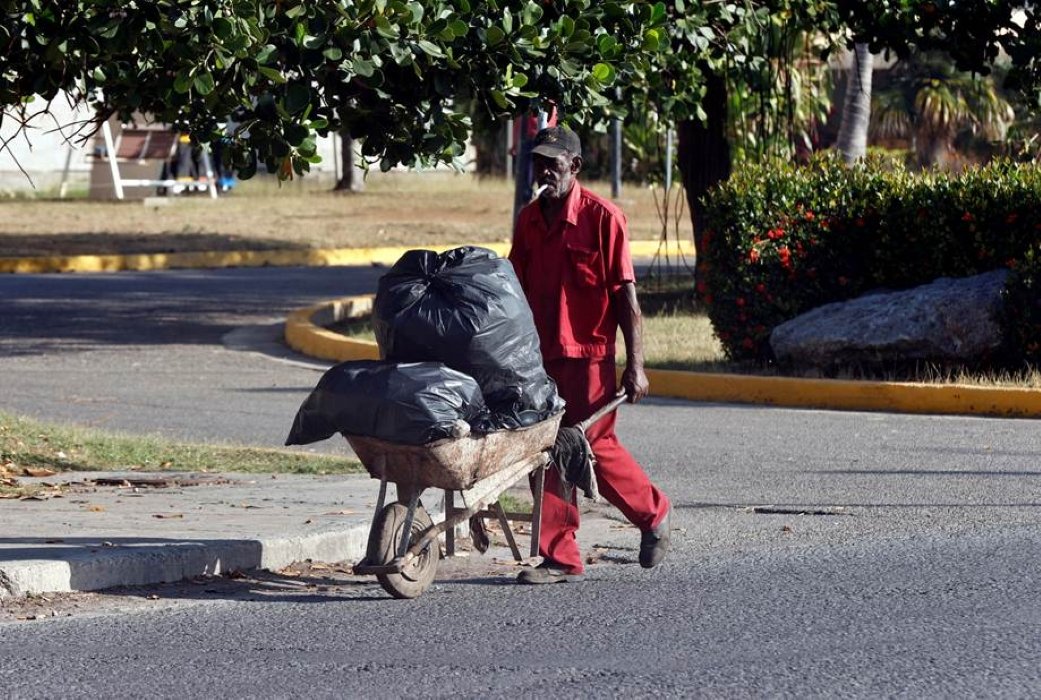
According to The New York Times, Cuba is experiencing an oil shortage and its economy is on the verge of collapse. Blackouts affect the electric grid, and fuel for vehicles is increasingly scarce. This crisis is tangible, urgent, and humiliating. Furthermore, it is political, revealing broader regional transformations beyond Cuba’s vulnerabilities.
The first big shift is psychological. A new generation of right-wing leaders across Latin America no longer sees Cuba as a romantic outpost of sovereignty. They see it as a warning, a one-party state associated with dysfunction, repression, and economic exhaustion. More surprising still, even leftist governments that once would have rushed to defend Havana are now drawing back. The leftist administrations in Brazil, Mexico, and Colombia are not stepping forward to provide emergency fuel shipments. The reason, as laid out in the notes, is not a mystery. It is the fear of provoking President Trump.
This fear reflects the current balance of power in the hemisphere. The New York Times quoted Jesús Silva-Herzog Márquez of Mexico’s Monterrey Institute of Technology, stating that “any gesture of independence now carries the threat of immediate, devastating retaliation” from the United States. He further noted that “one simply cannot predict the fallout of President Trump’s ire.” This statement extends beyond Cuba and diagnoses the region’s strategic climate. Although governments continue to invoke sovereignty, their capacity to defy it has significantly diminished.
For Latin America, Cuba’s crisis signifies the end of the revolutionary exception. The island can no longer rely on historical solidarity as an automatic resource. Symbolic capital no longer translates into material support.
Mexico and Brazil Assess the Costs
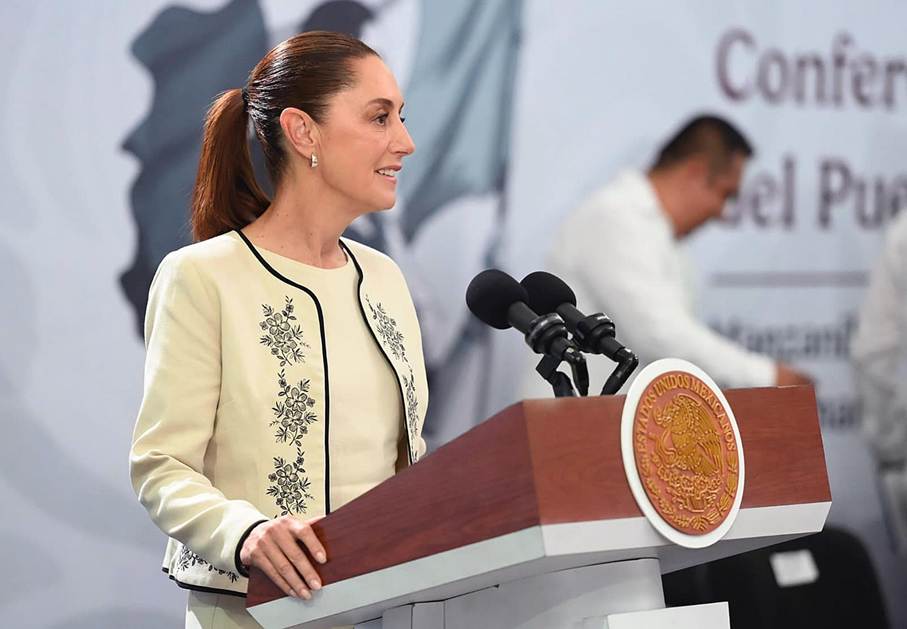
No country illustrates this rupture more clearly than Mexico. The irony is almost too sharp. Mexico was the cradle of the Cuban Revolution’s armed launch and, for decades, its most reliable regional protector. It was the only Latin American country that refused to bow to pressure from members of the Organization of American States to sever ties with Havana. Out of that history came a durable informal bargain. Mexico would defend Cuba in international forums and oppose the embargo. Fidel Castro, in turn, would not export revolution onto Mexican soil.
Under Claudia Sheinbaum and Andrés Manuel López Obrador, that protection became more than rhetoric. It became economic oxygen. As Venezuela’s shipments declined, Mexico stepped in as Cuba’s top oil supplier. Yet the notes make clear how unstable that posture always was. Mexico depends exceptionally on trade with the United States. Once the Trump administration threatened crippling tariffs on countries providing fuel to Cuba, Sheinbaum halted all oil exports and shifted instead to food and medicine.
That decision captures a harsh geopolitical truth. Even the Latin American government, with one of the deepest historical reasons to back Cuba, has concluded that open defiance now costs too much. The old special relationship survives in sentiment, but not in the one commodity Cuba most urgently needs.
Brazil’s position differs in form but is similar in substance. Luiz Inácio Lula da Silva’s government continues to express moral concern. The New York Times quoted Celso Amorim, Lula’s chief foreign policy adviser, warning that escalating pressure to asphyxiate the island ultimately victimizes the entire population. He also argued that coercion would likely harden the regime rather than soften it. This interpretation is familiar in Latin American diplomacy, where U.S. sanctions often reinforce the nationalist reflexes of targeted governments.
Still, Brazil is limiting its help to humanitarian aid. Petrobras, despite its far greater production capacity, has not supplied fuel. Amorim pointed to the risk of secondary sanctions and retaliatory measures. Behind that caution lies a second layer of reality. Brazil’s left is no longer dealing with Cuba in the political climate of another decade. The debt tied to the Port of Mariel still lingers. Jair Bolsonaro turned support for Cuba into a weapon against the Brazilian left. Lula now faces a competitive reelection battle against Flavio Bolsonaro. Meanwhile, Cuba’s internal repression has weakened sympathy even inside the Workers Party’s own hardcore.
Matias Spektor, quoted by The New York Times, stated bluntly that Cuba’s treatment of domestic opposition has made it very difficult even for hardline cadres of the Workers Party to support the regime openly. This statement may be one of the most significant in the entire regional narrative. Cuba is not only losing oil; it is losing moral patience.
A Hemisphere Realigns Around Pressure
The broader regional landscape is turning against Havana from multiple directions simultaneously. Venezuela, once Cuba’s primary post-Soviet rescuer, lost that role following the capture of Nicolás Maduro, the killing of Cuban advisers in an attack, and the U.S. takeover of Venezuela’s oil industry. Ecuador expelled Cuban diplomats. Nicaragua ended visa-free travel for Cubans, closing an important migration route. Guatemala, Honduras, and Jamaica terminated agreements involving Cuban doctors, reducing one of the government’s crucial sources of hard currency.
All of this amounts to more than diplomatic bad weather. It is a regional realignment. Cuba is increasingly isolated at the precise moment its economic weakness is becoming visible across borders through migration. Since 2020, the notes say, an estimated 2.75 million people have fled Cuba. The exodus is now reshaping countries once tied to Cuba, mainly as a symbol. Brazil has seen the largest surge, with Cubans becoming the top nationality seeking asylum there in 2025, surpassing Venezuelans for the first time.
This migration has political consequences. Lillian Guerra told The New York Times that these migrants are “vectors about what is actually happening in Cuba.” In other words, they carry testimony, challenge nostalgia, and complicate romanticized perceptions of the crisis in countries now absorbing its human cost.
Cuba’s current weakness matters geopolitically far beyond Havana. The island is no longer merely a diplomatic cause or ideological symbol. It has become a test of the extent to which Latin American governments can maneuver amid domestic pressure, migration, economic dependence, and Washington’s retaliation. Additionally, it provides the regional right with a new unifying rhetoric. Nayib Bukele, a prominent figure on the right, joined other leaders at a summit in Florida where Donald Trump declared that Cuba had been brought to its knees and was in its final moments.
That may prove premature. Cuba has survived many declarations of its end. But something real has changed anyway. The region that once embraced Cuba as a badge of autonomy is now treating it as a risk, a burden, or a warning. And that may be the most consequential shift of all.
Also Read:
Latin America Watches Cuba’s Prison Gesture and Washington’s Old Reflexes