By NAN Business Editor
News Americas, NEW YORK, NY, Fri. Mar. 20, 2026: Guyana is on track to fully repay ExxonMobil billions of dollars in oil development costs by the end of 2026, marking a major milestone in the country’s rapidly expanding oil economy.
But even as that financial burden clears, a critical question remains unanswered: When will Guyana actually receive its full 50% share of oil profits?


According to ExxonMobil Guyana President Alistair Routledge, the country could wipe out the remaining US$5 billion in recoverable costs this year – faster than originally projected – driven by rising global oil prices and increasing production levels.
Oil Boom Accelerates Cost Recovery
Guyana’s oil production, which began in 2019, has surged to approximately 900,000 barrels per day (bpd) and is expected to climb even higher with new projects coming online. At the same time, global oil prices – now hovering above US$100 per barrel, compared to earlier projections of $60 — are dramatically accelerating revenue flows.
Under the 2016 Production Sharing Agreement (PSA), ExxonMobil is allowed to recover up to 75% of oil revenues each month to cover its expenses before profits are split.
“With the current oil price environment, cost recovery could happen this year instead of 2027,” Routledge said.
That means Guyana, which has so far been receiving a smaller share of revenues – roughly 14.5% into its Natural Resource Fund – could soon see a significant increase in earnings.
The Big Question: When Does Guyana Get 50%?
Despite the positive outlook, ExxonMobil cannot confirm when Guyana will begin consistently receiving its full 50% share of profits, as outlined in the PSA.
Routledge emphasized that the actual percentage depends on multiple factors:
- Oil prices
- Production volumes
- Ongoing project expenditures
“What exactly that percentage is depends on oil price, volume, and spending levels,” he explained.
This uncertainty has reignited debate about whether Guyana is truly maximizing its benefits from one of the most lucrative oil discoveries in recent history.
$40 Billion Already Spent – And More Coming
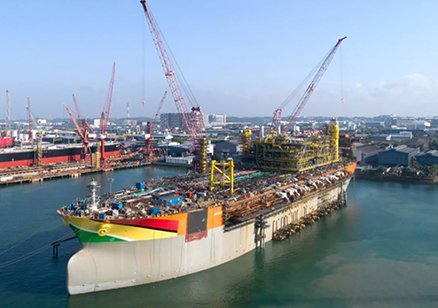
ExxonMobil has already invested approximately US$40 billion across seven approved offshore projects in the Stabroek Block.
Even as the cost bank shrinks, the company is pushing ahead with additional developments, including:
- Longtail (8th project)
- Haimara (9th project)
These projects will further boost production and revenues — but also introduce new costs into the system.
Still, Routledge insists that rising production will offset future expenses, ensuring Guyana does not return to accumulating large cost balances.
A High-Stakes Oil Future
Guyana’s rapid transformation into a global oil powerhouse is reshaping not just its economy, but the entire Caribbean energy landscape.
With production expected to exceed 1 million barrels per day in the coming years, the country is poised to become one of the top per capita oil producers in the world.
However, the structure of the PSA continues to draw scrutiny, particularly around:
- Cost recovery limits
- Profit-sharing timelines
- Transparency in financial flows
Boom or Balance?
For now, Guyana stands at a pivotal moment.
On one hand, soaring oil prices and production gains are accelerating revenue and clearing billions in debt to ExxonMobil.
On the other, the timeline for fully realizing its 50% profit share remains uncertain, leaving many to question how much of the oil boom is truly benefiting the country – and when.
As global energy markets shift and new projects come online, the stakes for Guyana have never been higher.
The oil is flowing. The money is growing. But the full payoff is still a waiting game.
