The biggest obstacle to electric-vehicle charging infrastructure is turning out to be the neighbors.
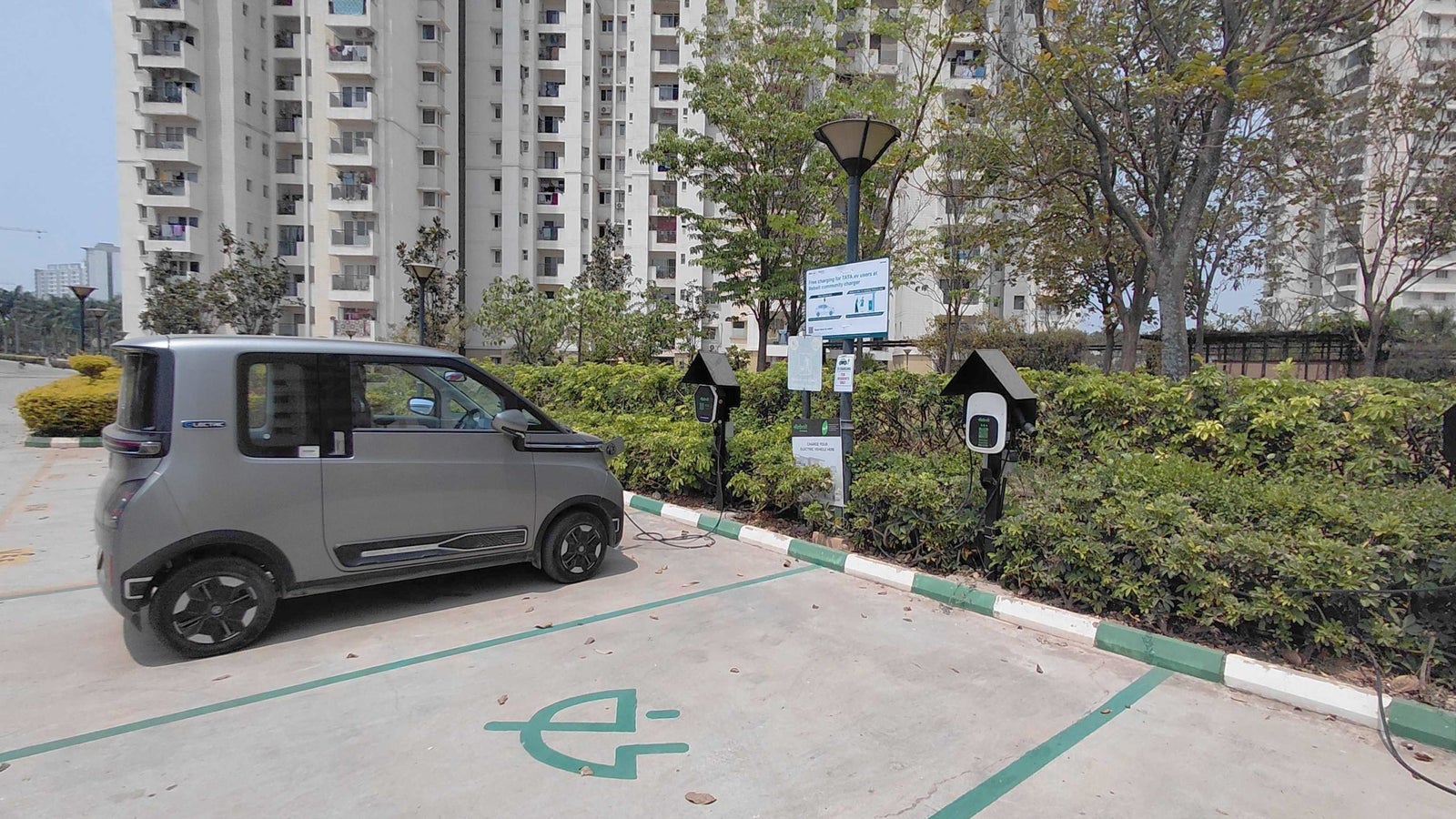
Communities across dozens of countries are fighting EV charging station installations, citing fire hazards, ugly design, lost parking, and potential property damage. In New York City, U.S., parents demanded the city pull the plug on a station near their children’s school. In Bengaluru, India, an upscale 500-apartment housing complex removed a resident’s charger last month for violating government norms. Congested neighborhoods in Malaysia’s capital, Kuala Lumpur, as well as the sparsely populated town of Narberth in the U.S. have also protested over parking.
The pushback is threatening to become a bottleneck in the global shift to electric transport, exposing a gap between climate ambitions and ground-level realities. Concerns about charger installations need to be addressed through clear policy frameworks, public-private partnerships, and community engagement, according to Amit Bhatt, India managing director of the International Council on Clean Transportation.
“The main challenges are not technological but institutional: unclear regulations, fragmented responsibilities, and lack of awareness,” Bhatt told Rest of World.
Fire concerns remain among the most stubborn obstacles. From South Korea to the U.S., authorities are banning the installation of chargers inside underground garages — despite evidence showing electric cars are far less likely to catch fire than their gasoline counterparts, and that the risk usually lies in the car’s battery, not the charger.
Norway offers a counterexample: In most high-rise buildings, charging takes place in basements without incident, showing “that with appropriate safety standards and ventilation, underground charging is both feasible and safe,” Bhatt said.
Aesthetics present another friction point. Residents of a heritage town near Melbourne protested two fast chargers in July 2023 because the “giant poker machines” clashed with the historic streetscape.
“Chargers can be built into period-appropriate lampposts, sleek metal bollards, or even hidden behind panels,” Greg Field, senior energy consultant at U.S.-based PGT Home Energy Solutions, told Rest of World. “Forcing a giant, brightly lit plastic box onto a historic streetscape is just asking for a fight, and it’s a fight the EV industry will — and should — lose.”
In European cities such as London and Paris, retrofitting lampposts has been easier because power feeds reach 240 volts versus 110 in New York, Tiya Gordon, co-founder of Brooklyn-based curbside EV charging startup noted in an October 2025 interview with consulting firm McKinsey & Company. The startup draws power from residential buildings to install on-street charging stations. Still, experts acknowledge there is no one-size-fits-all design in deploying curbside charging.
Post-installation reliability is another problem. A 2024 report found that nearly half of India’s 25,000 public chargers were non-functional. The Charge Ahead Partnership, a U.S. coalition of retailers and entrepreneurs, argues that letting gas station or grocery store owners manage chargers would bring accountability.
“If you want reliable chargers, there needs to be accountability,” Ryan McKinnon, a spokesperson for the coalition, told Rest of World. “The buck needs to stop with someone. And the best person for that buck to stop with in terms of incentive structures is someone who’s onsite and says, ‘Hey, this is my business.’”
In Bengaluru, the housing complex’s builder provided just six EV charging points for over 500 apartments. Twenty percent of the residents will use EVs within a few years, up from 3% right now, Ram Patil, vice president of the residents’ association, told Rest of World. He said most remain unaware of government-mandated installation norms, and that each new installation costs up to $4,300.
“It has to be low-voltage, and has to be done by an EV expert, not a regular electrician, according to the government rules,” Patil said.
Last year, an EV owner in Mumbai, India, filed a case and won some clarity for residents installing chargers in designated parking spaces. Many Indian state governments now require a percentage of parking spaces to be set aside for EV charging — but as the Bengaluru case shows, these allocations remain scarce and slow.
A November 2025 survey found that millennials worry “ugly” chargers lead to property devaluation, but EV chargers can increase property value by up to 7% in residential spaces and 15% in commercial properties, according to the Urban Land Institute.
In India, where EV penetration is still low at 7.8%, properties with charging stations cost 2%–5% more, and the price increases by 5.8% if multiple chargers are available, Santhosh Kumar, vice chairman of real estate consultancy Anarock Group, told Rest of World.
“Buyers who care about the environment are more likely to buy homes with chargers and are willing to pay more for them,” Kumar said. “Tenants pay extra for charging access in the housing society, and societies are quickly adopting this feature.”
Standardized rules, consistent incentives, and predictable timelines are essential, according to Stephanie Valdez Streaty, director of industry insights at Cox Automotive. Utility and city officials need to lead on grid capacity and permits, while site hosts take ownership of user experience, Valdez Streaty said.
Most resistance ultimately stems from social worries rather than technological flaws, Andrew Murphy, CEO of green hydrogen startup Oxford Hydrogen, told Rest of World. The concerns may be exaggerated, he said, but they demand respect.
“Though fears about safety or house prices are overstated, people have a right to care about how their surroundings look and feel,” Murphy said.