Mexico is seeking to reintegrate international experts into the Ayotzinapa investigation, reopening a deep regional wound. This effort goes beyond the forty-three disappeared students; it tests Latin America’s ability to confront state crime, military secrecy, and longstanding official evasion.
A Case That Never Stayed in the Past
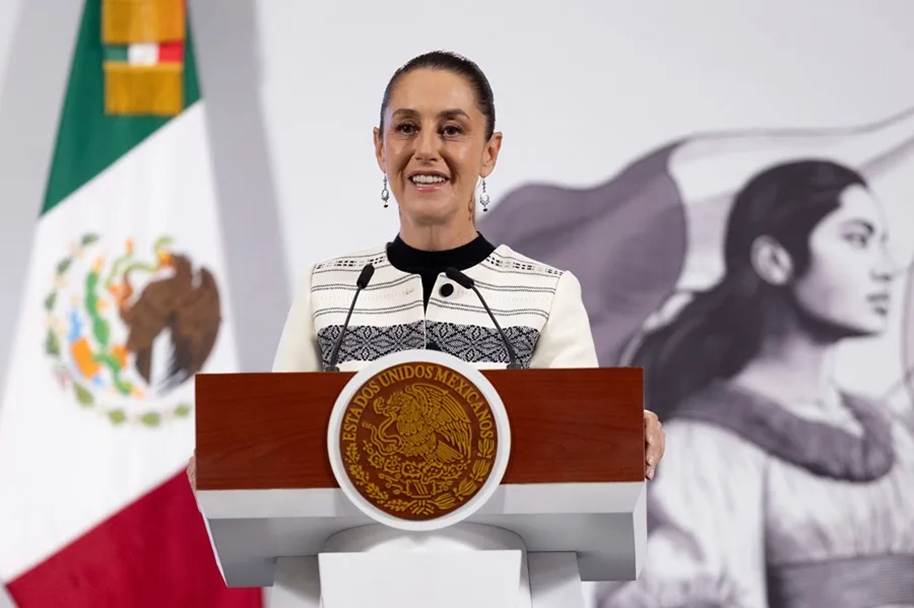
When President Claudia Sheinbaum announces negotiations to bring back international experts for the Ayotzinapa investigation, she is not just revising a legal process. She is confronting a national legacy of distrust. The disappearance of the forty-three students from Ayotzinapa Rural Teachers’ College in Guerrero has never been a simple criminal case. The records repeatedly label it as a crime of the state.
That description matters, and not only for Mexico across Latin America. This description matters beyond Mexico. Across Latin America, it reflects a history where governments, police, soldiers, intelligence agencies, and criminal networks often overlap. They share information, protect each other, and sometimes create false narratives that wear down public demand for justice.
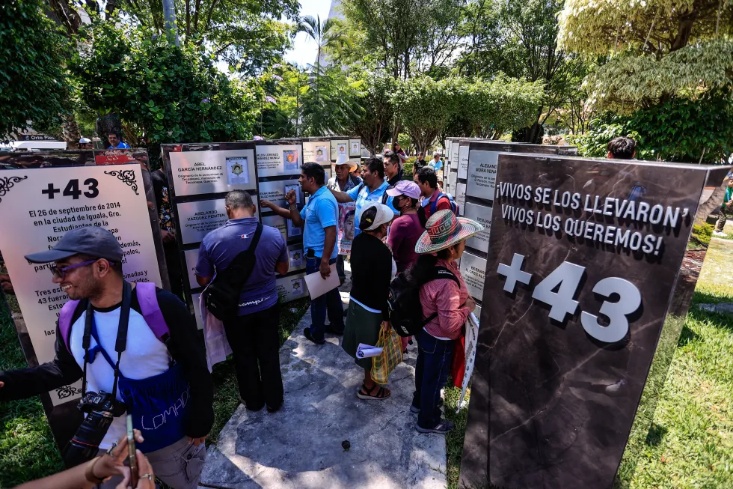
The students went to Iguala to take buses and travel to the commemoration of the repression against students in nineteen sixty-eight. What followed, according to the notes, was a chain of attacks, detentions, disappearances, injuries, and killings involving municipal police, other security forces, civilians tied to Guerreros Unidos, and a landscape already shaped by surveillance, persecution, and force. The notes make clear that others were attacked too, including the young players of Los Avispones and civilians caught in the same night of violence. This was not a single point of horror. It was an operation that spread through streets, roads, vehicles, institutions, and bodies.
This is why the potential return of the GIEI is significant. Established through an agreement among the Inter-American Commission on Human Rights, victims’ representatives, and the Mexican state, the group spent over eight years challenging the official narrative with evidence. They revealed investigative failures, contradictions, and the fragility of the so-called historical truth. When their contracts ended and they declined to continue, citing government obstruction, the message was clear: the state itself still resists the truth.
This effort is not just about restarting a process. It questions whether the state is willing to accept a truth that may implicate it more deeply than it prefers.
The Region Knows This Pattern Too Well
Latin America should consider this moment carefully. Ayotzinapa was never an isolated Mexican tragedy but a clear example of how impunity persists by fragmenting reality. Violence occurs first, followed by confusion, then a narrative that minimizes responsibility, limits the chain of command, isolates blame to local actors, and shields larger institutions. The notes document this pattern clearly.
The initial official construction centered on incineration at the garbage dump in Cocula and on a narrower frame of local collusion. Later reports, investigations, and the work of the GIEI and related bodies pushed far beyond that, pointing to deeper participation by regional criminal groups, municipal authorities, state and federal actors, and elements of the armed forces. The notes also describe a fake narrative assembled under pressure, testimony obtained under torture, evidence altered or hidden, and the systematic obstruction of lines of inquiry that might have touched more powerful institutions.
Sheinbaum’s move carries political significance beyond Mexico. Latin American democracies often claim to have left behind the darkest twentieth-century habits but retain many reflexes. Security institutions remain opaque, prosecutorial systems are compromised, documents vanish, and victims’ families are told to wait, endure, and accept partial truths as substitutes for justice. Ayotzinapa became emblematic because the families rejected this script and revealed how modern democracies can still act like old regimes when facts threaten powerful interests.
The notes highlight another key regional reality: international oversight has been essential, not ornamental. The Inter-American system, the GIEI, the Equipo Argentino de Antropología Forense, and other external or semi-independent bodies were established because domestic credibility had collapsed. Latin America continues to learn this hard lesson: where institutions are weak or captured, sovereignty without accountability becomes a shield for silence.
This explains why the debate over military documents is critical. A judge ordered the army to release relevant materials. The GIEI had repeatedly requested these documents with limited success. Sheinbaum called the court decision questionable, stating the defense ministry had already provided what was required. This tension lies at the core of the issue. Across Latin America, democratic governments still struggle to subordinate military archives, narratives, and secrecy to civilian truth. The question is not just whether documents exist but whether democracy can accept what they reveal.
What Mexico Decides Here Will Echo Across Latin America
If the GIEI returns with meaningful access, thorough analysis of phone records, and freedom to pursue new leads, Mexico will send a vital message to the region: even the most compromised cases can remain open to truth. This will not erase the damage, resurrect the students, or undo years without convictions. But it will affirm that time does not automatically favor impunity in Latin America.
If the return of international experts becomes a symbolic gesture, a negotiation yielding process without access, or a managed performance of concern, Ayotzinapa will reinforce a different lesson. It will show that despite scandal, evidence, arrests, apologies, truth commissions, shattered narratives, and years of struggle, the state can still protect its deepest silences.
There is another important aspect that Latin America should recognize. The Ayotzinapa students were not abstract victims. They came from a rural teachers’ college with a long history of resistance, political suspicion, and state hostility. The notes trace decades of pressure on rural normal schools, repression, ideological targeting, and the treatment of poor, organized, left-leaning students as problems to be contained. This background shows that Ayotzinapa was not only about criminal collusion but also about which lives the state has long deemed disposable.
This is why the case still resonates widely. It reveals several Latin American truths: the closeness of authority and criminal power, the vulnerability of the poor, the fragility of official truth, the vital role of families in preserving memory, and the reliance on international scrutiny when national institutions close ranks.
Mexico now faces a choice: let this wound remain a monument to obstruction or, however late, a test of democratic honesty. Latin America should watch closely. The region has too many disappeared, sealed archives, grand speeches about justice, and a long history of waiting for the truth to fade. Ayotzinapa has resisted that fate for years. The question is whether the state will finally stop resisting it.
Also Read:
Mexican Death in ICE Custody Haunts Latin America’s Fragile Diaspora