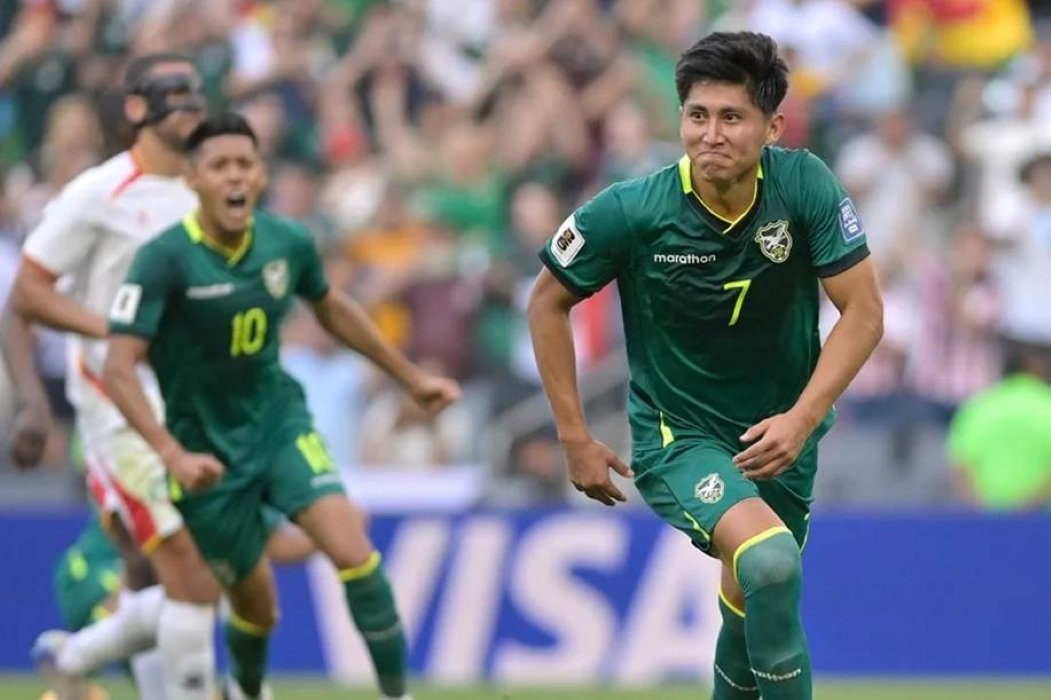
Bolivia’s comeback against Suriname was more than just a playoff win in Mexico. It brought back an old World Cup dream, challenged the belief that Bolivian football only thrives at high altitude, and reminded Latin America that it still craves fresh stories.
A Win That Refuses to Stay Small
Bolivia is now just ninety minutes away from reaching the World Cup for the first time since 1994, when the tournament was last held in the United States. That fact alone would be enough to spark memories. But the way they got there—coming from behind to beat Suriname 2-1 in Monterrey—gave the win a deeper meaning for Bolivia and Latin America.
This was not a quiet, technical victory. It was a late, nerve-heavy reversal shaped by pressure, anxiety, and the feeling that history was leaning in close. Suriname struck first through Liam van Gelderen after half-time. Bolivia looked in real danger of becoming exactly what skeptics had always said they were: a team that could breathe at home in El Alto but not beyond its own borders. Then the match bent. Moises Paniagua equalized late. Miguel Terceros converted a penalty soon after. And with that, Bolivia moved from worry to one more step from the biggest stage in football.
That swing matters because Bolivian football has long carried a familiar yet limiting reputation. The notes state it plainly. Seventeen of Bolivia’s twenty qualifying points came in home games played in El Alto, at 4,100 metres above sea level. That included the famous 1-0 win over Brazil in November, the result that pinched the playoff spot from Venezuela. The numbers encouraged a certain reading of Bolivia, one that many in Latin America would recognize instantly. Dangerous at altitude, exposed elsewhere. Useful at home, doubtful abroad. The sort of team that inspires affection, maybe even curiosity, but not quite trust.
So this comeback in Mexico carries political meaning within the football map of the region. It suggests Bolivia may be trying to escape the old geographical trap of its own story. Nations in Latin America know what it is to be defined by one condition, one cliché, one structural handicap. For Bolivia, in football, that condition has long been altitude. The comeback against Suriname does not erase that past. But it complicates it. It says this team wants to be seen as more than a mere physiological inconvenience.
That is why the victory feels larger than one playoff semi-final. It is a small act of narrative rebellion. Bolivia did not win on a mountain this time. They won in Monterrey, with tension in the air and elimination close enough to touch.

The Crowd Carried an Older Longing
The atmosphere around the match also said something important about the wider region. Huge numbers had travelled to Mexico hoping to see Bolivia take a purposeful step toward a first World Cup since 1994. The notes say Bolivian supporters made up the majority of the 33,547 crowd, comfortably outnumbering their opponents from Suriname. That detail matters more than it seems.
In football, crowds are never only spectators. Sometimes they are evidence. Here, they were evidence of how deeply a World Cup return still matters to a country that has lived so long at the edge of global football’s main room. Bolivia’s fans did not come merely to witness a match. They came to will the country past a psychological border it has struggled to cross for decades.
That speaks to something broader in Latin America. The region is rich in football identity, but that identity is not shared equally. Some nations live with the certainty that qualification is theirs sooner or later. Others live with longing, with memory, with the ache of almost. Bolivia belongs to that second group. So does Suriname, in a different way. The notes describe Suriname as barely given hope of reaching the World Cup at the start of qualification, an unfancied side with little pedigree and no history of reaching a major tournament. That, too, is a familiar Latin American football condition: talent without inheritance, promise without the old institutions of prestige.
For a while in Monterrey, Suriname seemed ready to stretch that condition into something bigger. Their lead through van Gelderen felt deserved. Henk ten Cate’s team, in the manager’s first game after taking over in December, created the better opportunities in the opening half. Joel Piroe, making his debut for Suriname after switching allegiances from the Netherlands earlier this year, missed two gilt-edged chances alone. The World Cup came back into sight for them then, briefly and cruelly.
That fleeting possibility is part of why the night matters regionally. Latin America and the Caribbean often speak about football in the voice of the giants. But nights like this reveal a different map, one full of teams trying to escape old ceilings. Bolivia’s victory will be celebrated in La Paz and far beyond, but Suriname’s heartbreak also belongs to the same regional story. It was another reminder that the outer edges of the footballing continent are alive with ambition, even when the door does not open.
A Team Learning How to Outgrow Its Past
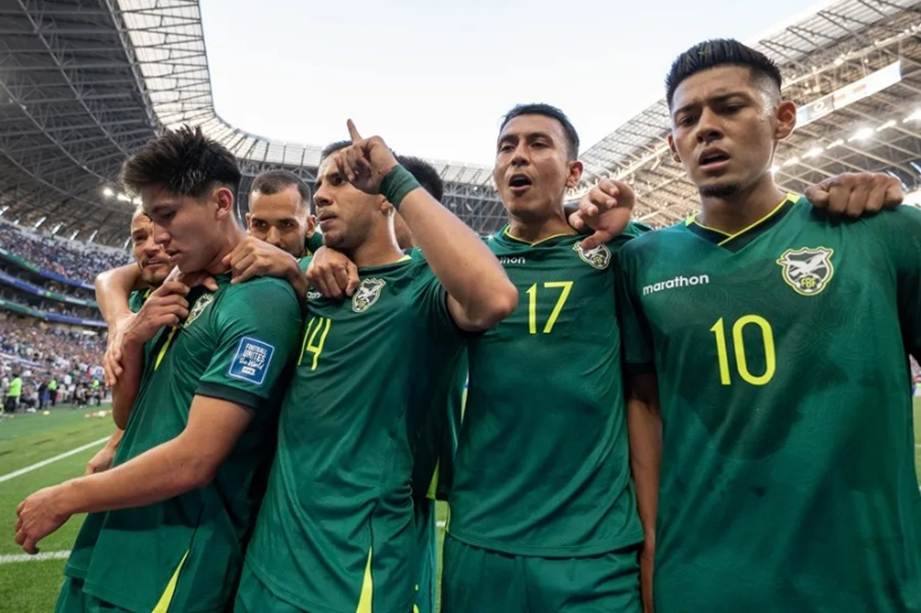
If Bolivia now stands one match from the World Cup, it is not only because it survived. This side is building a new self-image under Oscar Villegas. The notes say the late fightback will only fan optimism that this could be Bolivia’s moment under him, and that belief is tied to the idea of a rebuilt, youthful team. That phrase carries real weight. Rebuilt teams do not just change personnel. They try to change emotional habits.
This match had the shape of an old Bolivian disappointment. Away from home. A deserved deficit. A crowd suddenly becomes nervous. Suriname is pushing the game into uncomfortable spaces. And then Bolivia responded in a way that suggested something sturdier. Paniagua’s finish with eighteen minutes left altered the emotional weather. Juan Godoy then drew the foul that led to Terceros’ penalty. By the end, Suriname was throwing bodies forward and caution to the wind, but Bolivia held on.
Guillermo Viscarra’s role in that should not be forgotten. The notes call him the hero, and with reason. Late in the first half, during a period of heavy pressure from Suriname, he made a sprawling save to deny Leo Abena after neat interplay had unpicked Bolivia’s defense down the right. The stop was so forceful that he needed lengthy treatment afterward. He could not prevent van Gelderen’s goal later, but his earlier intervention turned out to be one of those moments that gain value only in retrospect. World Cups and the roads leading to them often hinge on precisely that kind of save.
So what does Bolivia’s comeback mean to Latin America? It means that the region’s football story is healthier when it makes room for countries like this to renew themselves in public. It means old reputations are not always permanent. It means a team long treated as dependent on height and home conditions can still travel and force belief to travel with it.
It also means something harder and more human. Latin American football is full of countries that know what it is to wait, to remember a brighter year, to keep telling themselves that maybe this cycle, maybe this generation, maybe this coach, maybe now. Bolivia has lived inside that maybe for a long time. After Monterrey, it lives a little closer to something stronger.
Now, Iraq is the only thing standing between Bolivia and a return to the World Cup. That sentence is simple, but for Bolivia, it carries three decades of yearning. For the region, too, it carries a small but unmistakable promise: that the map of who gets to dream on the biggest stage is not yet fixed.
Also Read:
Hispanic Pride Turns a Spurs Slur Into a Border Lesson