Brazil hit hardest as Latin America adjusts to Trump tariffs after one year
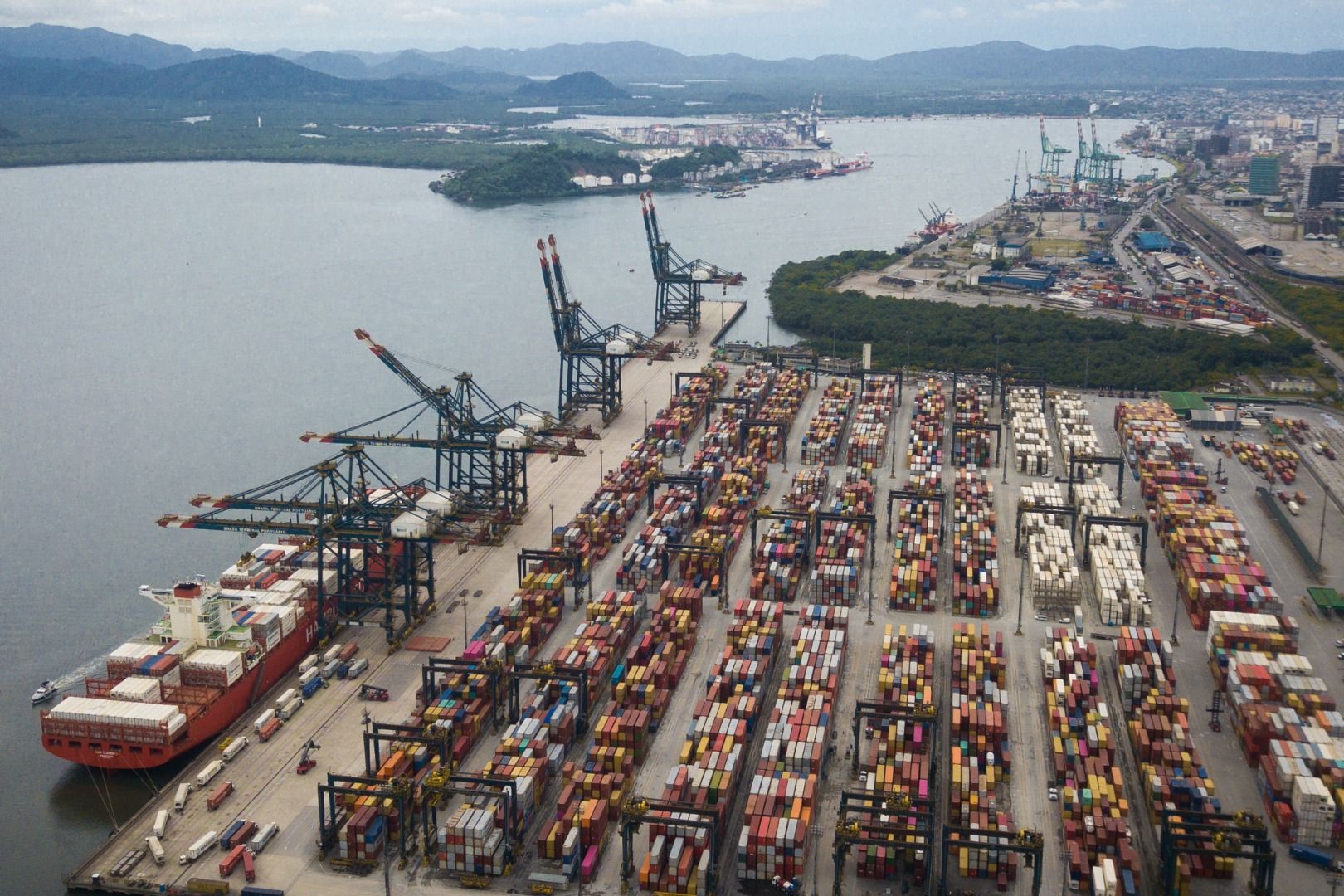
The region shows uneven results one year after the start of Washington’s tariff war. Photo: Brazil’s Santos port (APS)
One year after the Trump administration launched its tariff offensive against more than 180 countries, Latin America presents a mixed picture: some economies lost competitiveness in the U.S. market, while others redirected exports or negotiated agreements to cushion the blow.
Brazil bore the heaviest burden. An additional tariff of up to 50% imposed by Washington slashed its sales to the U.S. market by some $1.5 billion between August and December 2025, hitting sectors including timber, metals, plastics, rubber, and fishing. Exports to the United States, Brazil’s second-largest trading partner after China, fell 6.6% in 2025 to $37.72 billion.
Brasilia partially offset the decline by boosting sales to China (6%), Europe (6.2%), and its Mercosur partners — Argentina, Uruguay, and Paraguay — (26.6%), but closed the year with a trade surplus of $68.3 billion, its lowest in three years. Following a U.S. Supreme Court ruling in February 2026 that struck down the original tariffs, the replacement global scheme — initially set at 10% and raised to 15% the next day under Section 122 of the Trade Act — levels the playing field against other competitors, according to EFE.
Mexico was excluded from the so-called reciprocal tariffs but faced a general 25% levy on its imports. Washington later exempted 85% of goods covered by the USMCA free trade agreement, though steep rates remain: 50% on steel and aluminum, 25% on vehicles and auto parts, and 50% on copper products.
Argentina managed to cushion the 10% tariff through political engagement with Washington. President Javier Milei’s government negotiated a deal to eliminate tariffs on 1,675 products, still pending ratification, while Argentine exports to the U.S. market grew nearly 29% in 2025.
Uruguay cemented the United States as its fourth-largest export market, with a 30% jump in 2025 shipments concentrated in beef. Paraguay deemed the global 10% tariff manageable, with beef as its leading product and the United States as its third destination.
Colombia sustained and even increased its exports, with the fishing sector growing more than 11%, though a third of its exportable goods remain subject to tariffs. Chile benefited from copper’s exclusion but faces higher costs in sectors such as fruit, salmon, and timber.
Ecuador’s growth could slow to 7% in 2026 due to U.S. tariffs. A trade deal announced by President Daniel Noboa’s government will free 53% of non-oil exports to the United States. The Dominican Republic paid roughly $400 million in tariffs at the 10% rate and is negotiating a deal to lower them.
Bolivia, with limited exposure to the U.S. market, has used the shifting landscape to reorient its economic policy and seek American investment.