As the final six World Cup places are decided in one week of playoffs, Bolivia and Jamaica turn a qualifying footnote into a regional test, showing how Latin America enters the biggest tournament yet with pride, pressure, and unfinished ambitions.
A Final Door for the Region
There is something fitting, and a little cruel, about the last stretch of qualifying hinging on playoff nights in Mexico. Not grand speeches, not continental certainty, not tradition’s comfort. Just a few matches and fragile openings. For some countries, the road to the biggest World Cup ever still narrows to ninety minutes.
That is where Bolivia and Jamaica now sit, even if they arrive from different football worlds. One comes from South America, the other from the Caribbean, but both are suddenly carrying something larger than their own badge. In a tournament expanding to 48 teams and spanning the United States, Canada, and Mexico, their presence in the intercontinental playoff tournament says something important about Latin America and the wider region. Expansion creates opportunity, yes. But it also exposes who still has to fight through the side door.
European teams are chasing four places in winner-take-all matches, while the intercontinental playoff tournament in Mexico will decide the remaining two spots. In that tournament, Bolivia and Jamaica are still alive, joined by Congo and Iraq in the final two matches. Jamaica will face Congo. Bolivia will play Iraq. The decisive games are set for Tuesday in Guadalajara and Monterrey.
For Latin America, that matters beyond sport. Football in this part of the world has always been entangled with status and hierarchy. Who qualifies directly, who must survive detours, who arrives as host, who arrives by ordeal. The World Cup does not just reflect the level of play. It reflects regional weight, institutional consistency, and the uneven geography of power inside international football.
Mexico, of course, is already in as a co-host. So are the United States and Canada. South America already has Argentina, Brazil, Colombia, Ecuador, Paraguay, and Uruguay qualified. North America, Central America, and the Caribbean already include Curacao, Haiti, and Panama. On paper, the region is present. In practice, these playoff matches show that presence is still stratified. Some nations walk through history or structure. Others have to knock until their hands hurt.
The New World Cup Is Bigger, Not Necessarily Fairer
The expansion from 32 teams in Qatar to 48 now has a democratic look. More places. More flags. More room for the game’s outer edges to enter. But Latin America has reason to read this carefully. Bigger does not always mean fairer. Sometimes it just means the old inequalities are rearranged across a wider stage.
Look at Europe in these final days. There will be sixteen European teams at the World Cup, more than from any other continent. Eight of them are still competing for the last four European spots, including Italy, a four-time champion, trying to avoid missing a third consecutive World Cup. Even Europe’s uncertainty comes wrapped in abundance. There are enough places for heavyweight failure to still feel dramatic rather than terminal.
The situation feels different in the intercontinental bracket. Here, the format itself carries a certain political truth. Six teams arrived from different confederations. Two from CONCACAF, one each from Asia, Africa, South America, and Oceania. Only two will advance. This is FIFA’s language of inclusion, but it is also FIFA’s language of sorting. The margins are small, the routes unequal, and the burden often lands on nations outside football’s richest centers.
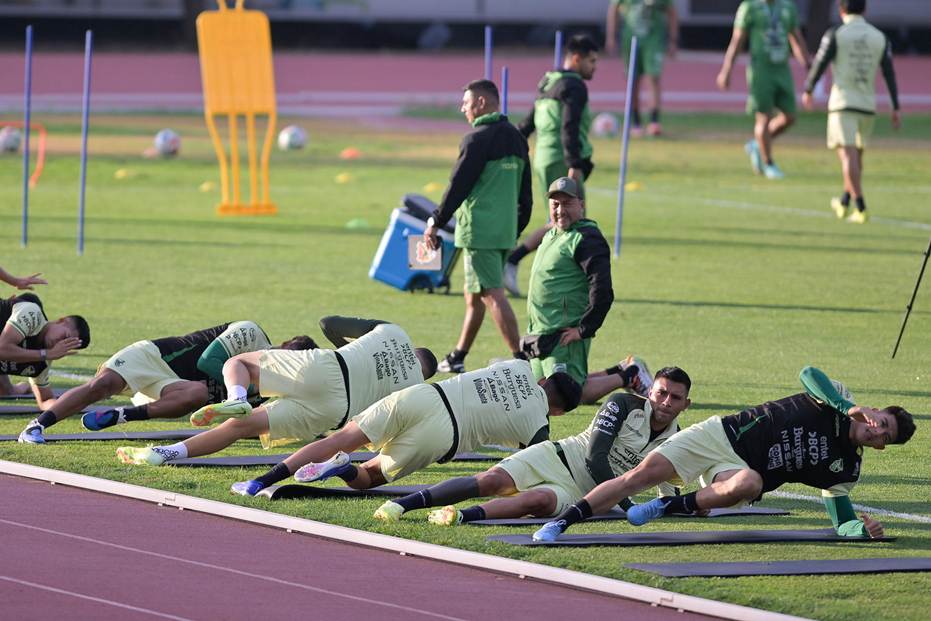
That is why Bolivia’s presence aches for South America. It reminds the region that, even in an era of expansion, not every South American team steps forward with the old aura of inevitability. Bolivia does not come into this playoff as a giant fallen on hard times. It arrives as a nation still longing to transform regional belonging into a lasting football presence on the highest stage. If it reaches the World Cup, it won’t simply add another South American name. It will crack open the continent’s emotional map, reshaping who gets to represent its soul on the grandest stage in North America.
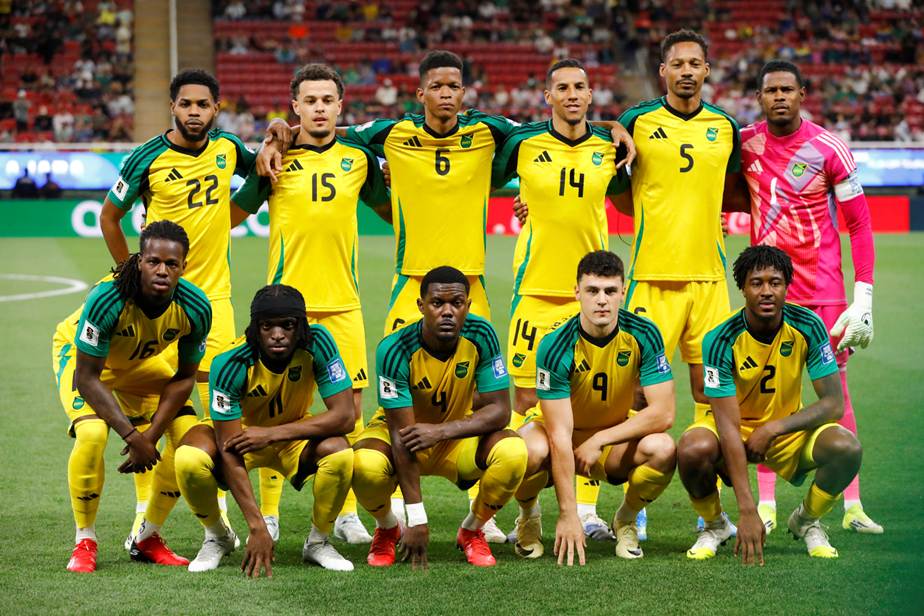
Jamaica’s place burns with a different, urgent charge. The Caribbean has long lived inside football’s larger conversations without ever truly holding the reins. When Jamaica rises to a stage like this, it yanks the Caribbean out of mere decorative inclusion and into genuine consequence. A win over Congo wouldn’t just send Jamaica forward—it would ignite the claim that the Caribbean is not merely tethered to North America, Central America, and the broader Latin American orbit for administrative convenience. It is part of the story, hungry for its own seat at the table.
What Mexico Hosts, the Region Feels
There is another layer here that Latin America should take note of. The intercontinental playoff tournament is being staged in Mexico, while the World Cup itself will open at Azteca Stadium in Mexico City on June 11 and end on July 19 at New York-New Jersey Stadium. That creates a symbolic bridge between qualification and spectacle. Mexico is not only a co-host. It is also the terrain where other countries now come to settle, whether they belong in the final field.
That gives Mexico a particular kind of regional centrality. Not the centrality of conquest or command, but of staging, passage, and visibility. Guadalajara and Monterrey become more than venues. They become waiting rooms of ambition for countries still trying to enter the world’s largest sporting stage. For Latin America, that is significant. It shows the region not as a peripheral supplier of talent, but as a site where the tournament’s final architecture is being built.
And yet the emotional core this week belongs to teams still at risk. Bolivia and Jamaica are compelling because they are not secure. They embody the football anxiety Latin America knows intimately. Representation is never abstract—it is won by exhausted players, anxious families, and countries that know a World Cup place can mean visibility, dignity, and a fleeting shift in global perception.
By Tuesday night, the field will be complete. Europe will have settled its last arguments. The Intercontinental tournament in Mexico will name its final survivors. For Latin America, though, the outcome stings deeper than numbers. This week aches with the knowledge that the region enters the forty-eight-team World Cup stronger and prouder, yet still unbalanced, larger but not liberated from old pecking orders. And in that tension, Bolivia and Jamaica become more than playoff teams; they become the trembling, defiant pulse of a region clutching at belonging one desperate qualifying match at a time.
Also Read:
Bolivia Moves One Match from the World Cup and Regional Relevance