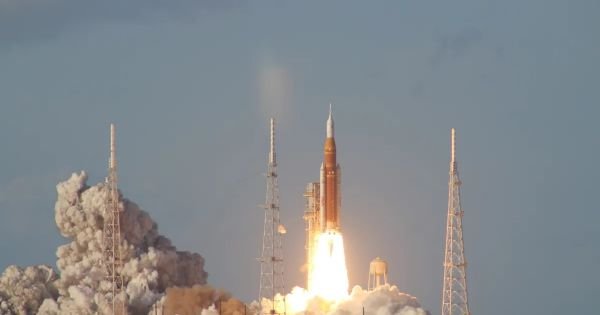
Artemis II lifts off successfully: humanity heads back to the Moon after half a century
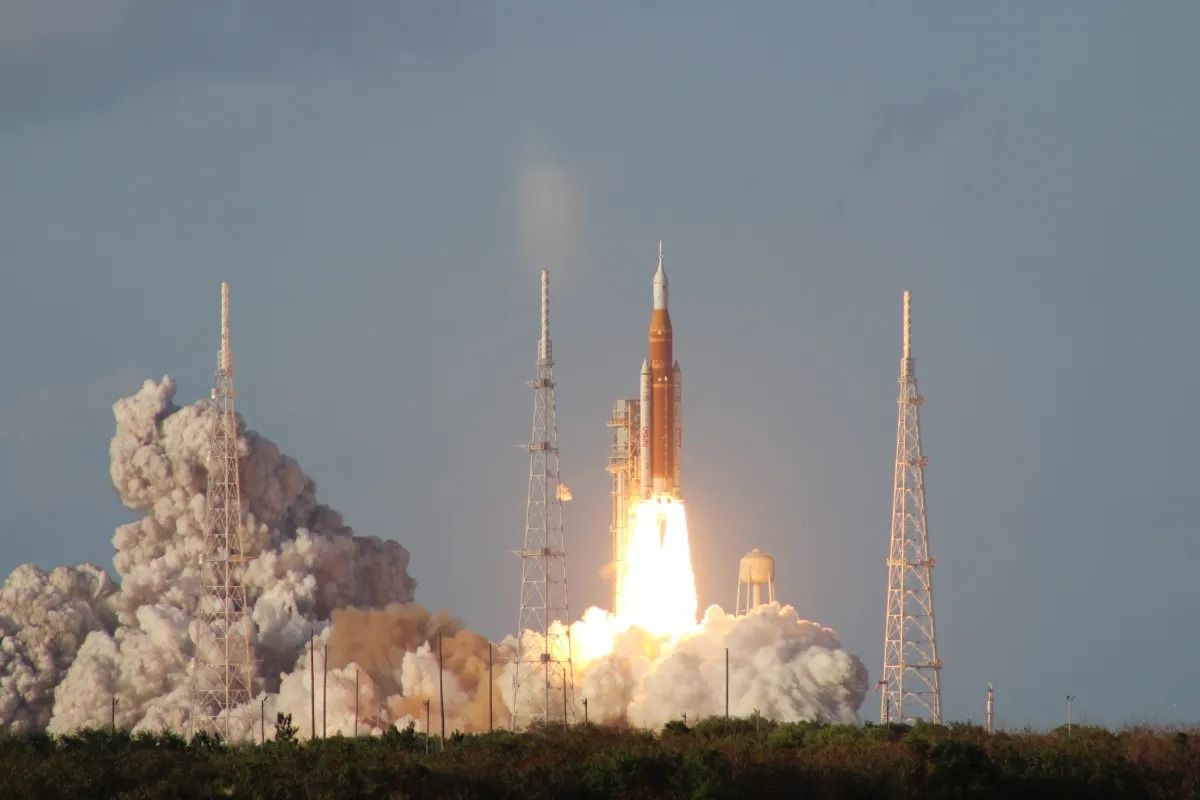
Artemis 2’s objective is not to land on the Moon but to validate the Orion spacecraft’s life-support, navigation, and communication systems with a crew on board
NASA’s Artemis 2 mission launched Wednesday at 6:35 p.m. EDT from Launch Complex 39B at the Kennedy Space Center in Florida, marking the first crewed mission beyond low Earth orbit since Apollo 17 in December 1972 — 54 years ago.
Astronauts Reid Wiseman (commander), Victor Glover (pilot), Christina Koch (mission specialist), and Jeremy Hansen (mission specialist, Canadian Space Agency) are traveling aboard the Orion capsule on an approximately 10-day journey that will take them around the far side of the Moon before returning to Earth for a splashdown in the Pacific Ocean expected on April 10.
Liftoff came with a slight delay from the opening of the launch window at 6:24 p.m. as ground crews resolved issues with the launch abort system, designed to extract the crewed capsule in the event of a failure during the first minutes of flight. The SLS (Space Launch System) rocket generated 8.8 million pounds of thrust at liftoff, powered by its twin solid rocket boosters and four RS-25 engines.
Liftoff.
The Artemis II mission launched from @NASAKennedy at 6:35pm ET (2235 UTC), propelling four astronauts on a journey around the Moon.
Artemis II will pave the way for future Moon landings, as well as the next giant leap — astronauts on Mars. pic.twitter.com/ENQA4RTqAc
— NASA (@NASA) April 1, 2026
After eight minutes of flight, the SLS core stage shut down its engines and separated after exhausting its liquid hydrogen and oxygen tank. The Orion spacecraft subsequently deployed its solar arrays while remaining attached to the interim cryogenic propulsion stage (ICPS), which will provide the additional thrust needed to consolidate its orbital trajectory. A trans-lunar injection burn will propel the spacecraft toward the Moon in the coming hours.
The mission will set several historic records. Glover will become the first Black astronaut and Koch the first woman to travel beyond low Earth orbit. Hansen will be the first non-U.S. citizen to reach the Moon’s vicinity. The crew will travel approximately 252,000 miles (405,000 kilometers) from Earth, the farthest distance ever reached by humans.
Artemis 2’s objective is not to land on the Moon but to validate the Orion spacecraft’s life-support, navigation, and communication systems with a crew on board, laying the groundwork for future lunar landing missions planned for 2028.
President Donald Trump celebrated the launch on his Truth Social platform. God bless our incredible Astronauts! he wrote. We are winning in space, on Earth, and everything in between […] and the whole world is watching.