What did Milei say about Falklands oil and why does it matter for Sea Lion?
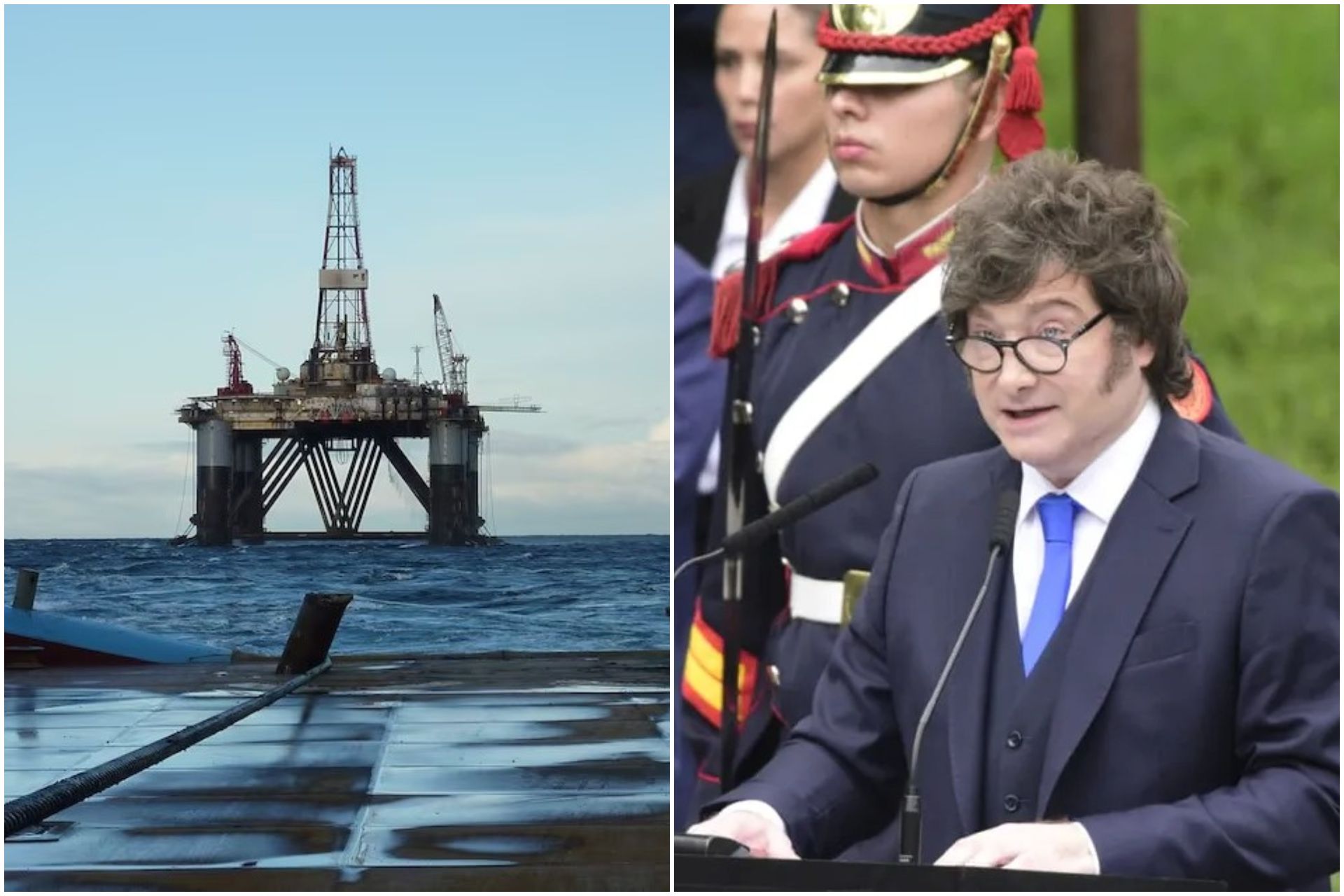
We act with determination against unilateral and illegitimate activities that seek to exploit resources belonging to the Argentine people, the president said
Argentine President Javier Milei warned Thursday that his government will respond with all necessary diplomatic measures to protect the country’s interests in the face of the advancing Sea Lion oil project, operated by Rockhopper Exploration and Navitas Petroleum in the North Falklands Basin. The remarks, delivered during the ceremony marking the 44th anniversary of the war, represent the Milei government’s firmest stance yet on a project that has just cleared a decisive financial milestone.
We act with determination against unilateral and illegitimate activities that seek to exploit resources belonging to the Argentine people, the president said in his address at Plaza San Martín in Buenos Aires, in a direct reference to the final investment decision (FID) announced by both companies last December, as reported by EFE.
Sea Lion is the largest oil development project underway in the South Atlantic outside Brazil. The field, discovered in 2010 by London-listed Rockhopper Exploration, reached its FID on December 10, 2025, after more than a decade of delays, financing setbacks, and regulatory hurdles. Navitas Petroleum, an Israel-based company, operates the field with a 65% stake, while Rockhopper holds the remaining 35%.
The total project cost is estimated at $2.1 billion. Phase 1 targets 170 million barrels with peak production of 50,000 barrels per day, with first oil planned for 2028. Phase 2 is expected to recover an additional 149 million barrels. The field holds total estimated resources of 917 million barrels, according to an independent evaluation by Netherland, Sewell & Associates conducted in 2025.
The development plan involves connecting subsea wells to a floating production, storage, and offloading vessel (FPSO) through a network of subsea infrastructure. Navitas has signed key contracts for drilling, subsea equipment, and the charter of the Aoka Mizu FPSO, previously deployed in waters west of Scotland. The Falkland Islands Government approved the development and production plan for phases 1 and 2, granting exploitation licenses valid for 35 years.
Argentina considers all hydrocarbon exploration and production activities in the waters surrounding the islands illegal, viewing them as part of its continental shelf under a sovereignty dispute. The United Nations recognizes the controversy as a colonial situation pending bilateral resolution between Buenos Aires and London, though it does not rule on resource ownership.
Milei’s warning comes at a moment of apparent contradiction: his government has strengthened ties with the United Kingdom, is negotiating the lifting of arms purchase restrictions, and is considering a presidential trip to London between April and May. However, the president has maintained since taking office that the sovereignty claim over the islands is non-negotiable, though he has conditioned any territorial recovery on the wishes of the islands’ inhabitants.
Neither Rockhopper nor Navitas has publicly commented on Milei’s remarks. Both companies have moved forward in recent weeks with contracting services for the start of subsea work planned for this year.