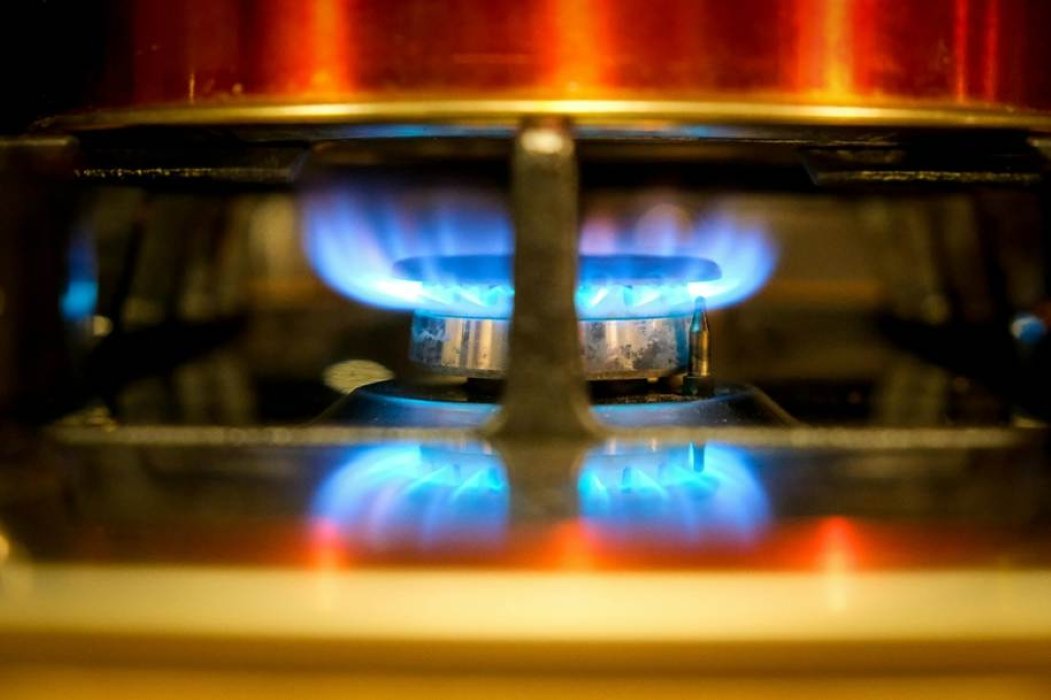
Rising liquefied petroleum gas prices are putting Brazil’s flagship free cooking gas program under real strain, exposing how war-driven energy shocks can travel quickly into kitchen life, electoral politics, and the fragile economics of helping millions survive inflation with dignity.
When Global War Reaches the Stove at Home
In Brazil, the kitchen has always been political. Not in the abstract way politicians like to speak about “household budgets” and “consumer confidence,” but in the immediate, bodily sense. A meal has to be cooked. A canister has to arrive. Someone has to carry that cylinder up the hill, down the dirt road, into the apartment block, into the back room of a rural home. When cooking gas fails, policy stops sounding like policy. It becomes hunger, improvisation, delay, and humiliation.
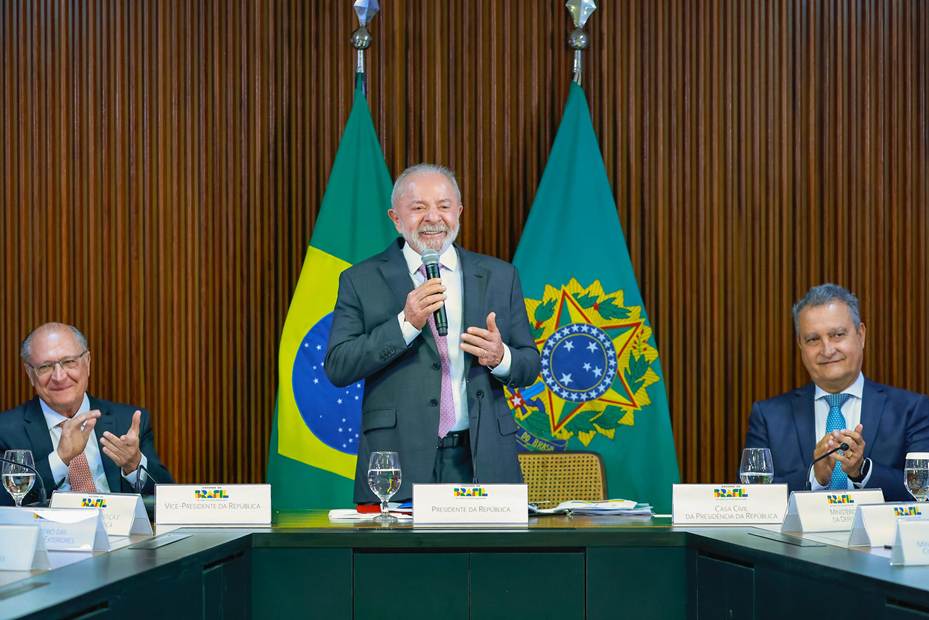
That is why the pressure now building around the government’s free cooking gas program matters so much. Reuters reports that surging energy prices could undermine the Brazilian initiative known as People’s Gas, a program designed to provide free cooking gas to around fifty million people. Launched by President Luiz Inacio Lula da Silva in November as his flagship energy initiative while preparing for an October reelection bid, it was meant to convey a clear message about the government’s priorities. The state would step into one of the most intimate spaces of poverty and try to shield families from one of the most basic costs of daily survival.
Now that promise is running into the violence of world events and the hard math of distribution.
The United States and Israel’s war on Iran has sharply pushed up liquefied petroleum gas prices in Brazil, according to Reuters. After an auction by Petrobras drew premiums of up to double its reference prices, Lula reacted angrily and vowed last week to cancel the tender. On Monday, the government announced a new subsidy of 330 million reais for LPG imports, saying it would soften the war’s impact on domestic prices. At first glance, that looks like a quick correction. But the deeper problem described by distributors, resellers, and analysts is more structural and more politically dangerous.
LPG from that auction has already reached distributors, and those higher costs have already been passed on to resellers across Brazil, Reuters reported. But under the current rules of the People’s Gas program, resellers cannot simply charge more because their costs have risen. That leaves them caught between public need and private loss.
Jose Luiz Rocha, who heads the Abragas gas resellers association, told Reuters that because profit margins are already small, resellers end up losing money. Many, he said, are threatening to leave the program. That warning lands heavily because the entire policy depends on those last-mile sellers. The government can announce a benefit in Brasilia. Petrobras can run an auction. Congress can lower a budget line. But in the end, someone local still has to accept the voucher, move the canister, absorb the cost, and keep the promise alive.
The Reseller Is the Weak Link and the Whole Chain
That local figure, the reseller, is where this story becomes unmistakably Brazilian. Public programs in a country of continental scale often live or die through intermediaries who are rarely treated as politically central until they begin to break. In distant corners of the country, Reuters notes, the People’s Gas program depends on resellers who are now being squeezed. If they leave, the state does not just lose a contractor; it loses a contractor. It loses the physical route through which the subsidy becomes real.
Rocha clearly described one of the policy’s traps. Once a reseller joins the program, they must remain in it for at least 3 months and, during the contracted period, cannot refuse vouchers. In ordinary times, that rigidity helps stabilize service. In a moment of extreme price volatility, it looks like a burden shifted downward onto smaller businesses.
Reuters also reports that LPG is not the only thing getting more expensive. The cost of trucking canisters has also risen alongside diesel prices, according to a source close to distributors. That detail matters. It reminds us that energy shocks rarely travel alone. They cascade. Gas becomes more expensive. Transport becomes more expensive. Margins collapse. Local sellers start doing their own survival calculations.
One small-scale reseller in Parana, speaking anonymously to Reuters, said he can no longer cover his costs and plans to stop accepting vouchers. A larger reseller in Brasilia said about ten percent of the volume he sells falls under the program, and without a price adjustment, he plans to boycott it. These are not just commercial complaints. They are early signs that a flagship social policy can become fragile when the government fixes the public price but cannot control the underlying market.
For Lula, that is a particularly dangerous kind of vulnerability. The program was supposed to function as an emblem of care, proof that the state could still meet ordinary Brazilians where they live. Instead, it now risks becoming a symbol of the opposite: a government promise that exists on paper while beneficiaries wander from seller to seller, unable to redeem it. Rocha put the political danger bluntly in remarks to Reuters. Beneficiaries, he said, will complain that they are looking for gas and cannot find where to get it. Then, he warned, it becomes a major government problem.
Brazil’s Old Social Question Returns Again
Brazil has a long history of subsidizing cooking gas for poorer households, and Reuters notes that the current government expanded that tradition, tripling the program’s reach to nearly a quarter of Brazilians. That expansion is politically powerful because it touches a deep national question: whether the state can protect low-income families not only through income transfers, but through access to the material infrastructure of daily life.
Cooking gas is one of those quiet thresholds between stability and decline. When it is affordable, family life holds together more easily. When it becomes scarce or inaccessible, households are pushed toward more precarious substitutes, more stress, more unpaid labor, and more exposure to indignity. In that sense, this is not merely an energy story. It is a story about social citizenship.
The budget dispute underneath it sharpens the stakes. Reuters reports that the government had forecast the program would cost around 5.1 billion reais this year, but Congress lowered that figure. On Monday, the government said it had budgeted around 4.7 billion reais instead. That reduction may look technical, but in a program this large, technical decisions quickly become moral ones. A narrower budget in the middle of global price volatility means someone else must absorb the shock. Right now, that someone appears to be the reseller.
Marcelo Colomer, an energy expert at UFRJ, told Reuters that some delay in price adjustments is natural. But he also said the extreme volatility since the war began has led industry players to argue that the government should rethink how it handles prices. What is needed, he said, may be an extraordinary mechanism linked to the program itself to mitigate these kinds of situations.
That may be the real lesson here for Brazil. Social protection cannot be built only around good intentions and headline scale. It also needs flexible mechanisms for when the world suddenly becomes hostile. Wars far away can still land inside Brazilian kitchens. Oil and gas markets can still decide the mood of an election. And a policy meant to display compassion can quickly expose how exposed people experiencing poverty remain when distribution systems are thin, margins are tight, and the state moves more slowly than the crisis.
So the fight over People’s Gas is bigger than one subsidy and bigger than one auction. It is about whether Brazil can defend a social promise all the way to the last mile, when global turmoil meets local survival. In a country where millions still measure politics by what arrives at home, that question is never small.
Also Read:
Brazil Turns Bankers Into Forest Guards as Amazon Politics Harden