Latin America faces fertilizer vulnerability; IICA and TFI agree joint plan amid Hormuz crisis
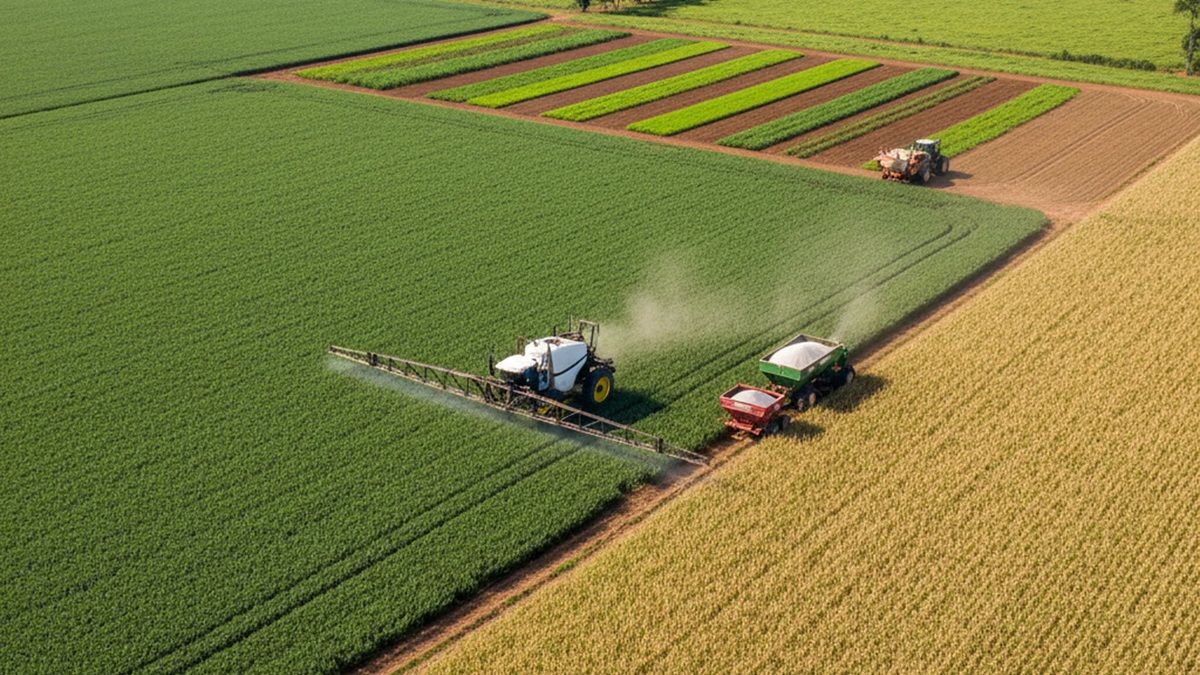
Global fertilizer supply chain faces simultaneous pressures: Chinese restrictions on phosphate exports, US tariffs that reduced nutrient imports, and the disruption of transit through Hormuz
The Inter-American Institute for Cooperation on Agriculture (IICA) and the U.S.-based Fertilizer Institute (TFI) announced a partnership to secure fertilizer supply across the Americas, amid logistical disruptions and price volatility worsened by the closure of the Strait of Hormuz due to the war between the United States, Israel and Iran.
IICA Director General Muhammad Ibrahim met this week in Washington with TFI President Corey Rosenbusch to define lines of collaboration. The two organizations will jointly produce reports on the fertilizer supply situation across the hemisphere, to be presented to the U.S. Department of Agriculture (USDA) and other relevant public and private institutions, according to an IICA statement.
The initiative addresses a structural vulnerability in the region. Latin America is heavily dependent on fertilizer imports: Brazil, the largest regional consumer, imports approximately 92% of its needs, according to data from the International Fertilizer Association (IFA). The closure of the Strait of Hormuz since March 2 disrupted key trade routes for urea and phosphate supplies from the Middle East and the Persian Gulf. Iran accounts for roughly 8% of global urea exports, and Gulf nations are major suppliers of monoammonium phosphate (MAP), a fertilizer whose deliveries were expected in April and May.
The agreement also includes developing a communication strategy to raise awareness about the region’s fertilizer vulnerabilities and the need to stabilize supply through public policy and long-term investment.
A key priority identified by IICA is boosting nitrogen production capacity within the continent. To that end, the institute will facilitate engagement between TFI and Trinidad and Tobago, a major Caribbean natural gas producer whose output is essential for manufacturing nitrogen-based fertilizers such as urea. The diversification of production sources aims to reduce the hemisphere’s exposure to geopolitical crises affecting traditional maritime routes.
Ibrahim’s visit to Washington also included meetings with USDA officials to advance a joint agenda focused on protecting the hemispheric food supply and expanding agricultural trade opportunities. The IICA-TFI agreement will be formalized shortly through the signing of a memorandum of understanding.
The partnership comes at a time when the global fertilizer supply chain faces simultaneous pressures: Chinese restrictions on phosphate exports, U.S. tariffs that reduced nutrient imports during 2025, and the disruption of transit through Hormuz, which according to the IFA particularly affects Latin America and South Asia — the regions most dependent on Middle Eastern fertilizer supplies.