Mexico’s president is testing whether unconventional gas can be sold as sovereignty instead of surrender, even as war abroad, rising electricity demand, and reliance on U.S. fuel expose the limits of energy language when insecurity suddenly feels existential.
A Climate Expert Meets the Politics of Naming
Mexico has arrived at one of those moments when the language around energy starts doing almost as much work as the policy itself.
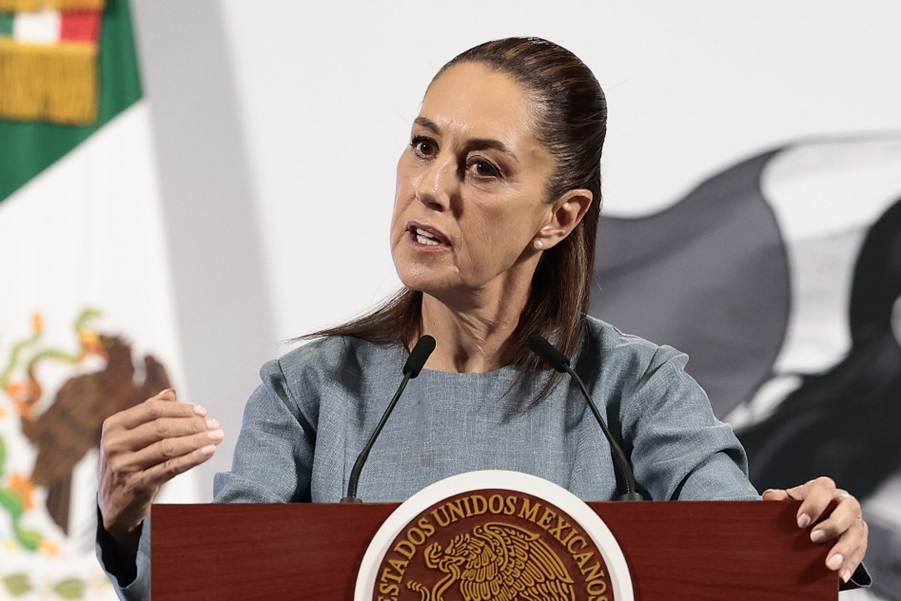
President Claudia Sheinbaum announced plans to tap unconventional natural gas deposits to reduce the country’s reliance on foreign energy, as the Iran war unsettles global markets. Yet she notably avoided saying “hydraulic fracturing,” or “fracking,” even though that is the drilling method most directly associated with extracting oil and natural gas from deep underground bedrock using highly pressurized liquid. Instead, she presented the initiative as a search for “sustainable” extraction and said environmental impacts would be minimized as much as possible.
That choice of phrasing is not cosmetic. It reveals the central strain inside Sheinbaum’s energy politics. She is a scientist and climate expert, a leader who entered office with the expectation that ecological language would matter not only as symbolism but as method. Now she is confronting the harder terrain of government, where energy security, state power, and industrial demand do not wait for moral clarity. So the word fracking is not merely being sidestepped. It is being politically reengineered.
Sheinbaum said a technical committee will spend 2 months evaluating less harmful methods, including the use of nonpotable water and reducing chemical additives. The committee will also assess the cost of those mitigations. That sounds cautious, deliberate, almost procedural. But it also underlines something important. The technical feasibility of what she is calling sustainable fracking remains a matter of significant debate among environmental scientists and energy experts. The controversy is not a side note. It is built into the proposal itself.
Her own argument shows why she believes the contradiction is worth entering. “All the gas we import comes from a type of extraction that has environmental impacts” and is “100 meters from the Mexican border,” she said, referring to fracking projects in Texas. There is a hard realism in that line. Mexico is not choosing between contamination and innocence. It is already tied to an energy system shaped by extraction methods it does not fully control. From that angle, the proposal is less a break with the existing model than an attempt to bring part of that model under national management.
Sovereignty Still Runs Through a U.S. Pipeline
That is where the idea of sovereignty begins to matter more than the technical details, at least politically.
Mexico is the world’s single largest buyer of U.S. gas. Sheinbaum acknowledged that import contracts with the United States remain secure and that the bilateral relationship is strong. Still, she argued that increasing energy sovereignty is a responsible necessity. “Is more gas needed? Yes. Can all gas be replaced? Hardly,” she said. Those two sentences do a great deal of work. They reject fantasy without abandoning ambition. They admit dependence while insisting that dependence cannot be the final model.
This is the deeper story inside the announcement. Mexico is not facing a clean energy transition in some abstract laboratory. It is facing a geopolitical moment in which foreign supply can feel stable one week and dangerously exposed the next. Sheinbaum explicitly invoked Europe’s shortage of Russian gas during the war in Ukraine and the disruptions caused by the current war in the Middle East. Her point was not subtle. A country that leaves too much of its energy life in outside hands may discover, in turbulent times, that contracts are not the same as autonomy.
Since taking power in October 2024, Sheinbaum has pledged to expand renewable energy while also maintaining firm support for Petróleos Mexicanos. This state-owned company remains central to the country’s political imagination. On Wednesday, she defended that position by saying fossil fuels still form an essential part of Mexico’s energy landscape. That is not the rhetoric of a leader retreating from climate talk altogether. It is the rhetoric of a leader trying to fit climate ambition inside a state tradition built around control of energy, national development, and the promise that sovereignty must be tangible, not theoretical.
The tension is obvious. A president known for climate expertise is now arguing that unconventional gas is part of responsible planning. Yet there is a reason this does not read simply as a reversal. In Mexico, the question is not only what kind of energy future seems desirable. It is what kind of vulnerability the state is willing to live with while that future is still incomplete. That makes the debate less pure, more political, and much harder to settle with slogans.
The Future Arrives Carrying Old Fuel
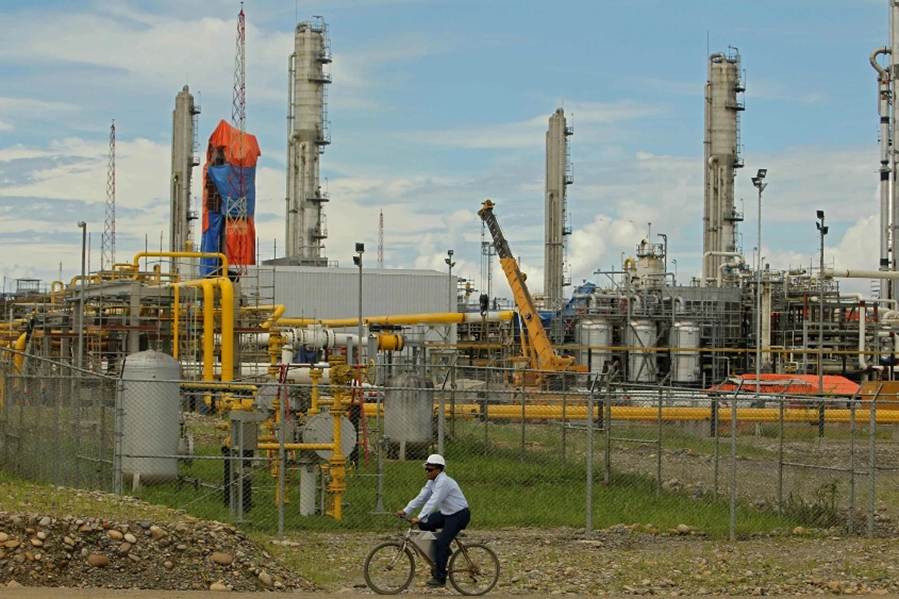
What makes the proposal even more revealing is its timing. Wednesday’s announcement comes amid a surge in infrastructure projects designed to increase U.S. gas imports. Those projects are meant to meet rising domestic electricity demand and also position Mexico as a hub for re-exporting gas to Asian and European markets.
That means Mexico is now moving along two tracks at once. On one track, the government is speaking the language of reduced external dependence and national resilience. On the other hand, it is a deepening infrastructure that binds the country even more tightly to imported gas flows and to its role inside a larger commercial network. That is not necessarily incoherent, but it is deeply telling. The state is trying to lower dependence without withdrawing from the very system that dependence helped build.
This is why the proposal is certain to spark controversy. Not only because fracking remains divisive, but because Sheinbaum is asking the public to accept a more complicated definition of sustainability than many expected from her. In this version, sustainability does not mean abandoning fossil fuel logic quickly or cleanly. It means making an already compromised energy system somewhat less harmful while using it to buy time, stability, and bargaining room.
The danger, of course, is that transitional language has a habit of becoming permanent language. Technical committees can study water use and chemical reductions. They can calculate costs and compare methods. What they cannot do is dissolve the underlying political question. If the country keeps expanding import infrastructure, keeps relying on fossil fuels as essential, and begins domestic unconventional extraction under a greener label, then the issue is no longer just whether fracking can be made less harmful. It is whether Mexico is entering a more durable gas era than its climate language would suggest.
That is what gives the whole episode its real weight. Sheinbaum is trying to govern from inside a contradiction many countries know well but rarely state so plainly. Energy transition is necessary, yet energy insecurity is immediate. Renewables matter, yet fossil fuels still hold up the structure. National dignity calls for autonomy, yet the grid still leans on external supply. Mexico’s new gas push does not resolve those conflicts. It exposes them. And in that exposure, there is something honest, if not comforting. The country is not choosing between a green future and a dirty past. It is negotiating, in full public view, how much residual risk it is willing to carry to feel less exposed the next time the world catches fire.
Also Read:
Brazil Oil Dreams Are Clearing Forest Faster Than Prosperity Arrives