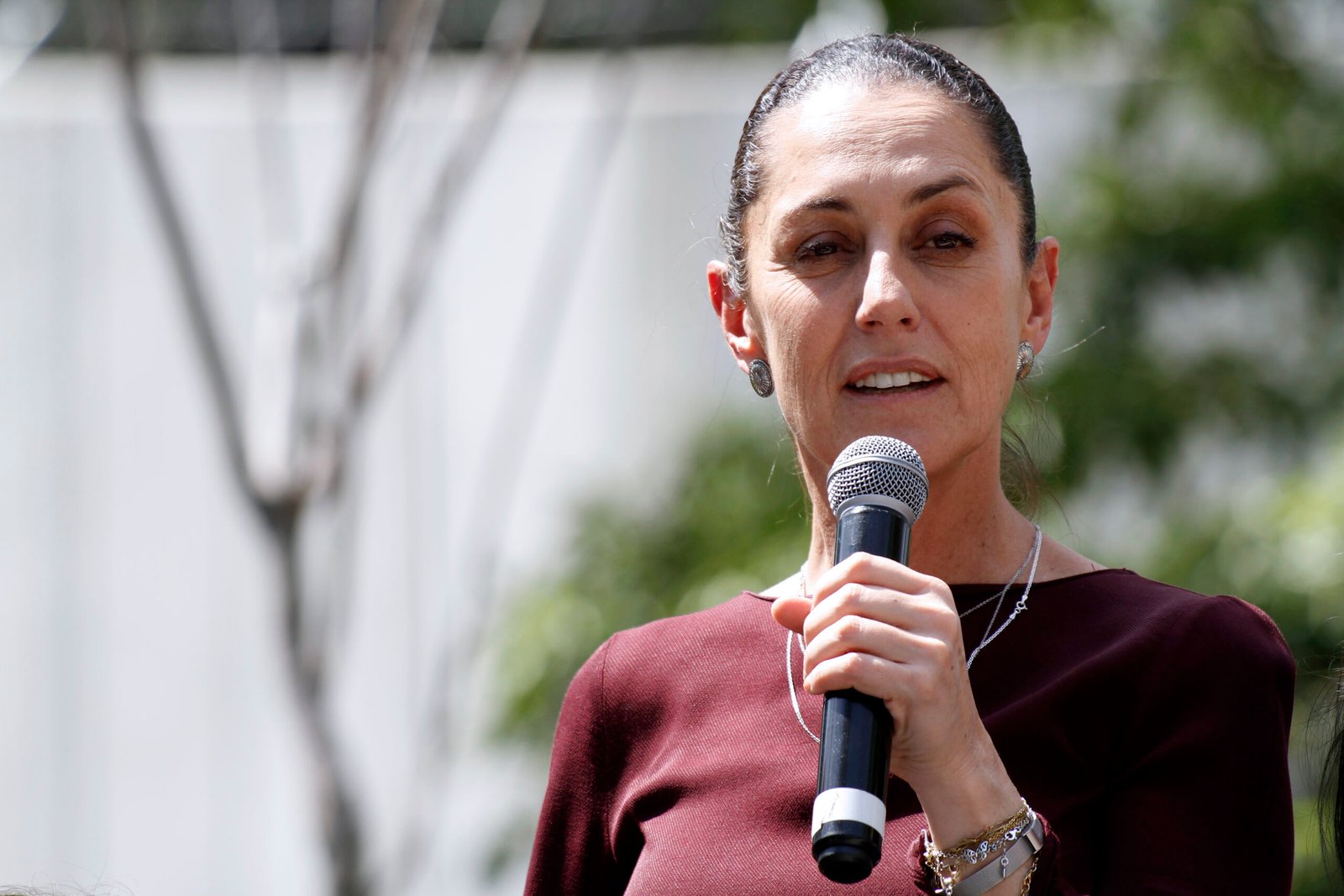
Medellín, Colombia – On Wednesday, Mexican President Claudia Sheinbaum announced plans to begin fracking in order to more than double the country’s natural gas production and “strengthen national sovereignty”.
Despite Mexico possessing 141 billion cubic feet of unconventional gas reserves, the country has hardly extracted it, instead importing more than 70% of its natural gas from the United States, making it the world’s largest buyer of U.S. gas.
Sheinbaum’s announcement signals a U-turn in her party’s traditional opposition to fracking due to its deleterious environmental impacts.
Hydraulic fracturing, or fracking, is a method of extracting oil and natural gas by forcing water, sand, and chemicals into the ground to fracture deep rock formations and allow oil and gas to flow up to the surface.
Fracking has long been controversial due to its environmental effects, such as causing earth tremors, air and water pollution, massive water consumption and increased greenhouse gas emissions.
However, in a press conference on Thursday, Sheinbaum, who is an energy and climate change scientist by profession, defended the plans to begin fracking, arguing that there are “new technologies which open the possibility of recycling water, that don’t use such powerful chemicals which are so hard to recycle”, therefore providing a sustainable alternative to traditional fracking practices. She emphasized that for all of her life, she has been “against traditional fracking.”
Sheinbaum said that a technical committee will spend two months evaluating the feasibility of these new fracking technologies.
The president’s announcement signals a departure from the historical rhetoric of her party, Morena. Andrés Manuel López Obrador, Sheinbaum’s predecessor and the founder of Morena, had previously attempted to impose a constitutional ban on the practice.
The announcement will likely also prove unpopular with people who considered Sheinbaum’s previous position on fracking when voting for her; in February a spokesperson for the Mexican Alliance Against Fracking described a potential shift towards fracking as “a betrayal to those who voted for President Sheinbaum, who said fracking would not be carried out,” and suggested that the president was “only listening to the industry and fracking promoters,” according to El País.
The spokesperson also highlighted the risks that fracking can have on indigenous communities, where it “fracture[s] the social fabric and create[s] risks for women.”
Although Sheinbaum recognizes that contracts with the U.S. for natural gas imports remain in place, the priority is to ensure energy stability in Mexico and reduce reliance on foreign powers in case of shortages caused by situations like the current war in the Middle East.
Featured image description: Claudia Sheinbaum in 2020
Featured image credit: Maritza Ríos via Wikimedia Commons