The Cuban government announced last Friday that it would free 2010 prisoners to coincide with Easter celebrations.
According to a statement by the Cuban Embassy in the United States, those released will include young people, women, adults over 60, those due for early release, foreign citizens and Cubans who reside abroad.
Although the embassy described the decision as a “humanitarian and sovereign gesture”, some speculate that the release is a response to increasing U.S. pressure on the Cuban government.
Since his re-election, U.S. President Donald Trump has repeatedly expressed his desire for regime change on the island. Though Cuba and the U.S. are currently engaged in diplomatic negotiations to de-escalate the recent significant increase in tensions between the two nations, Trump has not ruled out the prospect of an “unfriendly takeover” of Cuba.
The Trump administration’s operation to forcibly remove Cuban ally Nicolás Maduro from power in Venezuela – Cuba’s former primary oil supplier – and his three-month blockade of non-private fuel imports to the island in early 2026 indicate an aggressive American posture.
The Cuban government, however, has stated that its political system is not up for negotiation.
The regime has expressed its willingness to accept certain economic reforms which could improve its commercial relationship with the United States and liberalize its largely centrally planned economy.
Specifically, authorities have announced that Cuban Americans will be allowed to invest in businesses on the island and that remittances sent from abroad can be withdrawn in cash as U.S. dollars in Cuban currency exchange offices.
Lianys Torres Rivera, Cuba’s Chargé d’Affaires at the Cuban embassy in Washington, even revealed that Cuba was willing to allow the U.S. to participate in the island’s “economic transformation”.
Meanwhile, Trump recently declared that he had “no problem” with a Russian oil tanker loaded with an estimated 730,000 barrels of crude oil docking in Cuba.
These potential diplomatic overtures may represent the softening of the previously adversarial negotiating positions of both nations, which could indicate that a negotiated solution is on the horizon.
Was the prisoner release a concession?
The Cuban government has consistently rejected claims that its decisions are influenced by Washington. In March, the Cuban government released 51 prisoners after talks with the Vatican, but explicitly denied at the time that the release was in any way a result of U.S. coercion.
Nevertheless, Havana has used the tactic of releasing prisoners to improve bilateral relations with Washington before; in 2025 the Cuban government released over 500 prisoners early because of a deal that was made between Joe Biden’s administration and the Cuban government.
In exchange, Biden removed Cuba from the U.S. list of state sponsors of terrorism shortly before his term ended, a decision that was quickly reversed when Donald Trump came to power. But the Cuban government still upheld its end of the deal and freed the prisoners.
Some believe the latest prisoner release announcement comes in response to Washington easing the oil blockade on the island.
“Trump announced that he would allow the entry of a Russian oil tanker into Cuba and that he will assess case by case from now on the entrance of oil ships in Cuba. That is a concession, he is opening a crack in the oil blockade,” Jorge Alfonso, an independent Cuban journalist based in Mexico City, told Latin America Reports. The prisoner release is “probably the way that Cuba is responding to that”, continued the journalist.
However, Alfonso warned that this potential concession should not be misinterpreted as a sign that Cuba is willing to fundamentally change its internal, authoritarian political system: “They haven’t released political prisoners, they have only released people processed for other felonies … It is also important to note that this release is also a way for the Cuban government to alleviate pressure on the [strained] jail system regardless of U.S. pressure.”
Indeed, as of March 2026, Cuba has the second highest number of prisoners per 100,000 in the world, after El Salvador. Cuba’s poor prison conditions have begun to provoke dissent, with a protest recently breaking out in the La Canaleta jail in Ciego de Ávila because of dwindling food supplies and poor sanitary conditions.
The prisoner release may therefore be a pragmatic move rather than a sign of the regime loosening its grip; President Miguel Díaz-Canel reiterated in a recent interview on NBC (set to air on Sunday) that he has no intention of resigning.
More negotiation or confrontation?
Progress in negotiations does not automatically rule out the possibility that the United States might launch some kind of military operation to force political changes. Just two days before the Trump administration decided to attack Iran, the U.S. and Iran had been engaged in talks which reportedly produced a bilateral agreement on sanctions relief for Iran.
Despite Trump’s recent precedent of opting for military force over diplomacy, analysts believe this is unlikely in Cuba’s case.
“I do not expect a military intervention by the U.S. … I expect that there will continue to be talks between the two governments, and it is conceivable that Washington will reduce its pressure on the island in response to initiatives by Havana to open opportunities for U.S.-based businesses,” Eric Hershberg, Professor of Government at American University and expert, told Latin America Reports.
The White House’s repeated threats of regime change against Cuba could be part of a strategy that the U.S. President has used before. Hershberg explained that Trump often acts aggressively towards foes and then de-escalates before claiming an ultimate diplomatic victory.
“Cuba may turn out to be another instance of Trump-era American menacing that doesn’t achieve its purported objectives, in this instance overthrowing the Cuban political system,” concluded the academic.
Washington’s decision to strike an alliance with current Venezuelan President Delcy Rodríguez, the former vice-President under Maduro, instead of installing opposition leader María Corina Machado could suggest that Trump has little interest in changing foreign adversaries’ internal power structure.
Instead, the Venezuela case would suggest that Trump prefers obliging adversaries to align more closely with the U.S. diplomatically, rather than pushing for comprehensive regime change.
However, this preference is not necessarily shared by all of the Trump base or his high-ranking cabinet members, especially with regards to Cuba. U.S. Secretary of State Marco Rubio, for example, has a long history of calling for the current Cuban Government’s removal from power. Rubio told reporters as recently as mid-March that, for the Cuban domestic situation to improve, “they have to get new people in charge”.
The historically powerful Florida-based Cuban-American lobby is also likely to oppose any negotiation that allows the Cuban Communist Party to continue its one-party rule of the island.
Various Cuban opposition groups signed the so-called “Freedom Accord” in early March, a document which outlined the opposition’s plan for a democratic transition on the island and intention to “dismantl[e] the criminal enterprise that is the Communist Party of Cuba”.
Cuban American voters have historically supported Trump, and will likely lobby him to push for systematic internal changes in Cuba in negotiations.
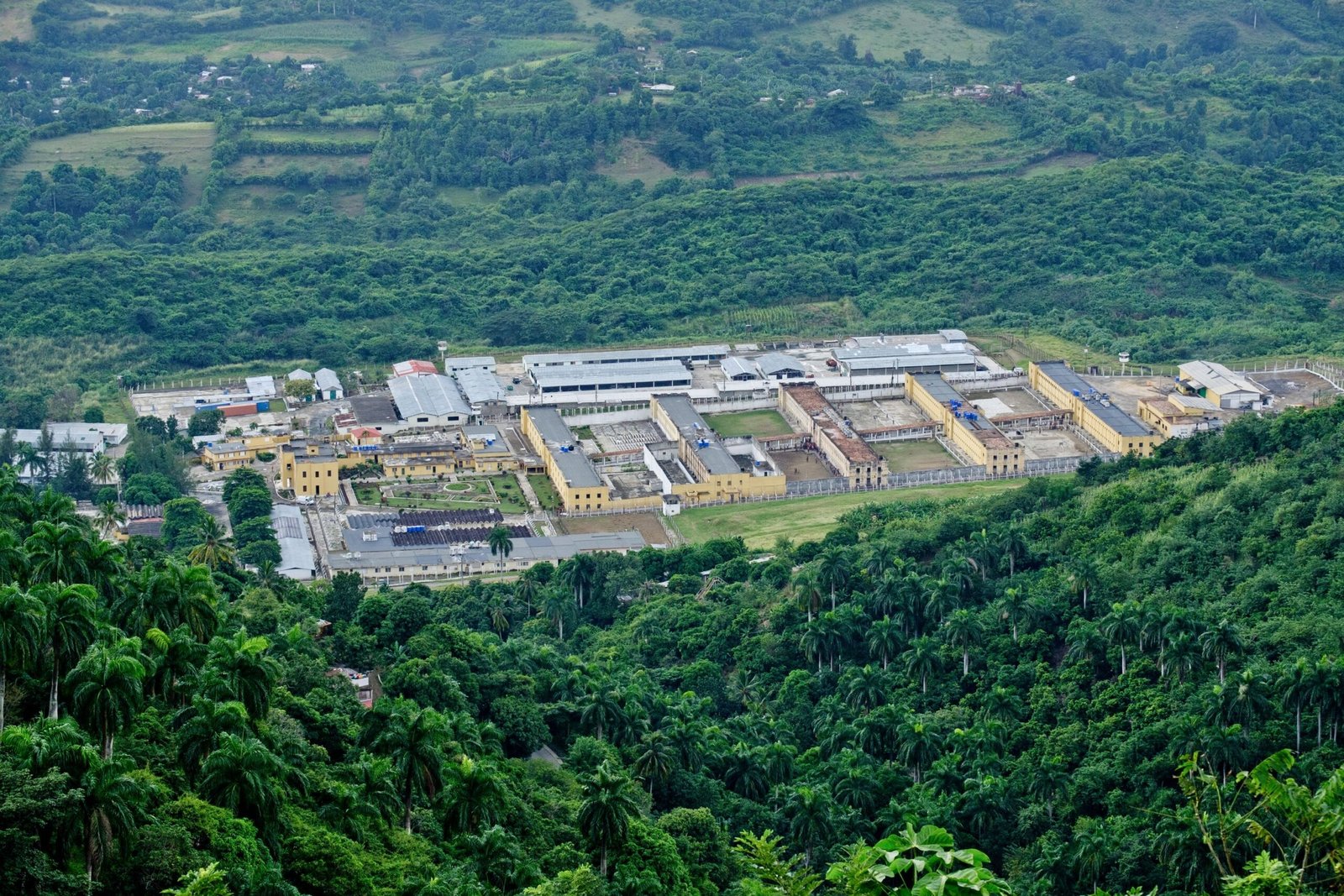
Featured Image: Boniato Prison, near Santiago de Cuba. The facility, which remains in use today, was the site of Fidel Castro’s imprisonment after the failed attack on the Moncada barracks in 1953
Image Credit: Greg0611 via Wikimedia Commons
License: Creative Commons Licenses