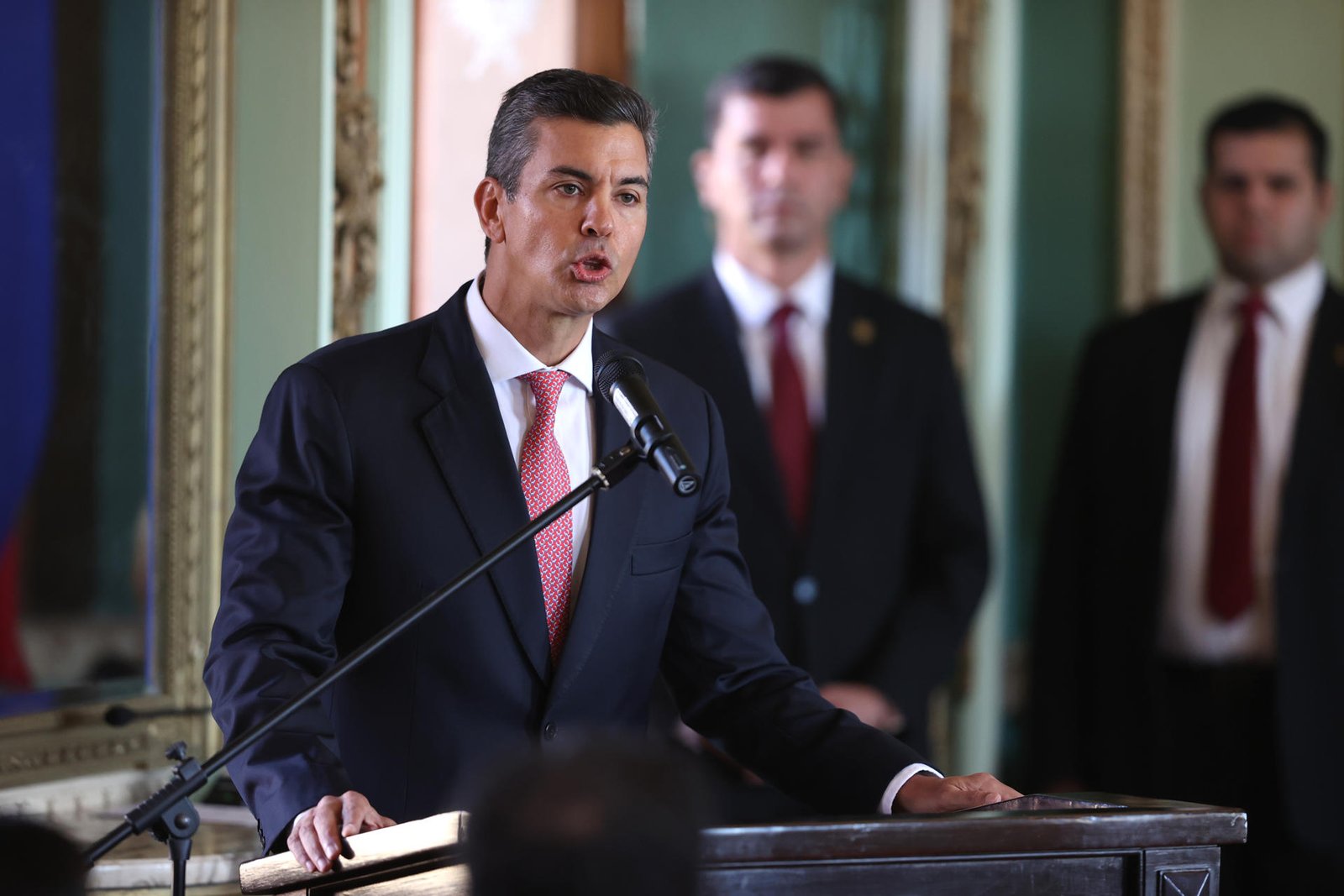
Paraguay’s rise from overlooked inland state to prized U.S. partner offers a revealing lesson for Latin America, where fiscal discipline, clean energy, and strategic clarity suddenly matter more as China expands and Washington searches for reliable allies close to home.
The Small Country Washington Finally Sees
In a report for The Washington Post, Ricardo Daniel Sasiain begins with a quiet humiliation that speaks volumes about how power works in the Americas. Most Americans, he notes, cannot find Paraguay on a map. And yet this landlocked country of close to 7 million people, hemmed in by Bolivia, Brazil, and Argentina, smaller than California, with no coastline and no oil, now sits at the center of one of the biggest strategic contests in the hemisphere, the struggle between the United States and China for influence in Latin America.
That is the first reason Paraguay matters. It has become important without ever becoming loud. Forty years ago, it lived under the military dictatorship of Alfredo Stroessner. Twenty years ago, it was still a fragile democracy, weighed down by corruption and underdevelopment. Ten years ago, it had become more stable, but remained economically modest, a country more often filed under regional footnote than strategic prize. Now the notes describe something else entirely. Paraguay has reworked its fiscal architecture, maintained budget discipline, posted 6% GDP growth last year, secured a double investment-grade credit rating, maintained one of the hemisphere’s lowest flat tax rates, and built itself on 100% renewable electricity generated by two of the world’s largest hydroelectric dams. It is even building an artificial intelligence data center powered entirely by clean energy.
That profile changes how Washington sees the country, but it also changes how Latin America should see it. Paraguay is not being presented here as a miracle or a model that every neighbor can copy. It is something more specific and more politically valuable. It is proof that a country long treated as marginal can become central when it offers what global powers increasingly want most, certainty.
That is why even Javier Milei, not a man known for handing out easy praise, held Paraguay up before its legislature as a country that embraced economic freedom, defeated inflation, kept growing, and attracted investors and residents from around the world. The quote matters because it captures the moment’s tone. In a region where politics often oscillate between overpromised transformation and chronic disappointment, Paraguay is being cast as the disciplined student who quietly got the math right while others kept improvising.
Why China Made Paraguay More Valuable
The second reason Paraguay matters is not only what it has done, but what it has refused to do.
Sasiain’s report places the country against the backdrop of China’s broad diplomatic and economic push across Latin America and the Caribbean. Since 2016, Beijing has flipped 10 countries in the region away from recognizing Taiwan. Since the turn of the century, it has signed nearly 1,000 bilateral agreements and financed roughly 2,500 development projects. Its expansion, as the piece argues, has not been merely commercial. China now has satellite ground stations in Argentina, Bolivia, Brazil, Chile, and Venezuela, facilities that the U.S. military views as potential intelligence-gathering platforms. Huawei and ZTE, both sanctioned by Washington, are already embedded in many regional 5G networks.
Paraguay, by contrast, has held firm. It remains one of only four Latin American nations that still formally recognize Taipei. It is also one of the very few countries in the region that has not allowed Chinese state firms to take control of its critical infrastructure. In Washington’s current geopolitical language, that makes Paraguay more than a friendly government. It makes it an anchor.
That is why Sasiain argues that supporting Paraguay is neither a Republican nor a Democratic position, but an American one. The phrase is worth sitting with. Whether the priority is countering Chinese influence, defending democratic institutions, or securing supply chains and energy critical infrastructure, Paraguay appears to satisfy all three. In a hemisphere where Beijing has often used trade and financing to convert economic presence into strategic leverage, Paraguay is the rare country that never opened the first gate.
A larger Latin American story lies behind that contrast. For years, the region has been told that its value lies mainly in raw materials, consumer markets, and diplomatic alignment that can be negotiated when needed. Paraguay complicates that old hierarchy. It suggests that reliability itself has become a commodity. Not only soy, not only energy, not only land or waterways, but also political stability. In a world where outside powers are scanning the hemisphere for openings, the countries that appear hardest to sway can suddenly look more attractive than the ones with grander rhetoric or flashier size.
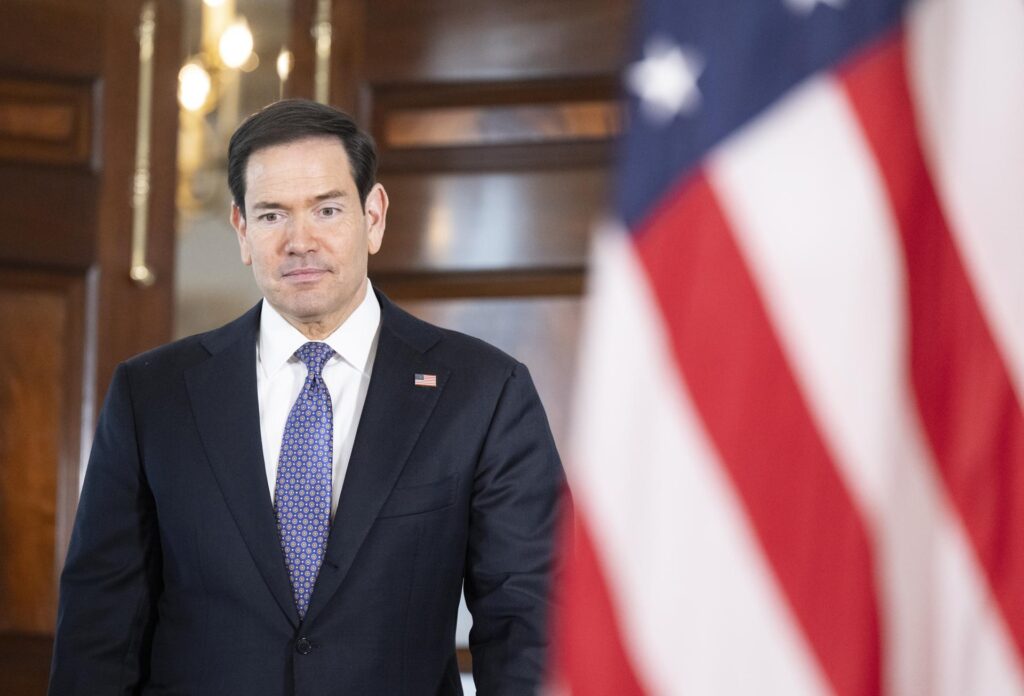
This is also where the Trump administration’s current posture comes into focus. Marco Rubio’s regional tour last year, as described in the report, reflected a doctrine of reinforcing America-aligned governments before Beijing’s economic leverage turns them into geopolitical clients. Paraguay represents the inverse scenario, a place where the foothold never fully developed in the first place. For Washington, that is less a rescue mission than a chance to reward prior fidelity.
A Bargain Built on Certainty
That logic has already begun translating into institutional form. Paraguay took part in the inaugural Shield of the Americas summit this month at Trump National in Doral, where a multinational alliance was formalized to confront organized crime, narco-terrorist cartels, illegal migration, and foreign influence. Days later, the Paraguayan government enacted a status of forces agreement that created a legal framework for the presence of U.S. security forces in Paraguay for training, joint exercises, and humanitarian assistance. Deputy Secretary of State Christopher Landau summed up the current mood in one line, saying the relationship had honestly never been better.
That is not sentimental diplomacy. It is transactional in the clearest sense, and that is precisely why it matters. Paraguay’s economic profile lines up neatly with what Washington says it wants from allies under the America First framework. The report highlights a 10% flat corporate tax, free capital repatriation, no Chinese infrastructure foothold, formal recognition of Taiwan, and an open pipeline for American engineering contracts on a commercially vital 2,050-mile waterway. These are not abstract virtues. They are offer sheets.
Just as important, the institutions are already there to deepen the relationship. The U.S. International Development Finance Corp., the U.S. Export-Import Bank, and the Inter-American Development Bank each have tools that align with Paraguay’s development path. American firms in dredging, construction, energy, agribusiness, and technology are already beginning to establish themselves before European and Chinese competitors can lock down the space.
For Latin America, this creates a revealing political mirror. The broader argument in Sasiain’s piece is not overly complicated. As China converts economic relationships into leverage, flipping Taiwan allies, building dual-use ports, and spreading surveillance-capable infrastructure, Washington has begun to value countries that seem not to be for sale. Paraguay, through multiple democratic transitions, has shown itself to be one of them.
That may be the most important part of the story. Paraguay is not being courted as an act of charity. It is being valued as a strategic self-interest. And in an investment landscape defined by volatility, dissolving rules, and ideological swings, that makes certainty feel almost luxurious. The hope, Sasiain writes, is that American business will follow Washington’s lead. The deeper lesson for the region is sharper. In this new hemispheric contest, countries do not become important only by being big, loud, or resource-rich. Sometimes they do it by holding the line long enough that everyone else finally notices what staying put is worth.
Also Read:
Peru Polls Revive Keiko Fujimori and an Unfinished National Argument