Paraguay’s abandoned Superclasico was more than a ruined match. It exposed how fan fury, fragile policing, and contested responsibility still collide across Latin American football, where stadiums often carry the pressures of class, identity, and mistrust far beyond sport itself.
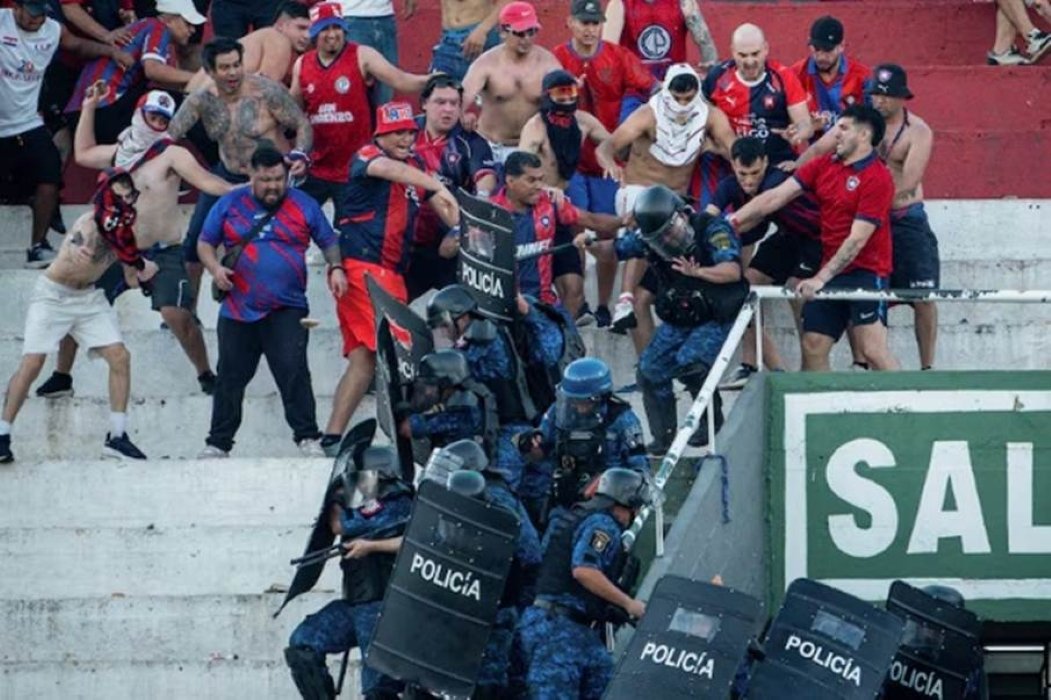
By the time hundreds of spectators were fleeing onto the pitch at Defensores del Chaco Stadium, the Superclasico had already become something darker than a title race between the top two sides in Paraguay. What should have been one of the defining sporting nights of the season dissolved into tear gas, rubber bullets, and accusation. The match between Olimpia and Cerro Porteno, both from Asuncion, was abandoned after violent clashes between fans and police turned the stands into a scene of panic.
Witnesses said the trouble began when firecrackers were detonated in the section allocated to Cerro Porteno supporters. From there, everything seems to have accelerated with the grim speed that football violence often carries in Latin America. Police moved in. Rubber bullets and tear gas were fired into the stands. Spectators spilled onto the field. Around 100 people were detained. At least six officers were reported injured, one of them seriously. A hospital spokesperson said the officers had sustained head injuries, lacerations, possible stab wounds, and other injuries.
Local police later said officers had acted immediately to ensure the safety of those in attendance and promised to identify those who instigated the conflict so they could be sanctioned and barred from future sporting events. That statement sounds firm, even necessary. But it also reveals the standard script of these nights, one that Latin American football knows too well. A derby explodes, authorities insist they reacted to protect the public, and then the argument shifts almost immediately from grief and accountability to blame allocation and disciplinary procedure.
That shift happened here, too. Paraguay Football Association rules state that a game must be forfeited by the side whose supporters forced a suspension. Olimpia president Rodrigo Nogues said his club would seek the three points from the disciplinary tribunal. Cerro Porteno president Blas Reguera, meanwhile, argued that Olimpia, as hosts, were responsible for stadium security. Even before the smoke fully clears, the institutions around the match begin speaking the language of advantage, liability, and interpretation.
That is one of the most revealing parts of the whole episode. Football violence in Latin America rarely exposes just one failure. It exposes several at once. The fans who ignite it, the police who escalate or mismanage it, the clubs that inherit and inflame rivalries, and the authorities who often seem better prepared to assign penalties after the fact than to prevent collapse in the first place.
The Derby as a Social Pressure Cooker
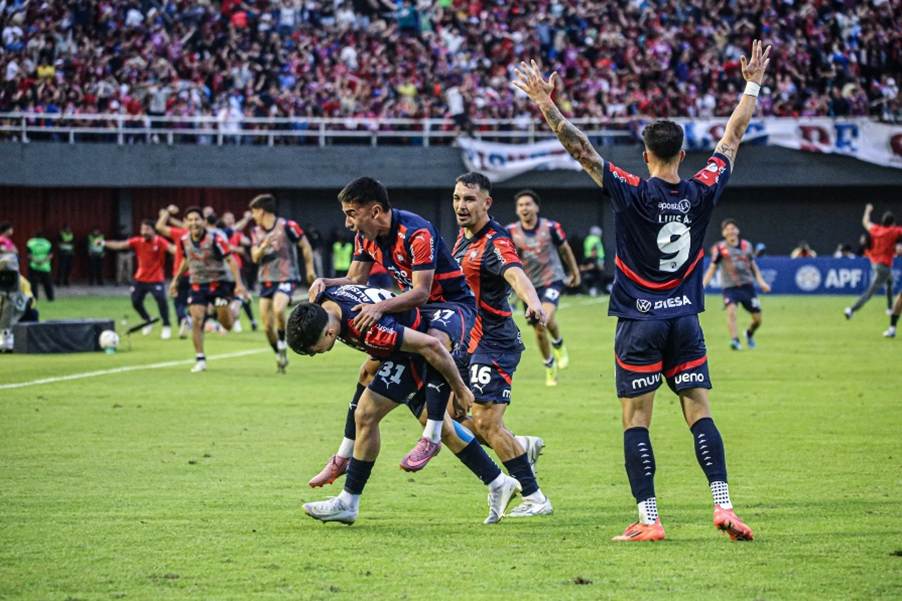
A Superclasico in Paraguay is never just a fixture. When Olimpia and Cerro Porteno meet, the match carries hierarchy, memory, neighborhood belonging, and emotional inheritance. The table adds more pressure. Six points separated league leaders Olimpia from second-placed Cerro Porteno, the 2025 Torneo Clausura winners, at the top of the Division de Honor. In that setting, tension is not an accident. It is part of the atmosphere long before the first whistle.
That matters because in Latin America, football has long functioned as a public stage where broader anxieties can be acted out under the cover of sport. Rivalries are fed not only by points and trophies, but by identity itself. Club loyalty often arrives through family, place, and class position. Stadiums become spaces where belonging is loudly defended, and humiliation is felt collectively. This does not excuse violence. But it helps explain why certain matches feel combustible even before anything goes wrong.
The firecrackers described by witnesses are telling in that sense. A single act in the wrong section of a stadium can spark far more than mere disorder. It can trigger the old emotional machinery of insult, invasion, and retaliation. Once that happens, the police are no longer entering a calm civic environment. They are entering a crowd already primed by rivalry and suspicion. If their response relies quickly on projectiles and gas, the logic of containment can turn into the logic of panic. Spectators stop reading the situation as a security operation and start living it as a stampede.
That is part of why the problem persists across the region. The matchday security model often remains reactive, muscular, and improvised. It is built on the assumption that order can be restored once trouble begins, rather than on the harder work of reducing the social temperature before it gets there. And when the model fails, each institution finds someone else to point at. Fans blame the police. Police blame agitators. Clubs blame the hosts, or the visitors, or the federation. The federation points to its rulebook. Responsibility splinters into legal fragments, even though the public experiences the event as one total failure.
There is history in that pattern. Latin American football has long lived with the uneasy overlap of passion and threat, spectacle and disorder. The derby is celebrated precisely because it feels intense, tribal, and alive. Yet those same qualities can slide into danger when institutions mistake intensity for something they can choreograph without consequence. The region has often wanted the emotional electricity of football without confronting the political and social conditions that make that electricity so unstable.
Why Paraguay’s Night Matters Beyond Paraguay
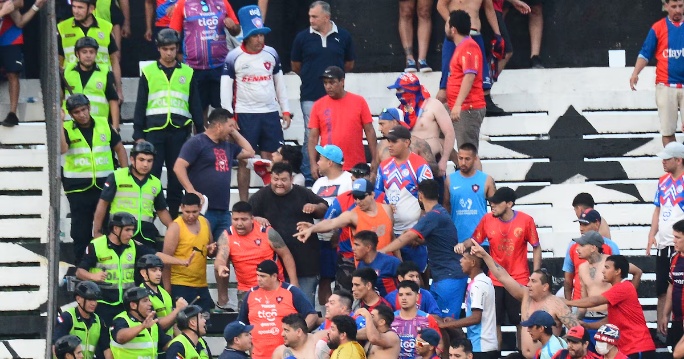
What happened in Asuncion matters because it shows how thin the line can be between football as civic ritual and football as institutional embarrassment. The images of hundreds of spectators escaping onto the pitch, not to celebrate but to flee, cut against the mythology that stadiums are controlled spaces once security is in place. They remind everyone that a match can quickly become ungovernable when trust between fans and authorities collapses.
For Paraguay, that is a warning not only about one derby, but about the credibility of matchday governance itself. If the country’s showcase fixture can descend into this kind of chaos, then the issue is larger than one bad decision or one violent pocket of supporters. It raises questions about preparedness, crowd management, and the wider culture around accountability. The fact that it was not immediately clear whether any fans had been injured only deepens the unease. In these moments, confusion becomes part of the damage. People leave not just shaken, but uncertain about what exactly happened, who endangered them, and whether anyone truly had control.
For Latin America more broadly, the lesson is equally sharp. The region often treats football violence as if it were an eternal inheritance, an unfortunate but familiar tax on passion. That view is too easy. What persists is not only the violence itself, but the willingness of institutions to meet it with routines that seem permanently one step behind. The result is a cycle of spectacle, crackdown, tribunal, and repetition.
There is something sad about that because football remains one of the few public rituals that still gathers vast numbers of people into a shared emotional space. It can create a sense of belonging, memory, and collective joy with unusual force. But nights like this reveal the other truth. Where mistrust already runs deep, the stadium does not magically suspend social fracture. It concentrates it.
So Paraguay’s abandoned Superclasico will be remembered not simply as a match that never finished. It will linger as a reminder that in much of Latin America, football still carries the old unresolved argument between passion and public order. Until clubs, police, and federations confront that honestly, the region will keep producing nights where the crowd comes for the game and leaves running from the very place that was supposed to hold it.
Also Read:
Mexico City Becomes the NBA’s Latin Future One Game Ahead