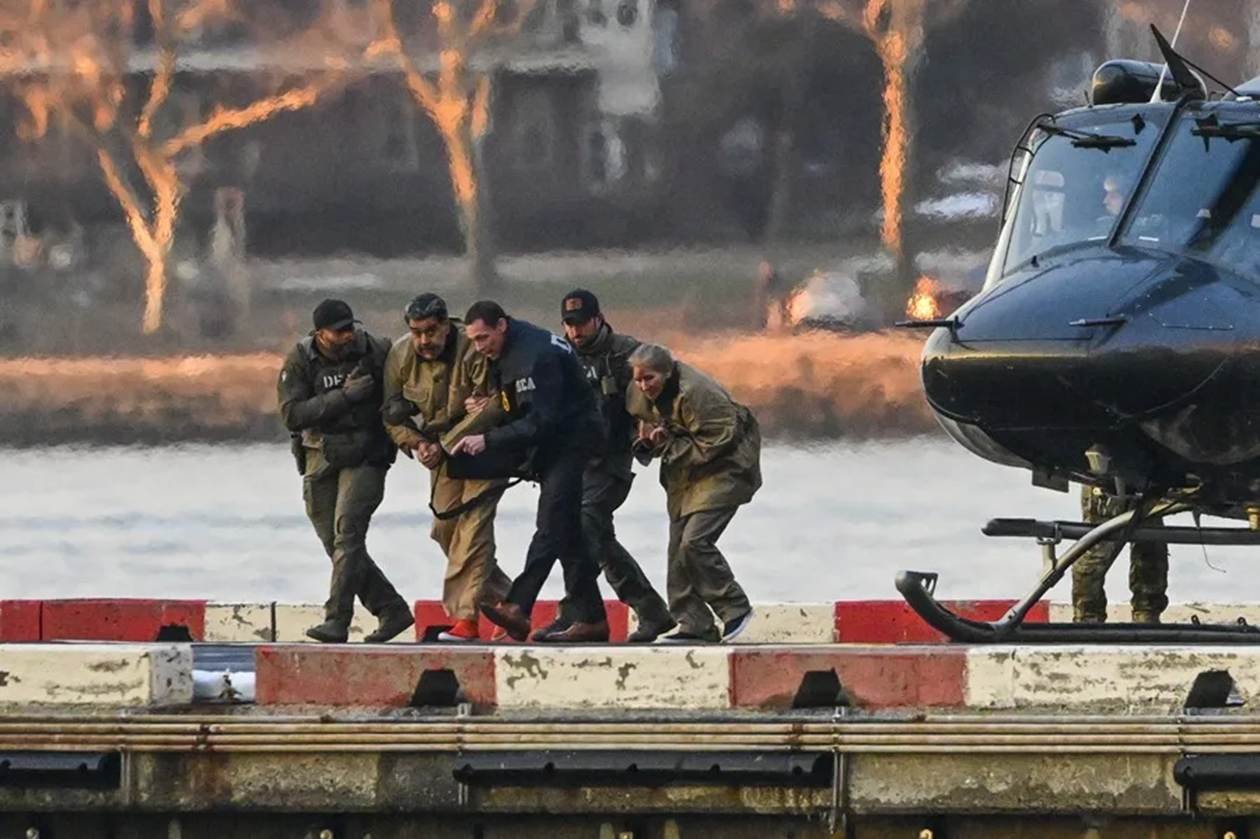
Maduro’s capture has unsettled the old Caracas-Havana axis, cutting oil flows, clouding medical missions, and exposing how one alliance, once built on revolution, fuel, doctors, and continental ambition, now faces silence, resentment, and Washington’s shadow across the Caribbean.
The Alliance That Ran on Oil and Faith
For years, Venezuela and Cuba looked less like two governments than two bodies sharing one bloodstream. Caracas sent oil. Havana sent doctors, advisers, political discipline, and revolutionary symbolism. Together they built a language of resistance that stretched from palace speeches to neighborhood clinics, from Petrocaribe shipments to ALBA summits, from the memory of Fidel Castro to the rise of Hugo Chávez and the long survival of Nicolás Maduro.
Now that the bloodstream appears interrupted.
The U.S. capture of former Venezuelan President Nicolás Maduro has emerged as a turning point in relations between Caracas and Havana, according to EFE reporting and interviews. What was once one of Latin America’s tightest political and economic alliances has become a relationship full of silence, distance, and unanswered questions. The shift is not only diplomatic. It is material. Cubans have stopped receiving oil from their main supplier. Venezuelans face uncertainty over a public health system that long depended on Cuban doctors as one of its basic pillars.
Pável Alemán, a researcher and professor at the University of Havana and one of Cuba’s leading experts on Havana-Caracas relations, told EFE that it is difficult to determine exactly where the bilateral relationship now stands. He described the bond as very deep and high level, but warned that it risks a gradual cooling as Venezuela’s acting president, Delcy Rodríguez, introduces changes.
Those changes matter because they touch the foundations of the old pact. Alemán said the new Venezuelan government is gradually deactivating social missions approved long ago, complying with a U.S. request not to export more oil to Cuba, and applying deeper reforms, including a Hydrocarbons Law and other measures approved quickly. “This hurts Cuban society and, logically, on bilateral relations,” he told EFE.
That is the quiet crime scene of the story. No single shot is heard. An army crosses no border in the old dramatic sense. But an alliance is being dismantled through decrees, fuel interruptions, canceled missions, and unanswered calls.

A Silence Where Slogans Used to Be
Efraín Vázquez Vera, a professor at the University of Puerto Rico and an international relations expert, told EFE that the relationship is “totally paralyzed,”” awaiting the situation to settle in Caracas and Havana. In his view, Venezuela is no longer a factor in Cuban politics the way it once was. If anything, he said, Maduro’s capture now functions as a warning, a threat, or a latent possibility of what could happen in Cuba.
That sentence should chill anyone who understands Caribbean geopolitics. For Havana, Venezuela was not only an ally; it was also a strategic partner. It was strategic depth. It was energy relief. It was proof that the Cuban Revolution still had regional descendants. It gave Cuba room to breathe during hard economic years and offered a continental stage on which anti-imperialism could be enacted as policy.
The silence now is telling. According to EFE, cross-mentions and public displays of support have been minimal in the last four months, a stark contrast with the previous habit of frequent mutual praise. Personal contacts have also dropped sharply. EFE contacted Cuba’s Foreign Ministry and the Venezuelan embassy in Havana for comment, but had not received responses.
In Latin America, silence can be louder than speeches. It can mean caution. It can mean betrayal. It can mean fear. It can mean everyone is waiting to see who survives before choosing the right words.
Vázquez Vera said he senses some resentment among Cubans because some on the island believe the operation against Maduro in January had internal support from Venezuela. That Cuban military personnel in his inner security circle were therefore sacrificed. The Cuban government has not officially criticized that possibility. Alemán did not address the idea of betrayal, but he did call the event painful for Cuba. It was, he noted, the first time in decades that Cubans fell in a conflict on foreign soil.
That detail cuts through the ideology. For Havana, this is not only about oil or influence. It is about bodies. Cuban personnel died in another country while protecting a project that may now be moving away from Cuba.

The Region Reads the Break
The regional meaning is enormous. Venezuela and Cuba were once the twin pillars of the twenty-first-century left’s most ambitious geopolitical project in the hemisphere. ALBA and Petrocaribe were not just institutions. They were attempts to build an alternative map, one where oil, doctors, subsidized energy, political loyalty, and anti-U.S. rhetoric could challenge Washington’s dominance.
If that axis weakens, the whole regional left loses an old center of gravity. Progressive governments in Latin America may still exist, but the Caracas-Havana engine no longer appears capable of driving continental strategy. Without Venezuelan oil, Cuba’s crisis deepens. Without Cuban support, Venezuela’s old revolutionary mystique fades into a more transactional, more nationalist, more uncertain post-Maduro order.
Alemán said Maduro felt sympathy for Cuba, having studied at a Communist Party center in Havana between 1986 and 1987. But he also noted that not everyone inside Venezuela’s power structures shared that view. The government, he told EFE, is heterogeneous, with people who never sympathized with Cuba or with the depth of the bilateral relationship.
That internal diversity now matters. Delcy Rodríguez’s government appears to be recalibrating under pressure from Washington and domestic needs. For Venezuela, cutting or reducing commitments to Cuba may be presented as pragmatism, sovereignty, or survival. For Cuba, it looks like abandonment at the worst possible time.
The change also stirs Cuban nationalism. Alemán argued that the shift in Caracas moved something inside Cuban national feeling, which he sees as more unifying than ideology itself and deeply marked by anti-imperialism. Any intrusive option in Cuba’s internal affairs, especially through force, would not be well received, he warned.
He also rejected the idea that a Venezuela-style intervention could easily be repeated in Cuba. “Here it will not be easy for them to find someone with whom they can try to negotiate behind Cuban society’s back and launch a project of government substitution,” Alemán told EFE.
That is the final lesson for the region. Alliances built on ideology can seem eternal until the fuel runs out. Foreign pressure can reorder loyalties faster than speeches can explain. And Cuba, watching Venezuela change after Maduro’s capture, sees not only the loss of a partner, but a possible preview of the strategy aimed at itself.
For Latin America, the old Caracas-Havana pact is no longer a monument. It is a question mark.
Also Read:
Peruvian Suspect Extradited in Women’s House of Horror Livestream Murders