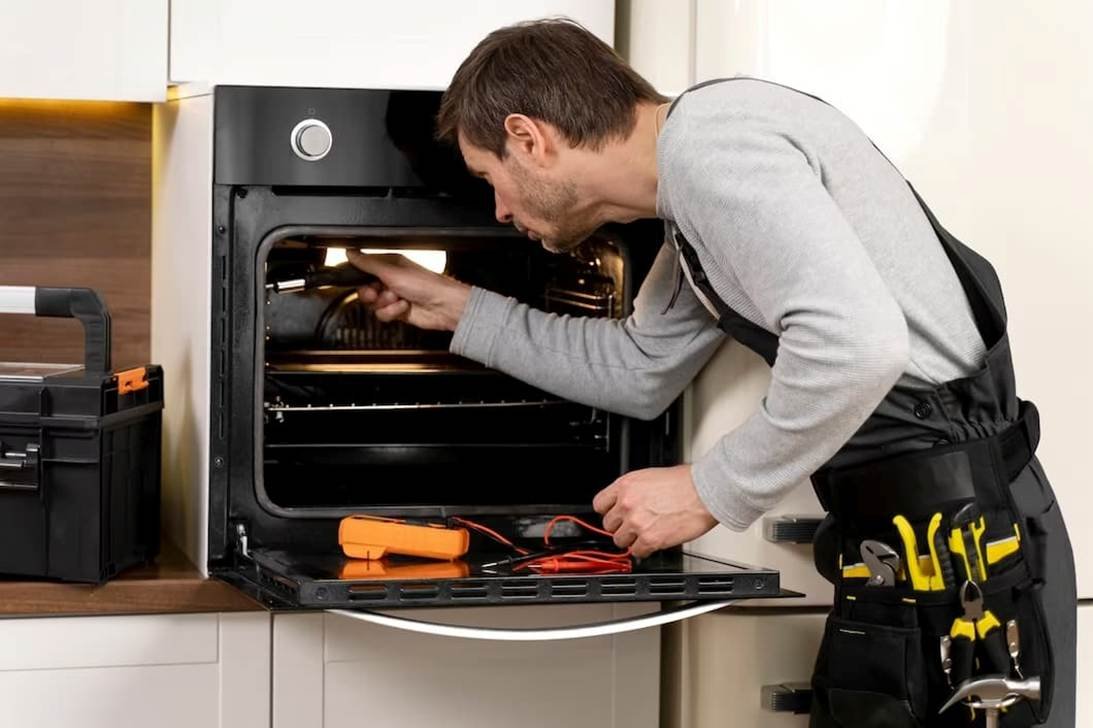
New is hard to resist – sleek lines, upgraded features, and an energy label that promises lower bills. But when a refrigerator starts short-cycling or your washer flashes an error code, going “brand-new” isn’t always the smartest move. Timing matters, and so does diagnosing the real fault: the right repair at the right moment can come out ahead on total cost, reduce risk, and keep day-to-day life comfortable.
There’s also the practical side of speed. A quick booking with local pros through appliance repair services often gets your kitchen back on track before the weekend shopping spree turns risky.
Let’s focus on what actually shifts the numbers in your bank statement – no hype, no guilt. Just the costs you pay, the uncertainties you avoid, and the value you keep.
The hidden price of “just replace it”
Sticker price is the loud part. The quiet bits add up.
- Delivery and haul-away. Most retailers charge for delivery, old-unit disposal, and sometimes a doorway removal or stair carry.
- Installation quirks. Icemaker plumbing, gas connectors, vent kits for dryers, trim kits for built-ins. It’s never just plug and play.
- Fit and finish. Cabinetry cut to a past model, a countertop that now needs shaving, a plinth that no longer lines up.
- Downtime. Days without cold storage or laundry while you juggle work and drop-offs, and then the returns if the first unit arrives dinged.
- Learning curve. Settings, cycles, app pairing, and a month of “why is this overcooking” until habits catch up.
- Depreciation shock. That four-figure purchase loses real value the moment it’s installed. A repair, by contrast, extends the life of something you’ve already paid for.
When you pencil it all in, a £900 fridge can easily turn into £1,200–£1,400 total outlay before the first cube drops into a glass.
The 50 per cent and five-year rules of thumb
Two simple heuristics keep decisions sane.
- If the repair quote is less than 50 per cent of the cost of a comparable replacement and the appliance is under five to eight years old, repair usually wins.
- If it is older than ten to twelve years and the fault is in a sealed system or major motor assembly, run the maths carefully. Replacement might be wiser.
Those aren’t laws, but they keep you from binning a good machine for a cheap fault or throwing good money after bad on a dying core.
Energy savings: real, but not magic
Newer models are more efficient, yes. But the payback depends on what you own now.
- A modern fridge might save £30–£60 a year versus a mid-2010s unit. If the new one costs £1,000 fully installed, you’re looking at a 16–33 year energy payback on savings alone.
- Swapping an ancient energy hog from the 1990s is different. Then the energy delta can be £100–£150 a year and a new unit can make sense, especially if repair requires a compressor.
The point is simple. Don’t use the energy label to justify a replacement that won’t pay for itself in any reasonable time. Fix the fault, keep the machine tight, and bank the difference.
Repair reduces risk you don’t see
A functioning appliance has a known history. A new one is a box of unknowns.
- Early failures. Even good brands ship the odd Friday afternoon unit. A repair keeps you out of the dead-on-arrival lottery.
- Fit risk. New dimensions rarely match old ones exactly. If cabinetry is bespoke, you can end up funding a mini-renovation.
- Feature drift. “Smart” often means software. Apps get retired, integrations change, and what was simple becomes fiddly.
- Supply noise. Lead times, parts shortages, a retailer quietly swapping your chosen model for an “equivalent”.
A targeted repair keeps value where you can see it and removes a few dice rolls you don’t need.
Embodied cost and the quiet win for the planet
A large appliance bakes in a lot of material and manufacturing energy before it ever meets your plug socket. Keeping a sound cabinet and motor train in service with a fan, relay or pump swap avoids hundreds of kilos of CO₂ and a trip to landfill. You don’t need to be a purist to like that side-effect.
Where repairs shine by category
Not all faults are created equal. Roughly:
- Fridges and freezers. Fans, relays, thermistors, door gaskets, ice-maker valves and defrost components are straightforward and cheap. Compressors and sealed systems are the big red flags, especially on very old units.
- Washers. Pumps, belts, door locks, inlet valves, pressure sensors and brushes are bread-and-butter fixes. Drum bearings and spider arms on older machines can be uneconomical.
- Dryers. Thermal fuses, thermostats, belt and idler pulleys, heating elements or gas coils are common and cost-effective. Drum rollers too.
- Dishwashers. Wash pumps, drain pumps, inlet valves, float switches and door latches make up most calls. Control boards are case by case.
- Ovens and ranges. Elements, igniters, thermostats and door seals for the win. Control boards and glass tops can swing the decision.
A quick triage call with a seasoned tech will usually tell you which camp your fault sits in within minutes.
A simple cost model to keep handy
Write three numbers on a scrap of paper:
- Replacement total. Unit, delivery, haul-away, install, any cabinetry or connector extras.
- Repair total. Call-out, diagnostics and part. Add a modest buffer for unknowns.
- Expected remaining life. Ask the tech. A good pro will give a conservative forecast.
Then divide cost by years.
- If a £250 repair buys you three to five more years of sane service, you’re at £50–£80 a year.
- If a £1,200 replacement buys you seven to ten, you’re at £120–£170 a year plus risk.
The cheaper line often stares back at you.
The warranty wrinkle
New appliances ship with a one-year warranty, sometimes two. Extended plans make sense only if they’re transparent on what they cover and you plan to keep the machine well past the term.
Repairs also carry warranties on parts and labour. Ask the question – a six- or twelve-month guarantee on a fix adds confidence.
How to make repair work for you
- Document the fault. Photos, videos, error codes, when it happens. Saves time and misdiagnosis.
- Clean the easy stuff first. Coils, filters, accessible drains, gaskets. It’s not beneath you and sometimes it’s the whole fix.
- Book before total failure. Diagnosing a dead unit is slower and often more expensive.
- Choose a tech who carries parts. A well-stocked van means one visit, not three.
- Ask for the old part. It’s a tiny accountability trick and an interesting lesson in what went wrong.
- Preventative smalls. New door seals, fresh water filters, levelling feet and a quick vacuum of coils buy months or years.
When replacement really is kinder to your wallet
- Multiple major faults in quick succession. The machine is telling you it’s tired.
- Big sealed-system work on an old fridge or repeated drum bearing failures on a washer.
- Safety issues. Carbon monoxide risk in gas appliances, burned connectors, scorched control boards.
- A huge energy leap. Swapping a true relic where the annual savings are clear and quick.
Even then, sell or recycle the old unit responsibly. Sometimes a cheap fix gets it to a new home where it still has useful life.
The bottom line
Repair looks boring until you price the alternative honestly. For most mid-life faults, a targeted fix wins on total cost, risk and time. It keeps a known-good machine in service, avoids a lot of hidden hassle, and quietly does the right thing for the planet.
And when the fault is above your pay-grade, handing it to a professional outfit like Superior Appliance Repair services turns a bad week into a footnote. That, in the end, is the kind of return on investment you can feel every morning when the fridge hums and the milk is cold.