
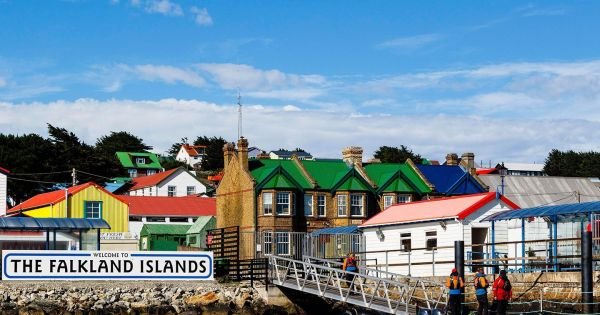
The Falklands turn into a small South Atlantic economic power as the ghosts of 1982 return
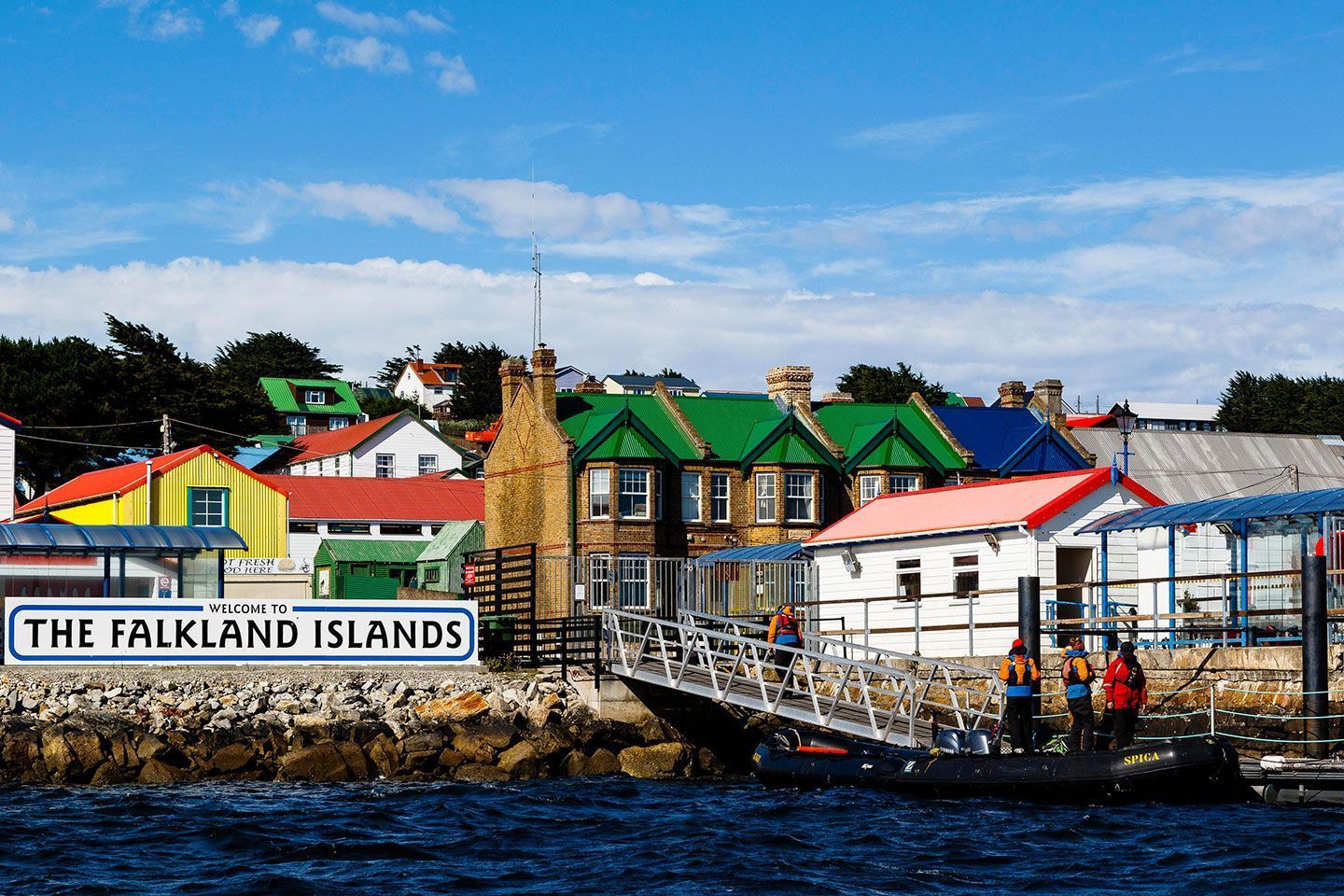
The Falklands have 3,662 inhabitants and a per capita income higher than that of the United Kingdom
The Falkland Islands are going through their traditional “commemoration season,” the cycle of ceremonies that recall the 1982 war each year, culminating in Liberation Day on 14 June, at a moment defined by two overlapping realities: the consolidation of the archipelago as a small economic power in the South Atlantic and the reactivation of diplomatic tensions with the United States and Argentina. A feature published on Saturday by the British newspaper The Sunday Times, written by Matthew Campbell from Fitzroy, captures the contrast between growing economic prosperity and the anxiety generated by the recent leak of a Pentagon memorandum.
The Falklands have 3,662 inhabitants and a per capita income higher than that of the United Kingdom, a transformation driven by the 200-mile fisheries exclusion zone established in 1986, which generated licences for foreign fleets to catch Illex and Loligo squid and Patagonian toothfish. Those two species today account for roughly 60% of the archipelago’s gross domestic product. Before the war we were a nation of scroungers, said sheep farmer Ailsa Heathman, 67, whose family estancia was occupied by British soldiers of 3 Para during the conflict. Fish brought money, paved roads, free education, health and dental care.
The next economic leap could come from the Sea Lion oil field, discovered in 2010 in the North Falklands Basin, whose drilling phase is expected to begin in the next few years with first production targeted for 2028. The project, operated by Navitas Petroleum and Rockhopper Exploration, reached its final investment decision in late 2025 at an estimated cost of USD 2.1 billion. The local Legislative Assembly, made up of eight elected members, is already debating the creation of a Norwegian-style sovereign wealth fund to manage future revenues. We have a need to protect and provide for future generations, said legislator Lewis Clifton.
The international political backdrop arrives at a moment of unusual tension. Last month, an internal Pentagon email was leaked suggesting that the United States might review its diplomatic support for the United Kingdom on the sovereignty of the archipelago in retaliation for London’s lack of backing for the US offensive against Iran. Argentine President Javier Milei doubled down days later by declaring that the islands were, are and will be Argentine. Island authorities played down the leak. It was just a leaked email; to give it more credibility than that would be dangerous, said legislator Roger Spink, who emphasized that the archipelago retains very good support and friends in the United States.
The security picture remains anchored in the Royal Air Force base at Mount Pleasant, built after the war, with between 1,000 and 1,500 military personnel, four Eurofighter Typhoon jets, a Royal Navy patrol vessel, radar systems, transport aircraft, and rotating infantry units. Retired General Sir Richard Barrons, a former head of the British Army, said in the same feature that the chances of a renewed Argentine surprise attack are very remote and that British control of the airspace remains quite assured.
The feature also captures the return of veterans from both sides. Tony Scales, a former Welsh Guardsman, aged 65, who was wounded in the attack on the RFA Sir Galahad on 8 June 1982, returned for the first time to Bluff Cove, where 48 people died, among them 32 Welsh Guardsmen. On the other side, former Argentine soldier Fernando Suárez, 63, a veteran of the 7th Infantry Regiment at Wireless Ridge, traveled to the archipelago accompanied by his two children. I believe in self-determination. There should never be another war, he said. In the 2013 referendum, all but three of those eligible to vote backed remaining a British Overseas Territory, with turnout above 90%. The 1982 war left 255 British and 649 Argentine service members dead in 74 days of combat.