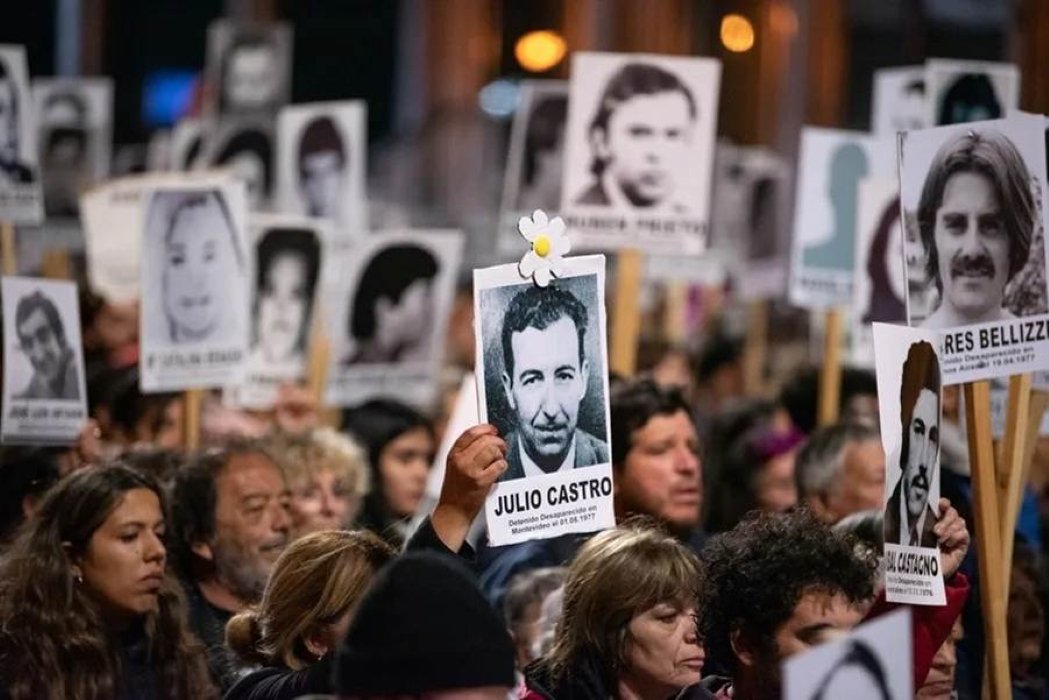
Fifty years after Zelmar Michelini, Héctor Gutiérrez Ruiz, Rosario Barredo, and William Whitelaw were murdered in Buenos Aires, Uruguay confronts Plan Condor’s unfinished wound, where memory, archives, military silence, and democracy’s fragile dignity still collide.
The Night Politics Was Murdered
Some crimes do not end when the bodies are found. They remain inside a country’s political language, inside its silences, inside the way families say a name at the table and suddenly lower their voices. Uruguay still lives with one of those crimes.
On May 20, 1976, Uruguayan legislators Zelmar Michelini and Héctor Gutiérrez Ruiz were murdered in Buenos Aires alongside former Tupamaro militants Rosario Barredo and William Whitelaw. The killings became one of the most emblematic crimes of Plan Condor, the machinery of repression through which South America’s dictatorships coordinated surveillance, kidnapping, torture, and murder across borders.
Half a century later, the event is no longer merely an episode in the history of dictatorship. It is a test of what Uruguay believes democracy means when the dead are not anonymous, when the executioners were agents of the state, and when many families still do not know where their loved ones are.
In interviews with EFE in Montevideo, Santiago Gutiérrez, grandson of Héctor Gutiérrez Ruiz and a deputy from the National Party, described the murders as “the assassination of the formal party system” in Uruguay. Rafael Michelini, son of Zelmar Michelini and a senator from the Broad Front, called them “the beginning of the end” of the civic-military dictatorship that ruled the country from 1973 to 1985.
The two phrases come from different political houses, and that is precisely why they matter. This was not a wound belonging to any one party, family, or ideological camp. The dictatorship struck figures who represented the breadth of Uruguay’s political life. Zelmar Michelini had begun in the Colorado Party and later helped found the Broad Front. Héctor Gutiérrez Ruiz was president of the Chamber of Representatives for the National Party. In their deaths, Uruguay saw not only individual cruelty, but a direct message to the entire political order: no institution was sacred, no exile was safe, no democratic legitimacy could protect a citizen from state terror.
Rafael Michelini told EFE that the murderers sought to transmit that “no one was safe from terror.” He also said his father, Gutiérrez Ruiz, Barredo, and Whitelaw were killed by the Uruguayan dictatorship. For him, that moment helped break social support for the repressors because Uruguayan society drew a line: “with murderers, no.”

A Crime Against the Whole Republic
The personal memories remain sharper than the official dates. Rafael Michelini remembers the words from the day his father was kidnapped in Buenos Aires on May 18, 1976: “They took Dad, he’s not coming back.” Three days later came the news that the bodies had been found.
There is a terrible compression in that sentence. A child did not need a court file to understand what the adults already knew. Under Plan Condor, disappearance was not confusion. It was a method. Kidnapping was a message. The delay between the taking and the discovery became a corridor of dread where families imagined every possible pain before receiving the final fact.
Santiago Gutiérrez was born almost 20 years after his grandfather’s assassination. His relationship to the crime came through family memory, public record, and the documentary “D.F. Destino Final,” made by his uncle Mateo Gutiérrez, which reconstructs the investigations while showing the more human side of the legislators. That generational distance is important. Uruguay is now in a phase in which the memory of the dictatorship must survive without resting solely on those who lived it directly.
That is where democratic culture is either strengthened or thinned out. The danger for any post-dictatorship society is not only denial. It is fatigue. The quiet temptation to say enough time has passed. The desire to turn state crimes into sad anniversaries rather than living obligations. But crimes like the May 20 murders do not belong to the past in the ordinary sense because the conditions that allowed them, institutional obedience, ideological dehumanization, military secrecy, and international coordination, are always capable of returning in new clothing.
Plan Condor was geopolitics turned into an assassination policy. Its logic was regional, not merely national. Chile, Argentina, Uruguay, Paraguay, Bolivia, and Brazil shared intelligence and repression under Cold War anti-communism, often with the tolerance or backing of U.S. security doctrine. The Southern Cone became a hunting ground where borders stopped protecting citizens and instead helped dictatorships reach them. Buenos Aires was not foreign soil for the Uruguayan repressors. It was an extension of their impunity.
That lesson matters for Latin America today. When states cooperate without democratic oversight, when security is allowed to override rights, when enemies are defined as internal infections rather than political opponents, the region already knows where that road can lead. The language changes. The technology improves. The old doctrine of national security becomes the new talk of order, emergency, anti-terrorism, or anti-crime. But the danger is familiar: the state deciding that certain bodies can be removed from the law.

The Missing Still Ask Questions
The families of Michelini and Gutiérrez Ruiz know where their relatives are and what happened to them. That knowledge does not erase grief, but it gives mourning a grave, a place, a certainty. Many other Uruguayan families still do not have even that.
At the beginning of May, the Association of Mothers and Relatives of Uruguayan Detained and Disappeared People met with President Yamandú Orsi. They urged him to order the Armed Forces to hand over information about the whereabouts of the disappeared. Rafael Michelini believes the decision should come through a decree mandating the recovery of archives, clues, oral accounts, and other materials, while assigning responsibilities within the Armed Forces to locate possible files linked to the disappeared.
Santiago Gutiérrez told EFE that this is institutionally important and necessary. However, he doubts its effectiveness because the perpetrators do not feel remorse. His words cut deeply: even in war, he said, there comes a moment when weapons stop, the wounded are treated, and the dead are mourned. They did not even allow that.
That is the heart of the unresolved issue. The dictatorship did not only kill. It denied burial, truth, and the minimum rituals by which a society recognizes the humanity of the dead. In Latin American political memory, disappearance is a double crime: against the person and against time. It forces families to live permanently between hope and evidence, between mourning and search.
Gutiérrez says the search for the disappeared has become state policy, noting that Uruguay’s three major parties, when in power, have taken executive actions on the issue, some with more rhetorical emphasis than others. That consensus is valuable, but it is not enough if it does not pierce the military silence that still protects information.
The fiftieth anniversary should not be used to flatten Uruguay’s disagreements about the dictatorship, the years before it, or the politics that followed. Democracies do not require identical memories. But they do require a shared floor. Gutiérrez is right that May 20 should lead to agreement on one basic point: it is unacceptable that any Uruguayan has failed to return home because of the state’s actions.
That sentence should travel beyond Uruguay. Across Latin America, where old authoritarian temptations still whisper through security crises and polarization, the Condor crimes remain a warning. A republic does not die only when tanks enter the streets. It also dies when the state learns to hunt its citizens and calls it order.
Fifty years later, Uruguay is still asking where the missing are. It is also asking what kind of democracy can be built when the truth remains locked in barracks, archives, and guilty mouths. The answer will decide whether memory becomes ceremony or justice.
Also Read:
Haiti Bleeds as Gang Battles Turn Cité-Soleil Into Burning Map