
By Staff Reporter | NewsAmericasNow.com
News Americas, MIAMI, FL, Thurs. May 21, 2026: Cuba has sharply condemned the U.S. decision to indict former Cuban President Raul Castro over the 1996 shootdown of two civilian aircraft operated by the Miami-based group Brothers to the Rescue, calling the charges a “despicable and infamous act of political provocation.”
The U.S. Department of Justice on Wednesday unsealed a superseding indictment charging Castro, now 94, and five co-defendants with conspiracy to kill U.S. nationals, destruction of aircraft, and four counts of murder in connection with the deaths of four Americans nearly 30 years ago. If convicted, Castro could face life imprisonment or the death penalty.
The four men killed were Carlos Costa, Armando Alejandre Jr., Mario de la Peña, and Pablo Morales. All were members of Brothers to the Rescue, also known as Hermanos al Rescate, a volunteer organization that used small civilian planes to search for Cuban migrants in distress in the Florida Straits.

THE INDICTMENT
US federal prosecutors allege that on February 24, 1996, Cuban military pilots radioed Havana twice for authorization before shooting down two unarmed American civilian aircraft over international waters near the Florida Straits, killing four US nationals. Thirty years later, the United States has charged the man it alleges gave the order – former Cuban President Raul Modesto Castro Ruz, now 94 years old.
The US Department of Justice unsealed a superseding indictment on Wednesday, May 20, 2026, charging Castro Ruz and five co-defendants for their alleged roles in the attack. The charges include conspiracy to kill US nationals, two counts of destruction of aircraft, and four counts of murder. If convicted, Castro Ruz faces a maximum penalty of death or life imprisonment.
The four Americans killed were Carlos Costa, Armando Alejandre Jr., Mario de la Peña, and Pablo Morales – members of Brothers to the Rescue, also known as Hermanos al Rescate, a Miami-based organization that flew unarmed Cessna aircraft across the Florida Straits to search for Cuban migrants in distress at sea.
A Long-Planned Operation, Prosecutors Allege
The February 24, 1996 attack was not spontaneous, according to the indictment. Prosecutors allege it was the culmination of a deliberate Cuban intelligence and military operation code-named Operación Escorpión – Operation Scorpion – designed to stop Brothers to the Rescue from conducting flights near Cuba.
According to the indictment, Cuban intelligence had been running agents inside the United States since at least 1992, specifically tasked with infiltrating Brothers to the Rescue in Miami. Those agents were allegedly part of a spy network code-named La Red Avispa – the Wasp Network — whose members posed as Cuban exiles fleeing the Castro regime.
At least one alleged Wasp Network agent, Juan Pablo Roque, went further – offering himself to the FBI as an informant on Miami-based exile groups including Brothers to the Rescue, while allegedly working as a Cuban intelligence operative whose FBI cooperation was directed and controlled by Havana, according to the indictment.
For years, the indictment alleges, the Wasp Network reported back to Havana on Brothers to the Rescue flight operations, personnel, and plans. As Operation Scorpion intensified in early 1996, the network was allegedly instructed to urgently report all Brothers to the Rescue flight data — including specific plans for February 24, 1996.
Castro Allegedly Authorized Deadly Force Personally
According to the indictment, after Brothers to the Rescue flights in January 1996 dropped pro-democracy leaflets over Cuba, Castro Ruz personally met with military leaders and allegedly authorized them to take decisive and deadly action against the organization’s aircraft.
The Cuban military allegedly conducted specific training missions following those January flights, during which MiG fighter pilots practiced locating, following, and intercepting slow-moving civilian aircraft of the exact type flown by Brothers to the Rescue. The indictment alleges that all orders to kill by the Cuban military traveled through a chain of command with Castro Ruz and his brother Fidel Castro as the final decision makers.
The Spies Allegedly Knew What Was Coming
Among the most significant allegations in the indictment is what prosecutors say happened in the days immediately before the attack. On January 30, 1996, Cuban intelligence allegedly instructed its Miami-based agents – including Roque and fellow operative Rene Gonzalez – to avoid flying with Brothers to the Rescue and to use particular radio phrases if they happened to be airborne during the operation.
On February 21, 1996 – three days before the attack – Roque allegedly falsely informed the FBI that Brothers to the Rescue would not be flying during the weekend of February 24, 1996, despite knowing the organization was scheduled to fly that day. On February 23, 1996, Roque allegedly left Miami as directed and returned to Cuba.
February 24, 1996
At approximately 1:30pm on February 24, 1996, three unarmed Brothers to the Rescue aircraft departed from Opa-Locka Airport in Miami-Dade County, heading south across the 24th parallel. At approximately 3:00pm, according to the indictment, alleged co-defendant Lorenzo Alberto Perez-Perez and another pilot took off from San Antonio de los Baños airfield near Havana in Cuban military MiG jets.
At approximately 3:20pm, according to the indictment, Perez-Perez radioed for authorization to destroy the first Brothers to the Rescue aircraft – tail number N2456S – which was at that time flying over international waters. Authorization was allegedly granted. At approximately 3:21pm, without warning, the aircraft was allegedly shot down by an air-to-air missile, killing pilot Carlos Costa and his passenger Pablo Morales.
At approximately 3:26pm, according to the indictment, Perez-Perez radioed again – seeking authorization to destroy a second unarmed civilian aircraft, tail number N5485S, also flying over international waters. Authorization was allegedly granted a second time. At approximately 3:28pm, the second aircraft was allegedly destroyed by an air-to-air missile, killing pilot Mario de la Peña and his passenger Armando Alejandre Jr.
A third Brothers to the Rescue aircraft – tail number N2506 – escaped after additional Cuban MiG jets were scrambled to pursue and destroy it as well, according to the indictment.
One Defendant Already In US Custody
Of the six defendants named in the superseding indictment, one is already on US soil. Luis Raul Gonzalez-Pardo Rodriguez, 65, of Havana – alleged to have been one of the MiG pilots inside his fighter jet and ready to deploy on the day of the attack – is currently in US custody in the Middle District of Florida, pending sentencing this month for making false statements in an immigration document, according to the DOJ.
Historic Charges
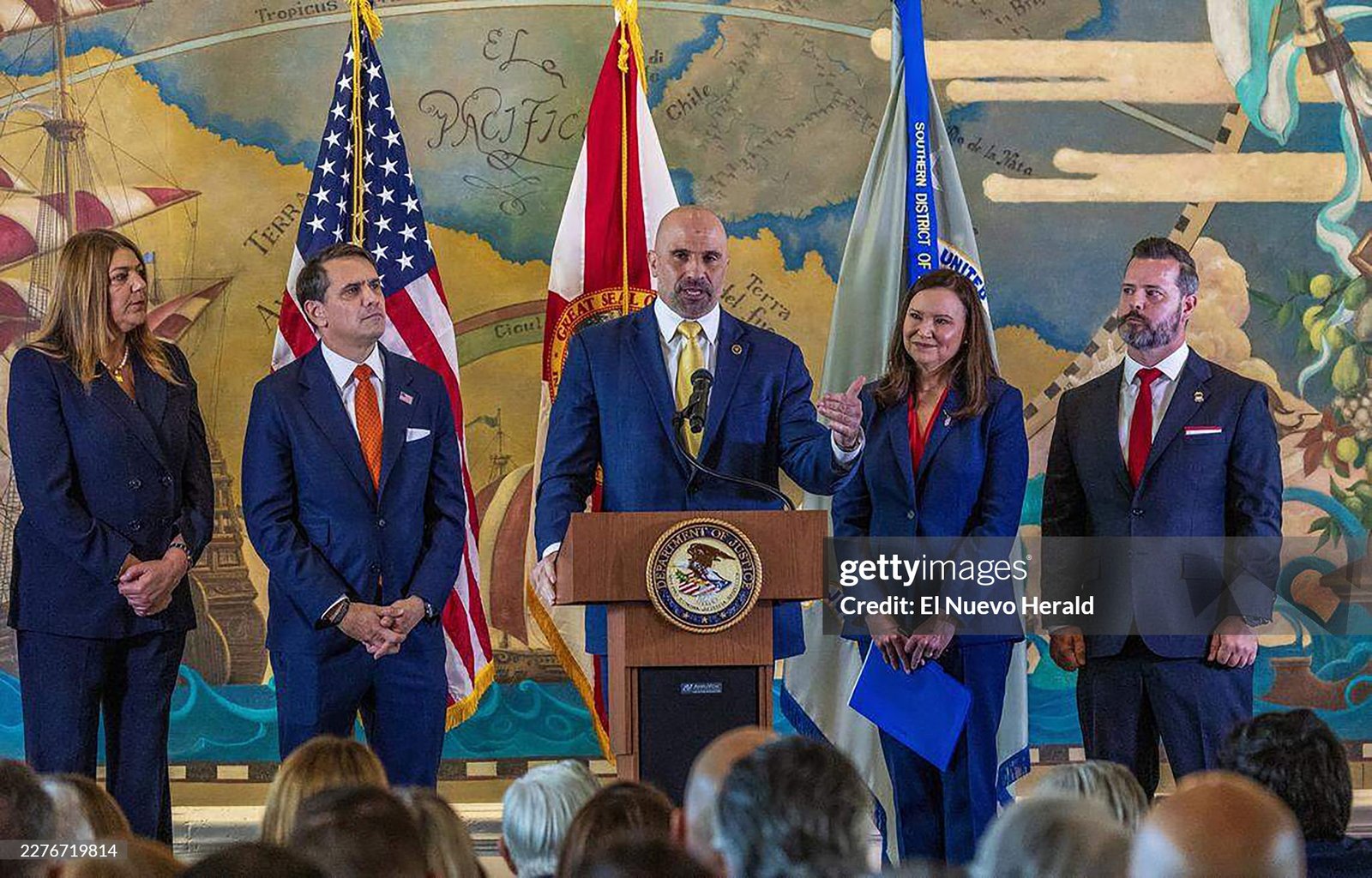
Acting Attorney General Todd Blanche described Wednesday’s announcement as a landmark moment. “For the first time in nearly 70 years, senior leadership of the Cuban regime has been charged in the United States for alleged acts of violence resulting in the deaths of American citizens,” Blanche said, as quoted in the DOJ announcement.
US Attorney Jason Reding Quiñones for the Southern District of Florida added: “This passage of time does not erase murder. It does not diminish the value of these lives. And it does not weaken our commitment to the rule of law,” as quoted by the DOJ.
The original indictment in this case was first filed under seal in 2003. Its unsealing Wednesday – more than two decades later – comes as part of the Trump administration’s escalating pressure campaign against Cuba, which has included a national emergency declaration in January 2026, expanded secondary sanctions targeting foreign entities doing business with Cuba in May 2026, and the designation of 11 Cuban regime officials just two days before Wednesday’s announcement.
Cuban Government Response
In a statement issued Wednesday, Cuba’s government said the United States lacks both the legitimacy and jurisdiction to prosecute Raul Castro. Havana argued that the 1996 incident was an act of lawful self-defense after repeated incursions into Cuban airspace by Brothers to the Rescue aircraft.
Cuban officials said they had filed multiple complaints with the U.S. State Department, the Federal Aviation Administration, and the International Civil Aviation Organization regarding more than 25 alleged violations between 1994 and 1996. “The Revolutionary Government condemns in the strongest terms the despicable accusation by the United States Department of Justice,” the statement said.
Cuba also accused Washington of distorting the historical record and using the case to justify tougher sanctions and continued pressure on the island.
RELATED: Is Washington Preparing Another Bay Of Pigs In Cuba?