Monika Silva Koniuszek built a life defending Ecuador’s coast from corruption, poverty, and land grabs. Then she was found dead in Montañita, and a rushed suicide theory turned a local tragedy into a test for Latin America’s fragile democracies today.
The Woman Montañita Learned by Name
In Montañita, grief does not arrive quietly. It comes with neighbors at the doorway, candles in Manglaralto, and the stunned silence of people who knew the woman at the center of the story was not a visitor chasing surf season. Monika Silva Koniuszek, Polish by birth and Ecuadorian by devotion, had made Santa Elena her battlefield and her home.
She chaired Fundación La Integridad, a small civic organization with a large appetite for uncomfortable questions. Its work ran through humanitarian aid, citizen oversight, anti-corruption complaints, land conflicts, public contracts, environmental disputes, and the thin line between municipal power and private fortune. On X, Silva described herself as an anti-corruption activist, defender of the Pachamama and vulnerable groups, adding a phrase that now reads like an epitaph: “No hace falta nacer en Ecuador para amarlo y defender lo justo.”
Santa Elena is not only a postcard coast. It is also a province where tourism, land speculation, and poverty sit shoulder to shoulder. Silva’s foundation framed rural misery, child malnutrition, unemployment, and the absence of basic services as symptoms of systemic corruption. In coastal Ecuador, a water system that never arrives, a sewage plant that fails, a beachfront parcel that changes hands too cheaply, these are the local grammar of inequality.
Local investigative outlet La Fuente reported that Silva spent more than a decade accompanying comuneros and reconstructing land disputes document by document. It also reported that she and Robinson del Pezo, a community journalist killed in November 2025, had worked around alleged land trafficking and political corruption in Santa Elena. After his death, Silva reportedly warned that she feared for her life.
The Suicide Theory That Moved Too Fast
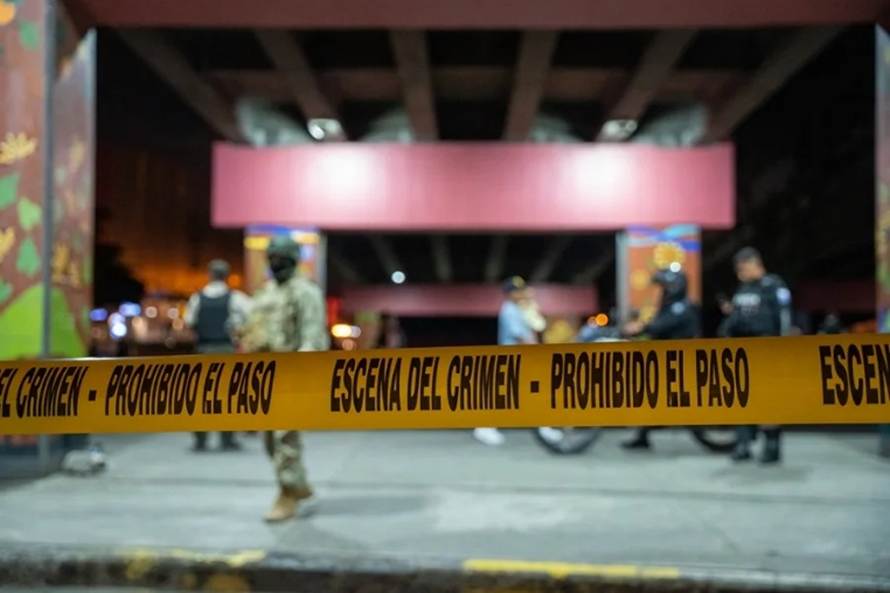
The mystery begins with timing. Silva was found dead on June 8, 2026, inside her home in Montañita. By June 9, Interior Minister John Reimberg had publicly said the initial theory pointed to suicide, while acknowledging that autopsy and forensic reports would have to confirm or reject that hypothesis. That may yet be what investigators prove. But the problem is the speed with which the state appeared to narrow the story around a woman who had described threats.
Then the official line bent under pressure. The European Union asked for a rapid, exhaustive, independent, and transparent investigation. Poland’s diplomatic mission sent consular attention and urged full clarification. Ecuador’s Fiscalía requested foreign experts. El Universo reported that Silva’s body was to be transferred to Guayaquil for a second autopsy with international specialists, while her lawyer said the investigation contained “muchísimas dudas.” Preliminary information attributed to a medical examiner mentioned a small head injury before death and signs linked to hanging or strangulation, while the official report remained reserved. Fiscalía, according to the same report, kept open a preliminary investigation for alleged femicide.
A second autopsy is not a verdict. It is an admission that the first narrative did not convince enough people. In a healthy investigation, every possibility remains on the table. In a wounded democracy, an early label can shrink the victim’s life until the threats, the land files, the dead colleague, and the girls left behind become background noise.
The numbers explain why Ecuadorians are unwilling to accept noise. Ecuador closed 2025 with 9,216 intentional homicides, its worst year on record, a rate of 50.91 violent deaths per 100,000 inhabitants, and a 32 percent jump over 2024. That is roughly 25 killings a day. Los Ríos reached a provincial rate of 130.4, and violence concentrated heavily along the Litoral, where ports, roads, plantations, tourism corridors, and criminal economies overlap.
June sharpened the dread. Eight young people who left Daule for Milagro on May 31 were later tied to bodies found in sacks along the Jujan to Babahoyo road, amid forensic delays and family anguish. Days later, Ecuador’s Air Force commander publicly apologized for the state’s responsibility in the forced disappearance and deaths of four Afro-Ecuadorian boys detained by a military patrol in 2024.
A Regional Warning Written on the Coast
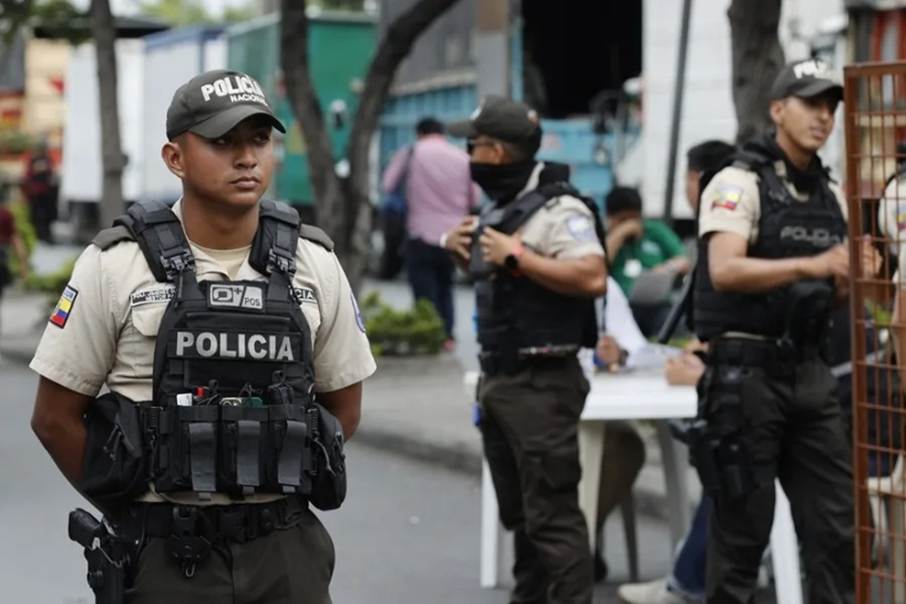
President Daniel Noboa has leaned on states of exception as a central security tool. On June 16, 2026, he declared a new 60-day state of exception in 10 provinces and three cantons, including Santa Elena. Primicias reported that Ecuador had accumulated nearly 900 days under such measures during his government, with rights such as the inviolability of home and correspondence suspended in the latest decree.
The point is not that security is optional. Ecuador is living through a real criminal reordering. The point is that a militarized emergency cannot substitute for credible institutions. If morgues lack capacity, if threatened activists do not receive protection, if ministers float conclusions before forensic certainty, the state may win checkpoints and lose trust.
For Latin America, Silva’s death falls within a familiar map. Global Witness documented 146 killings or long-term disappearances of land and environmental defenders worldwide in 2024, with 117 cases, or 82 percent, in Latin America. The Escazú Agreement, which includes Ecuador, requires states to guarantee a safe environment for environmental defenders and to prevent, investigate, and punish attacks, threats, and intimidation.
That is why Monika Silva’s story is bigger than Montañita, and also painfully Montañita. A foreign-born woman loved a place enough to enter its most dangerous arguments. Now the region is watching to see whether Ecuador can answer one human question without hiding behind paperwork: what happens to a country when the people who keep receipts begin to die?
Also Read:
Ecuador’s Emergency Habit Tests Democracy as Noboa Hunts Narco Power