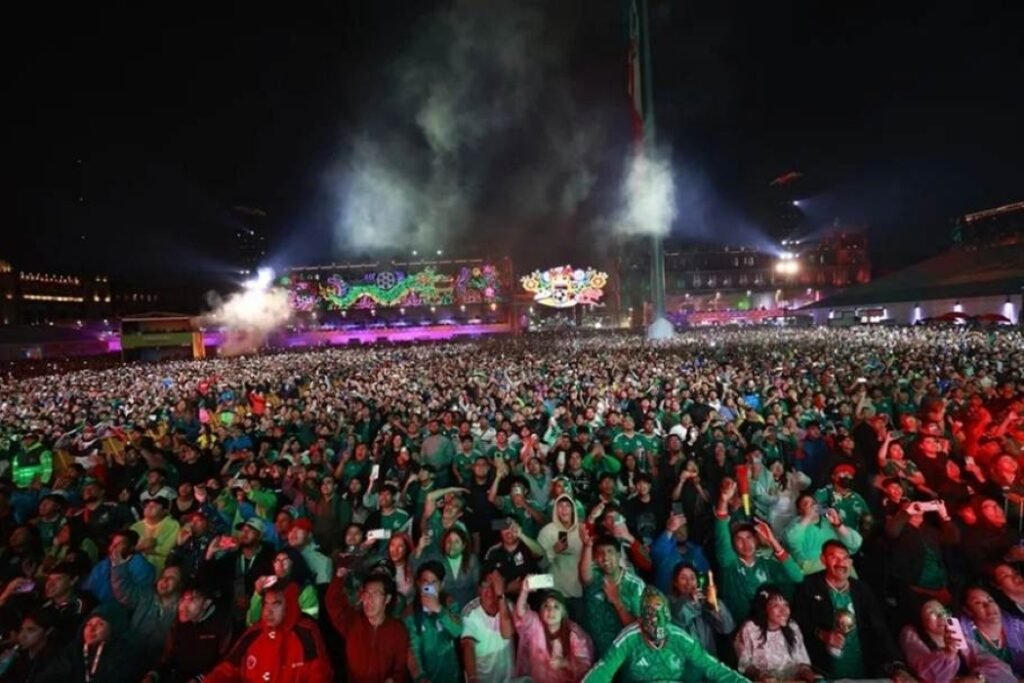
Mexico’s controversial goalkeeper chant returned against Ecuador, reviving FIFA fines, LGBTQ criticism, and a bitter diplomatic backdrop as soccer’s loudest supporters insisted the word carries street meanings deeper than the global outrage surrounding Tuesday’s World Cup showdown in Mexico City.
Five Minutes In, the Old Noise Returned
The first goal kick had barely arrived when the night tilted from soccer into something older, rougher, and more difficult to police. At the five-minute mark, Ecuador goalkeeper Hernán Galíndez placed the ball down, stepped back, measured the field, and heard what Mexican soccer has heard for more than a decade.
A single word rose from the stands.
It was not new. That was part of the problem. It was familiar enough that everyone inside the stadium seemed to know what had happened before the echo had finished bouncing off the concrete. It was the chant FIFA has fined Mexico for, the chant the Mexican federation has tried to bury with warnings, campaigns, punishments, and stadium announcements, the chant some fans still treat as a stubborn piece of terrace folklore.
On Tuesday night, in a World Cup round-of-32 match against Ecuador, it returned for the second time in the tournament. For officials, activists, and many viewers, the word was not a joke or a localism. It was a homophobic slur, aimed at degrading a player by feminizing him, sexualizing him, and questioning his masculinity. For supporters who defend it, the story is less simple. They argue that in Mexican Spanish, street language slips, mutates, and depends on tone. The same word can be hurled as “coward,” shouted as frustration, or used as a blunt insult without a literal sexual meaning.
That defense deserves to be heard carefully, not because the chant is harmless, but because soccer in Latin America is rarely just a clean moral diagram. It is class, neighborhood, masculinity, history, humor, resentment, and release, all packed into ninety minutes. The stadium is not a seminar room. It is a pressure valve.
But pressure valves can still burn people standing nearby.

A Word With Too Many Shadows
The chant’s defenders often start from a fair observation. Language does not travel evenly. A word that lands one way in Miami, Madrid, or Zurich may carry different weight in Guadalajara, Tepito, Monterrey, or East Los Angeles. Mexican speech is famously elastic, violent, funny, intimate, and contradictory. It can turn profanity into affection, insult into rhythm, and humiliation into theater.
That elasticity is real. So is the injury.
The chant is usually shouted when the opposing goalkeeper takes a goal kick, a ritual designed to rattle him in the loneliest public second of his job. He stands by himself, everyone watching, and the crowd tries to enter his body through sound. The technique is not uniquely Mexican. Soccer fans everywhere seek weak spots. They whistle, sing, curse, bang drums, and drag private anxieties into public competition. In Latin America, where soccer often carries the emotional load of politics, migration, police pressure, economic strain, and wounded national pride, the stadium becomes a place where people say what daily life forces them to swallow.
That is why the chant persists. It gives fans a feeling of authorship. It lets thousands of people become one mouth. It is crude, synchronized power.
Its origin story matters. The chant is believed to have taken shape in the early 2000s and gained force around a Mexico-United States Olympic qualifying match in Guadalajara, then exploded globally during the 2014 World Cup in Brazil. That path tells us something. It grew not in isolation, but in the old North American soccer triangle of rivalry, insecurity, and assertion. Against the United States, Mexican fans have long defended something more than a scoreline. They defend taste, memory, neighborhood soccer, the right to be loud in a world that often tells them to be grateful, quiet, or invisible.
Still, a chant born from defiance can age badly. It can begin as a local taunt and, under international scrutiny, become a public wound.
FIFA’s fines have made the issue larger, not smaller. Every punishment turns the chant into a referendum. Some fans hear “discipline” and think “censorship”. Some hear criticism and think of foreign scolding. Some hear LGBTQ advocates and sporting bodies call the word discriminatory and think their language is being flattened by outsiders who do not understand Mexican slang.
Yet the best defense of Mexican culture is not that every old habit must survive. It is that Mexican culture is strong enough to argue with itself.
Diplomacy Was Already in the Stands
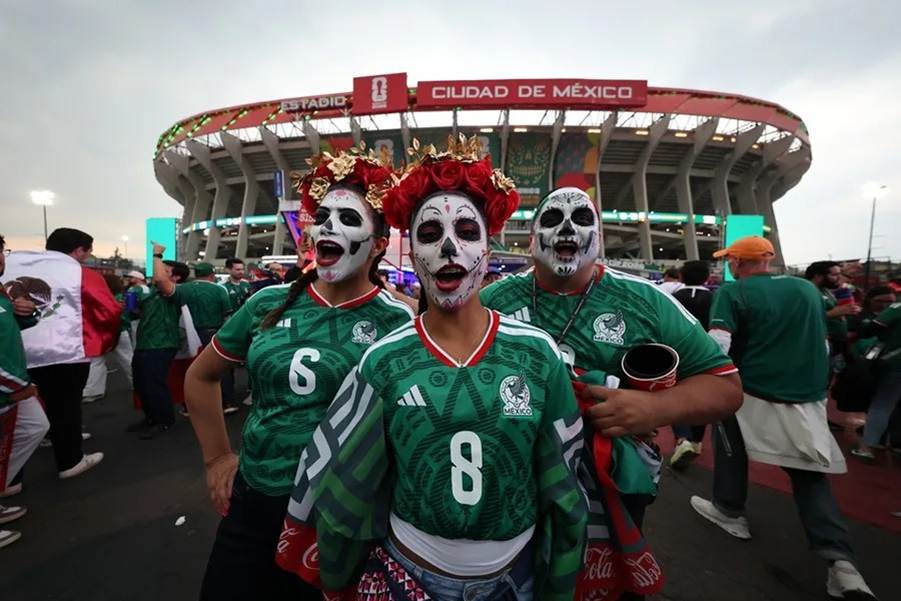
The match against Ecuador was never going to be emotionally neutral. Before the first whistle, Mexican fans had already gathered outside Ecuador’s hotel in Mexico City late Monday and into Tuesday morning. Horns, drums, motorcycles, cars, and DJs turned the sidewalk into a sleepless warning. It was gamesmanship, yes, but also a reminder of how quickly Latin American soccer absorbs politics.
Mexico and Ecuador have been living through a diplomatic rupture since April 2024, when Ecuadorian police entered the Mexican embassy in Quito to arrest former Vice President Jorge Glas, who had been granted asylum there. In a region where embassies carry the memory of coups, exiles, and sanctuary, that raid landed as more than a legal dispute. It touched the old Latin American nerve: sovereignty. Who has the right to cross a threshold? Who protects the persecuted? Who decides when the rules bend?
Ecuadorian President Daniel Noboa has signaled a willingness to repair ties. Mexican President Claudia Sheinbaum said last Monday that she would not discuss the matter until after the match. That detail sounds almost theatrical, but it also feels honest. In Latin America, soccer does not pause diplomacy. Sometimes it holds diplomacy hostage.
So when the chant came, it did not float in empty air. It arrived inside a stadium already carrying embassy walls, national pride, sleepless hotel corridors, and the sharp humor of fans who know that soccer is one of the few places where ordinary people can still make presidents and federations listen.
That does not excuse everything shouted in the heat. It explains why scolding alone fails.
The Mexican federation’s problem is not simply enforcement. It is persuasion. Fans must be convinced that retiring the chant is not surrender to FIFA, not obedience to Europe, not a betrayal of barrio language or stadium mischief. The better argument is more Mexican than institutional: find a sharper insult, a funnier one, a more inventive one, a chant that intimidates without borrowing its force from a wound carried by gay people who also wear the jersey, buy the ticket, cry for the same goals.
Because they are there too. In the stands. In the bars. In the families watching at home.
Mexico’s soccer culture has never lacked imagination. It has songs for heartbreak, jokes for disaster, nicknames for every kind of hero and fraud. It does not need one tired word to prove it can be dangerous.
Tuesday night showed the chant still has life. It also showed that the argument around it has matured. The question is no longer whether Mexican fans are uniquely guilty. They are not. The question is whether a great soccer country can preserve its defiant voice while changing one note that keeps hurting people who should feel at home inside it.
Also Read:
La Guaira Listens for Life as Venezuela’s Quake Grief Deepens