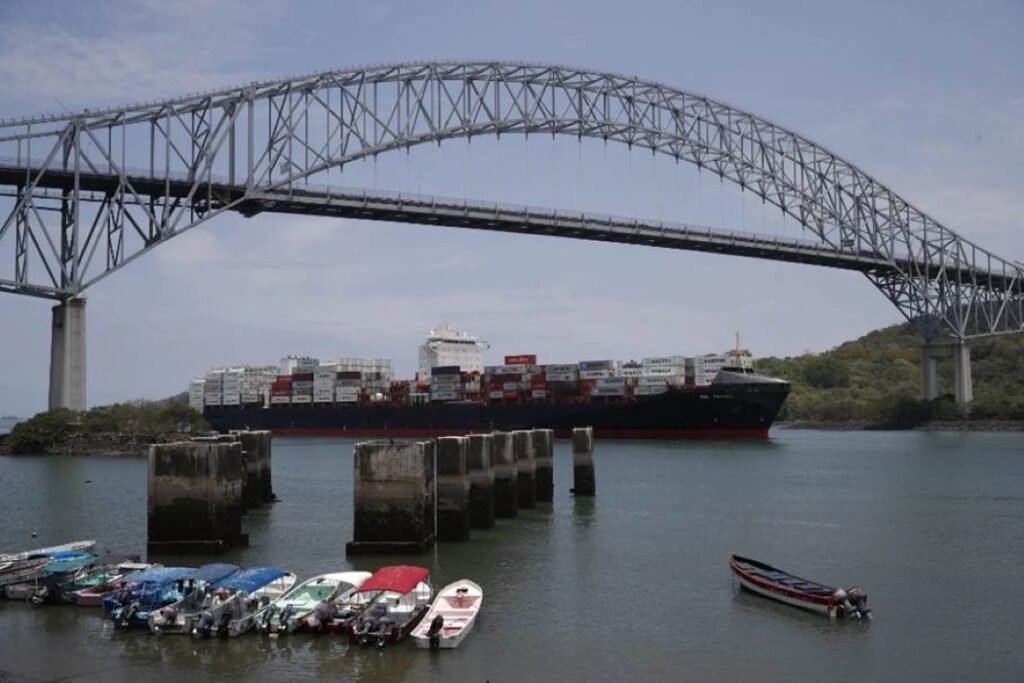
Trump’s renewed Panama Canal warnings revive an old imperial ache: U.S. security anxieties, China fears, and a small republic’s insistence that sovereignty is not a lease, a favor, or a nostalgic trophy from Washington’s century of Caribbean power politics abroad.
A Canal, a Crowd, and an Old Wound
In Bismarck, North Dakota, far from the humid locks and ship horns of the isthmus, Donald Trump turned the Panama Canal into a stage prop for American grandeur. Speaking at Theodore Roosevelt’s presidential library during an event tied to the 250th anniversary of U.S. independence, he reached back to one of Washington’s oldest hemispheric habits: telling Latin America that security begins with U.S. suspicion.
“China is trying to take over the Panama Canal,” Trump said, casting the waterway as both a trophy and a threatened inheritance. The phrasing was familiar. Since returning to the White House in 2025, he has repeatedly framed the canal as something America lost, something Panama monetized, and something China might use. It is a compact political story. It is also, in Panama, a dangerous simplification.
The canal has never been just concrete, water, gates, and tolls. It is the nation’s scar and spine. Generations of Panamanians grew up with the Zone as a reminder that sovereignty could be divided by fence lines and foreign police. The 1999 transfer did not feel like a giveaway in Panama City. It felt like history finally exhaling.
Trump sees the opposite. He told the crowd the United States “gave it away,” and repeated the claim that 38,000 people died building it. He described the canal as the most expensive thing America ever built and also the most profitable. Then came the grievance about fees, with Panama accused of multiplying rates and making “enormous sums of money.”
That line may land well in a U.S. political culture trained to resent global tollbooths. But in Panama, canal revenue is not an exotic windfall. It is payroll, infrastructure, debt management, national pride, and proof that a small republic can competently run a global artery. To call that profit suspicious is to miss the point of postcolonial administration. Panama did not inherit a souvenir. It inherited a state-building responsibility.
China Anxiety Meets Panamanian Memory
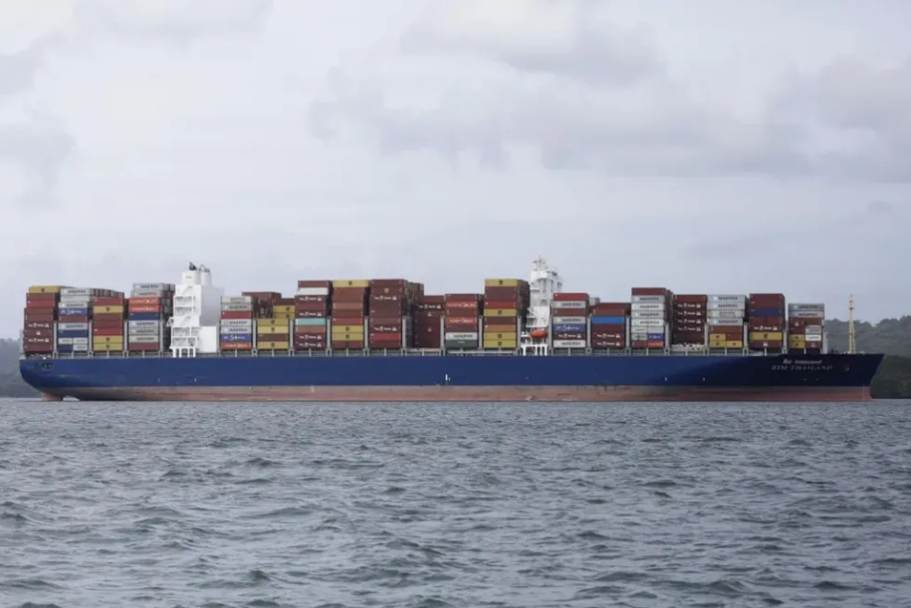
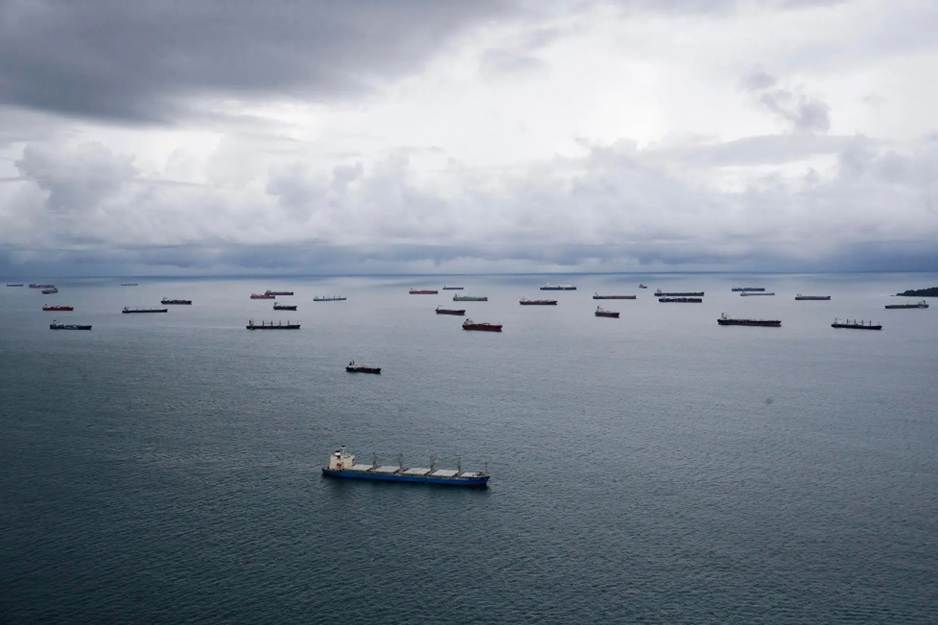
There is a real strategic question under Trump’s theater. The canal matters to U.S. naval movement between the Atlantic and Pacific. It matters to supply chains, energy markets, grain exports, container shipping, and crisis planning. Depending on the estimate, roughly 3 percent to 6 percent of world commerce passes through it. Washington would be negligent not to watch who operates around it.
But watching is not the same as owning. That distinction is where the politics become combustible.
Trump’s China argument has rested partly on the presence of CK Hutchison, the Hong Kong conglomerate once linked to operations at two of the five ports around the canal. In Washington’s more hawkish circles, that was enough to evoke a nightmare of Chinese leverage at the gates. In Panama, the story has already shifted. A February 23 court ruling declared the old concession null, ending a nearly 30-year arrangement that had long drawn criticism at home.
That matters. Panama was not sleeping while Washington worried. Its institutions acted, messily but decisively, in a way that complicates the idea of a helpless country being swallowed by Beijing. Latin American history is full of outside powers mistaking local politics for emptiness. Panama’s port controversy was not proof that sovereignty had vanished. It was proof that sovereignty was being fought over in public.
Then came Admiral Daryl Caudle, the U.S. Navy’s chief of operations, saying something less useful for campaign rhetoric but more important for policy. He said he did not see a weakness in canal security. He called the apparatus robust. U.S. vessels, he said, were getting the security they needed.
That statement cuts through the fog. If the U.S. Navy sees no immediate deficiency, then the emergency tone becomes less about present danger and more about future leverage. China is the word, but control is the subtext.
For Panama’s President José Raúl Mulino, the challenge is delicate. He needs Washington. No serious Panamanian government can pretend otherwise. The United States is still the indispensable security partner in a region squeezed by narcotrafficking, organized crime, migration pressures, and maritime vulnerability. Yet Mulino also cannot look like the custodian of a canal on loan from a nostalgic empire.
That is why the 2025 security memorandum between Panama and the United States produced such sharp local reactions. The agreement expanded joint training on Panamanian soil. Officials in both countries said it strengthened cooperation against drug trafficking, organized crime, and threats to the canal. Critics in Panama heard another sound: boots returning through the side door.
Mulino rejected the sovereignty alarm, noting that more than 20 similar agreements had been signed in recent decades. Technically, he may be right. Politically, the number does not erase the memory. In Panama, sovereignty is not theoretical. It has dates, cemeteries, martyrs, neighborhoods, and grandparents who remember the line between Panamanian streets and U.S. jurisdiction.
The Small Republic Holds the Keys
The deeper story is not whether Panama should cooperate with Washington. It should. The canal cannot be defended by slogans, and the security risks around it are real. The Inter-American Naval Conference in Panama City, with 17 member countries plus French and Dutch observers, reflects a region where maritime crime, disaster response, and naval interoperability are not abstractions.
The question is whether cooperation can survive Trump’s language of repossession.
There is a Latin American rhythm to this dispute, old and bitter. Washington announces a security concern. A local government insists it is sovereign. Domestic opponents accuse the government of submission. China watches for openings. The United States asks for trust while speaking as if history began with its own engineering feats.
Panama has spent decades trying to escape precisely that script. It is not a great power, but it is not a pawn without agency. The canal’s success since 1999 is one of the clearest regional answers to the old assumption that only Washington could manage strategic infrastructure. The locks did not collapse when the flag changed. The ships kept moving. The country became, not perfectly but unmistakably, the administrator of its own destiny.
Trump’s rhetoric risks converting a manageable security concern into a nationalist confrontation. It gives Panamanian skeptics an easy argument against even practical cooperation. It also helps Beijing pose as the calmer partner, the one less likely to speak of “taking back” anything. That is the irony. A U.S. strategy meant to limit Chinese influence can widen China’s diplomatic space if it treats Panama like property.
The wiser path would be less theatrical and more exacting. Washington should press for transparent port contracts, cybersecurity safeguards, anti-corruption enforcement, and reliable naval passage. Panama should welcome scrutiny that strengthens institutions, not threats that shrink its dignity. The canal is too important for romantic imperial memory and too Panamanian for anyone else’s nostalgia.
The small republic at the isthmus knows the weight of geography. It knows that every empire passing through its waters eventually calls its interest a necessity. Trump’s warning may thrill a crowd in North Dakota. In Panama, it lands differently, with the old echo of a giant asking why the keys are no longer in its pocket.
Also Read:
Colombia Bets on De la Espriella as Markets Count Pesos