Paraguay faces France in the 2026 World Cup knockout round carrying a 1998 wound, a stubborn defensive inheritance, and a chance to turn old heartbreak into fresh proof that Guaraní football still knows how to make giants sweat again on Saturday.
Lens Still Hums
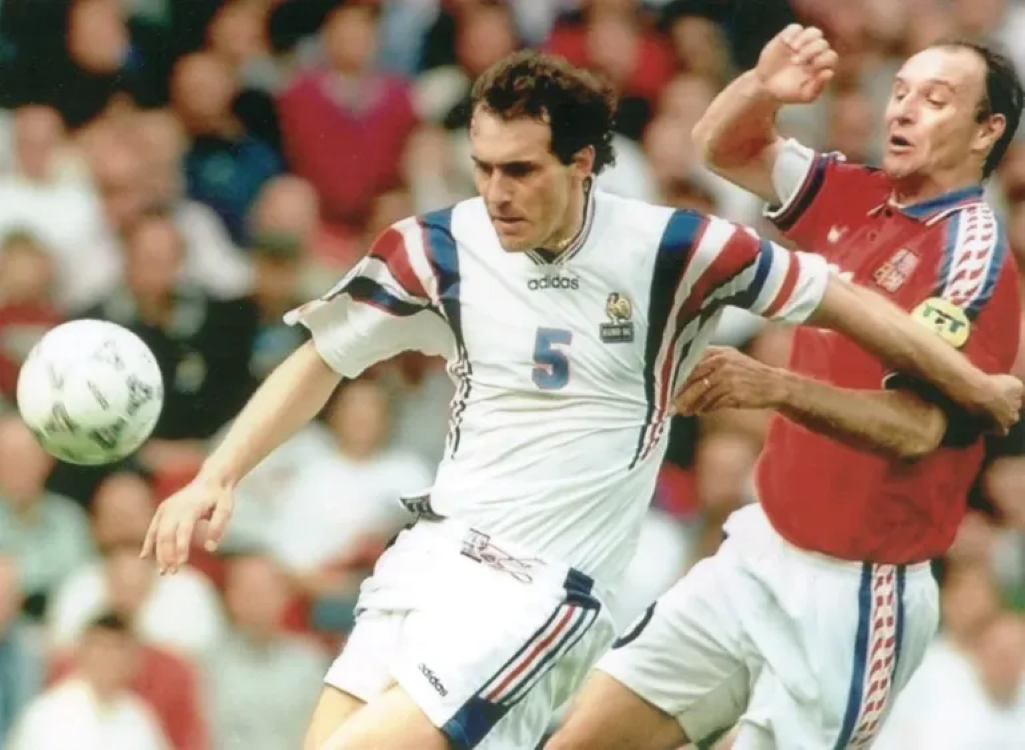
The clock said 114 minutes in Lens, and Paraguay was still standing. France had the crowd, the pedigree, the home World Cup, the blue shirts, the future champions. Paraguay had José Luis Chilavert, Carlos Gamarra, Celso Ayala, Francisco Arce, Pedro Sarabia, Roberto Acuña, Julio César Enciso, and Carlos Paredes, men arranged like a locked gate across a narrow road.
Then David Trezeguet nodded the ball down, Laurent Blanc struck it on the volley, and the first golden goal in World Cup history cut the night in two. France survived. Paraguay went home. A country that had made the hosts suffer for nearly two hours was reduced to one cruel football fact: almost.
EFE’s dispatch from June 28, 1998, caught the exhaustion and injustice of it cleanly, writing that the Guaraníes made the World Cup hosts “sweat blood” and were beaten only after nearly two hours of play, worn down by fatigue. That sentence still feels less like a match report than a family memory. Paraguayan football has carried it for a generation.
Now France and Paraguay meet again on Saturday in the round of 16 at the 2026 World Cup, and the fixture arrives with the old echo intact. France has never lost to Paraguay. The record says so plainly. But records do not run, tackle, breathe, or feel the pressure when a supposedly smaller football nation refuses to behave like one.
For Paraguay, this is not nostalgia dressed as motivation. It is a reckoning with a long football identity: compact, proud, unglamorous, and difficult to kill. In Latin America, where style often becomes a national myth, Paraguay has traditionally built its case on resistance. The country’s football has rarely been about seduction. It has been about endurance, aerial strength, concentration, and the quiet belief that a match can be made uncomfortable enough to make talent lose its rhythm.
France knows that story better than most.
The Weight of Never
History is not kind to Paraguay. The first World Cup meeting took place in Sweden in 1958 and produced one of the wildest scorelines in tournament history. France won 7-3 in Norrköping, though Paraguay had led 3-2 early in the second half. Florencio Amarilla scored twice. Romero added another. For a while, the French looked shaken.
Then the match became a French avalanche. Just Fontaine, already on his way to becoming a World Cup legend, scored twice. Piantoni, Wisnieski, Kopa, and Vincent joined the punishment. What had begun as a Paraguayan ambush ended as a lesson in how quickly European firepower could turn Latin American boldness into damage control.
The later meetings softened the violence but not the pattern. France and Paraguay drew 0-0 in 2008. They drew 1-1 in 2014. In 2017, with Didier Deschamps already managing the French team he once captained, France won 5-0. Across five matches, Paraguay has found frustration rather than victory.
Still, Saturday’s match is not played by ghosts alone. France carries its own pressures. A favorite is never simply a favorite in a knockout game. It is a team walking with a piano on its back. Every minute without a goal becomes a question. Every blocked shot becomes a story. Every Paraguayan clearance toward midfield can begin to feel like an accusation.
That is the space Paraguay must occupy. Not sentiment. Not revenge for Blanc’s volley. Something more practical and more dangerous: the art of making France remember Lens.
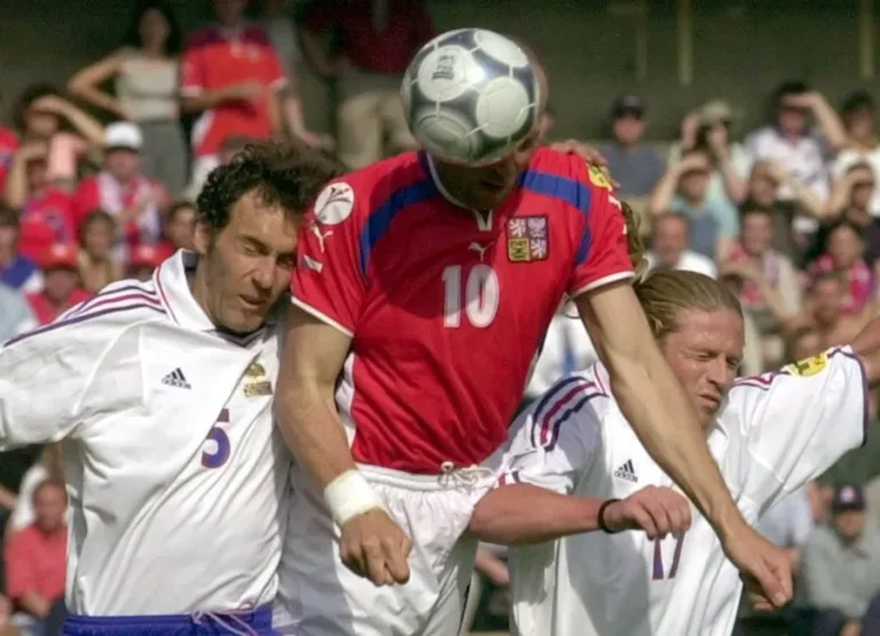
The 1998 match matters because it showed the emotional cost of facing Paraguay when Paraguay is fully itself. The French team that day was formidable even without the suspended Zinedine Zidane. Fabien Barthez was in goal. Blanc, Marcel Desailly, Lilian Thuram, and Bixente Lizarazu formed the spine of an elite defense. Didier Deschamps, Emmanuel Petit, and Youri Djorkaeff gave the midfield its structure. Thierry Henry and Trezeguet, young and sharp, carried a threat.
Yet Paraguay dragged them into discomfort. That is the lesson for 2026. France may have more famous names, deeper club résumés, more commercial shine. But knockout football has a rural memory. It rewards teams that understand suffering, distance, heat, doubt, and scarcity. Paraguay, as a football culture, understands all of that.
Guaraní Patience, French Pressure
There is also a cultural truth tucked inside this matchup. Paraguay has often been overlooked in South American football conversations dominated by Brazil’s beauty, Argentina’s mythology, Uruguay’s garra, Colombia’s rhythm and Chile’s cycles of rebellion. Paraguay sits inland, bilingual in Spanish and Guaraní, shaped by war, migration, dictatorship, rural conservatism and a stubborn sense of survival. Its football reflects that geography of persistence.
When Paraguay defends well, it is not merely tactical. It is historical. The team closes space as if protecting a small national room from bigger neighbors and louder narratives. That can sound romantic, but it is visible on the field. The best Paraguayan sides have known how to make a match feel narrow, physical, repetitive, and mentally expensive.
France will try to widen it. That is where Saturday may turn. If the French score early, history could loosen its grip, and Paraguay may be forced into a game it does not want. But if Paraguay reaches halftime level, or drags the match deep into the second half, the old pressure changes shirts. The burden moves toward France. The favorite starts hearing footsteps from 1998.
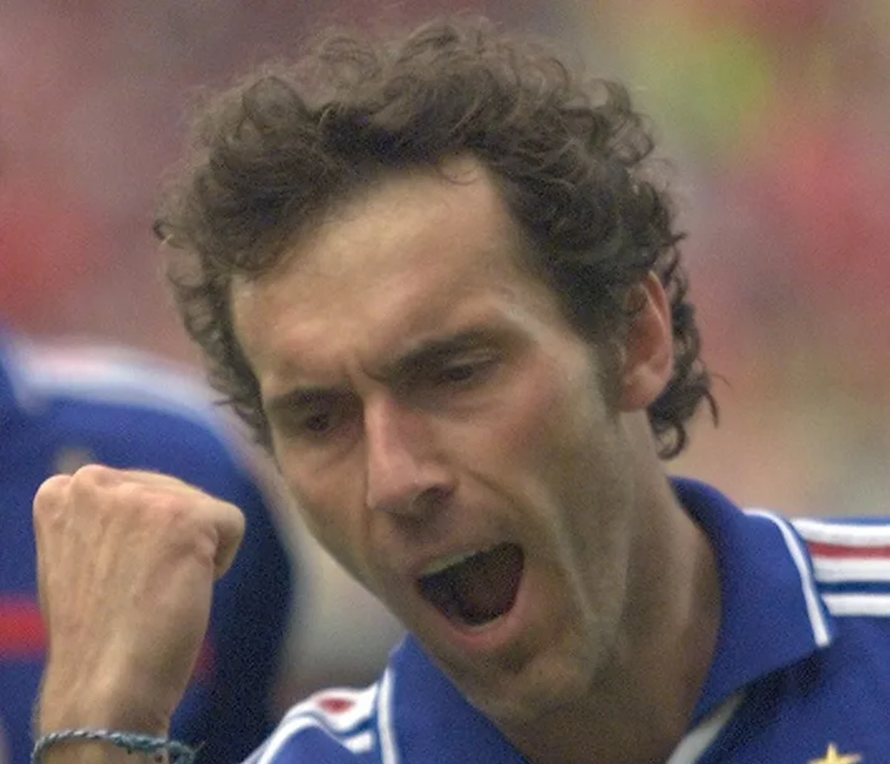
EFE’s archive image of Laurent Blanc celebrating elsewhere in a French shirt is almost too neat a symbol. Blanc is not just a former defender in this story. He is the man who made Paraguay’s great resistance come to an end. Chilavert, beaten at last, became part of the golden goal’s mythology. That rule is gone now, retired after too many matches were distorted by its sudden-death cruelty. But the wound remains.
The coming match offers Paraguay something rarer than revenge. Revenge is theatrical. This is about authorship. A win over France would allow Paraguay to write itself back into the World Cup imagination not as the team that nearly broke the host nation in Lens, but as the team that finally finished the job.
France will see a round-of-16 opponent. Paraguay will see 114 minutes, a bouncing ball, a volley, and a quarter century of unfinished conversation. That does not guarantee an upset. It does guarantee a match with memory in its lungs.
Also Read:
Colombia-Born Quiñones Turns Mexico’s World Cup Dream Into Living Proof