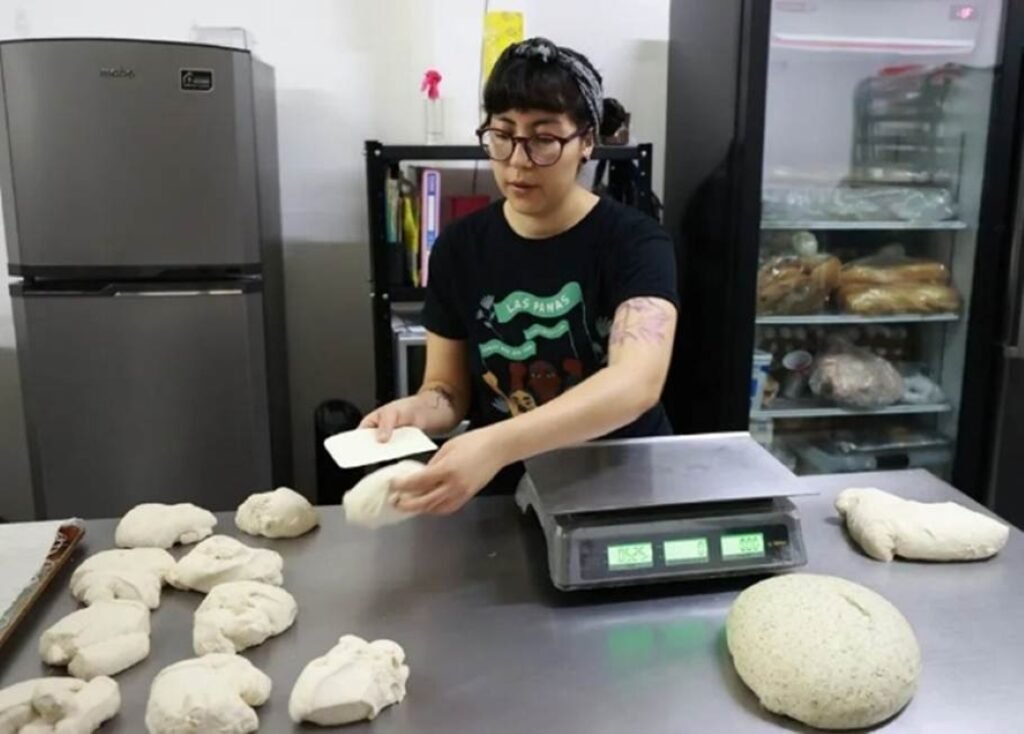
In downtown Mexico City, Las Panas smells of sugar, yeast, and feminist defiance. Its threatened demolition shows how gentrification turns women’s safety, work and memory into collateral, and why Latin America’s housing crisis is also a gender crisis.
A Bakery That Held the Line
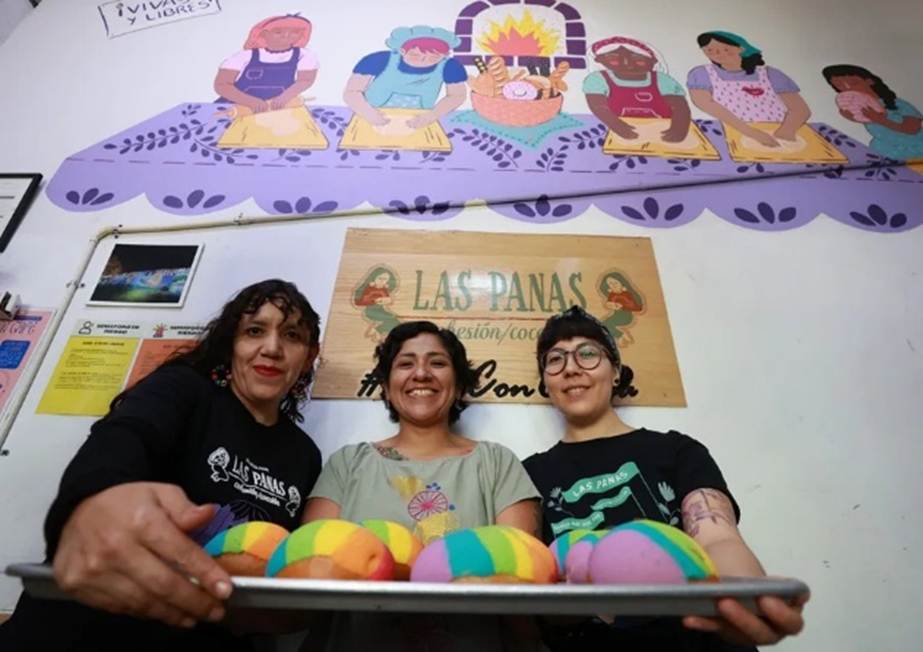
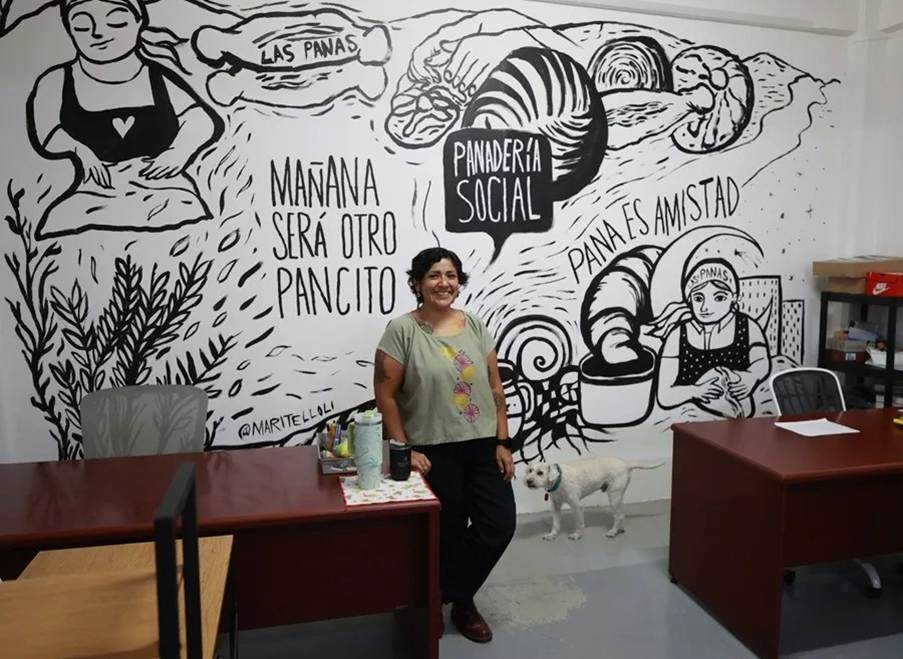
By the time the bread comes out, the neighborhood has already told on itself. There are murals with feminist slogans, the rush of people through Cuauhtémoc, the blunt geometry of nearby new projects, the smell of dough rising from being given time. Las Panas began as an unfinished space and, in less than four years, became a social bakery built by women to confront gender violence. Now it is scheduled to be torn down for housing, EFE reported after interviews at the site.
That is the cruelty of it. The building that replaces it may be sold as urban progress. More units. Cleaner walls. Better returns. But Las Panas was already housing something the market rarely prices correctly: safety. Rosalía Trujano, the project’s director, told EFE that gentrification has consumed the area over four years, drying up water, thinning the local economy and turning the zone into a corridor of expensive works tied, in her telling, to the World Cup rush around the nearby Calzada Flotante de Tlalpan.
For women in Mexico, that pattern lands on already bruised ground. INEGI’s ENDIREH survey found that 70.1% of women 15 and older had experienced some form of violence in their lives, and 42.8% had experienced violence in the prior year. In public community settings, where the walk home, the bus stop, and the street corner all become contested territory, 45.6% reported violence over a lifetime and 22.4% in the previous 12 months. A bakery like Las Panas is not a lifestyle amenity. It is a neighborhood counterweight to fear.
The Rent Is Also a Gendered Threat
The word gentrification can sound bloodless, as if cities merely change wardrobes. In Mexico City, it often means the people who made a barrio livable are told they can no longer afford to remain human there. A 2024 study in the Proceedings of the National Academy of Sciences found that average housing prices in the capital quadrupled over two decades, while per capita labor income fell relative to inflation. By 2015, the average family faced four times as much difficulty accessing housing as it did in 2005.
That squeeze is not gender neutral. The ILO reported that in 2024, women’s labor force participation in Latin America and the Caribbean stood at 52.1%, far below men’s 74.3%, and that women earned, on average, 20% less than men. ECLAC’s Gender Equality Observatory says 25% of women in the region have no income of their own, compared with 10% of men. When rent jumps, women are less likely to have the savings, contracts or formal pay slips that make staying possible.
This is why Trujano’s phrase, as relayed to EFE, that leaving means “starting from scratch,” carries a whole Latin American archive inside it. Women start from scratch after fleeing partners. Mothers start from scratch after landlords sell. Migrants start from scratch after crossing borders that treat their bodies as paperwork. Workers start from scratch when the city decides their labor is charming in a mural but inconvenient on a lease.
Las Panas Cohesión Cocción, Trujano told EFE, is “not just a bakery.” Since 2017, it has operated as a civil association supporting women and gender-diverse people living with violence through bread-making workshops designed as therapy and as training for economic independence. The goal, she said, is for women to leave stronger, with a tool they can carry into other bakeries, internships, or self-employment. That matters because violence often survives through dependency. A recipe, a wage, a practice shift, a person who expects you tomorrow, these can become exit routes.
A Small Oven, a Regional Warning
Alma Palomec’s story, told to EFE, explains the stakes better than a policy memo. During the pandemic, when homes across the region became pressure cookers for women trapped with aggressors, she found in Las Panas a place to return to herself. She described bread as a starting point. Even after learning of the eviction, EFE reported, she kept working the dough slowly, carefully, as someone who understands that violence and labor are not lived alone.
That sentence should travel beyond Mexico. In Latin America, feminist organizing has often begun where the state was late: kitchens, church patios, union halls, WhatsApp groups, mothers’ searches in the desert, neighborhood workshops behind roll-up doors. ECLAC recorded at least 3,770 femicides or gender-related violent deaths of women in 26 countries and territories of Latin America and the Caribbean in 2024, at least 11 each day. Against that scale, Las Panas is tiny. That is precisely why it matters. Small places are where women practice surviving before institutions learn their names.
There is a temptation to treat displacement as sad but inevitable, the rent of modernization. That is lazy. Cities choose what they protect. They protect stadium routes, tourist corridors, brands, glass towers, foreign capital, and photo-ready sidewalks. They can also protect bakeries where women learn to earn and breathe. If Mexico City cannot make room for both housing and community care, then its development is not sophisticated. It is merely expensive.
Trujano told EFE that Las Panas is preparing a Day of the Dead farewell with neighbors in November, not as surrender but as a way to mark an ending that begins elsewhere. That is a very Mexican kind of defiance, mourning with flowers, feeding the living, refusing to let death have the final word. Still, women in Latin America should not have to become experts in rebirth every time the market discovers their block. The oven can move. The loss should not be mistaken for progress.
Also Read:
Mexico World Cup Faces Women’s Safety Reckoning Beyond Stadium Lights