Argentina Senate set to vote labor reform after last-minute deal on key changes
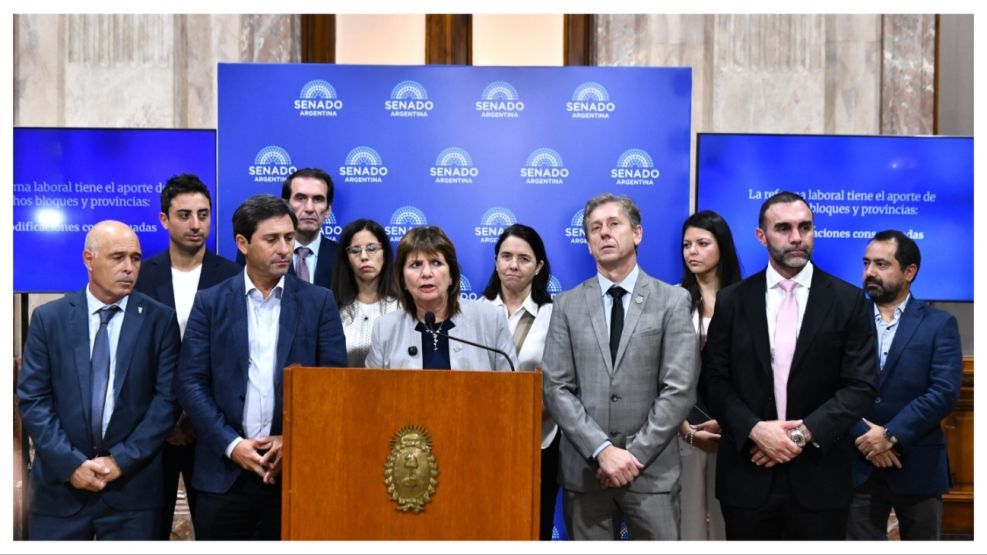
The revisions steered by Senate ruling bloc leader Patricia Bullrich are key to advancing the labor reform
Argentina’s ruling coalition and centrist opposition blocs in the Senate reached a deal to vote on a labor reform bill on Wednesday, starting at 11 a.m., during an extraordinary session, according to the final draft circulated in the upper house and local reporting. The revisions steered by Senate ruling bloc leader Patricia Bullrich are key to advancing the labor reform and include dropping the corporate income tax cut—preserving revenues for provinces and the federal government—concessions to unions and business chambers on mandatory contributions, maintaining the allocation to union-run health funds, and moderating the original severance fund proposal.
A key change is the removal of Article 190 from the majority report, which would have cut the corporate income tax rate for large companies from 30% to 27%.
The agreement keeps the employer contribution to the union-run health funds system at 6% of wages for employees in a formal labor relationship—dropping a proposed cut to 5%—and adds language allowing the health services regulator to audit the use of those contributions.
It also deletes Article 137, which would have allowed employers to act as withholding agents for union membership dues under specific conditions.
On collective bargaining agreement levies, the text sets caps: for business chambers and employer-linked entities, the contribution “may not exceed” 0.5% of wages; for workers’ associations applicable to members and non-members, the cap is 2%. The draft adds that from Jan. 1, 2028, employer contributions to business chambers become “strictly voluntary.”
The final draft also includes provisions on maintaining the National Labor Court system until a transfer of competencies agreement is implemented with the City of Buenos Aires, and a reduction in employer social security contributions of 1 percentage point for large firms and 2.5 points for micro, small and medium-sized companies, with a mechanism to expand the cuts subject to executive action and bicameral approval.
On severance-related changes, the bill outlines Labor Assistance Funds financed through mandatory monthly contributions of 1% (large firms) and 2.5% (SMEs), with potential increases under the same approval framework.
The Senate debate comes amid mounting friction with unions, which have signaled protests against the government’s labor reform push.