Argentina unemployment rises to 7.5% at end-2025, Indec says
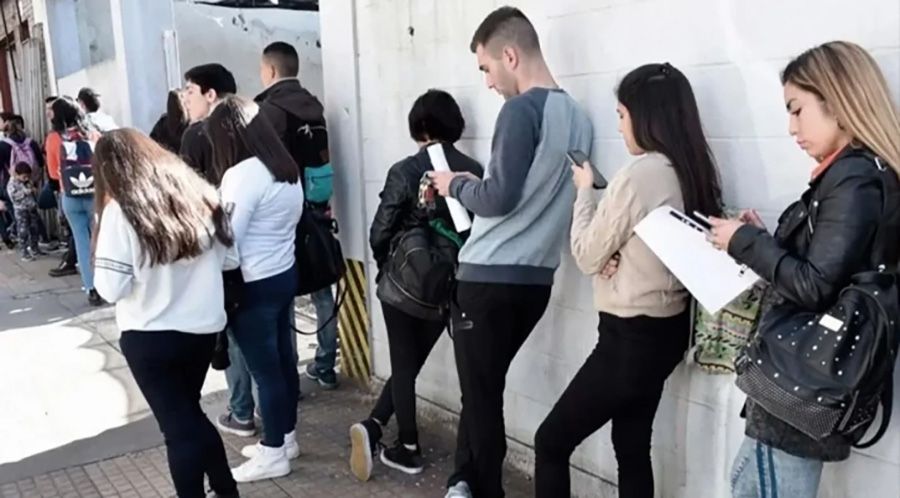
By region, Greater Buenos Aires posted the highest unemployment rate at 8.6%, followed by the Pampas region at 7.7%
Argentina’s unemployment rate stood at 7.5% in the fourth quarter of 2025, up from 6.4% in the same period of 2024 and from 6.6% in the previous quarter, according to data released on Wednesday by the national statistics agency, Indec. The employment rate was 45.0%, while the activity rate reached 48.6% across the 31 urban areas covered by the Permanent Household Survey.
The official report said the 1.1 percentage point year-on-year increase in unemployment was statistically significant, as was the 0.9 point rise from the third quarter of 2025. Indec defines unemployed people as those without a job who are available to work and actively seeking employment. Within the survey universe, that amounted to about 1.1 million people; projected onto Argentina’s estimated population of 47.5 million, the figure comes to roughly 1.7 million unemployed.
By region, Greater Buenos Aires posted the highest unemployment rate at 8.6%, followed by the Pampas region at 7.7%. It was followed by the Northeast at 5.6%, Cuyo at 4.9%, Patagonia at 4.8% and the Northwest at 4.2%. The report also showed a sharp gap between larger and smaller cities: in urban areas with 500,000 inhabitants or more, unemployment reached 8.0%, compared with 4.7% in those below that threshold.
Indec estimated that 13.5 million people were employed in the main urban centres at the end of 2025. Of that total, 9.7 million were wage earners and 3.8 million were non-wage workers. Among the latter group, 86.9% were self-employed, 11.7% were employers and 1.4% were unpaid family workers.
The report also pointed to a high share of precarious or weakly protected employment. Only 56.9% of employed workers were in formal jobs, while 43.0% were informal. Among wage earners, 63.7% made pension contributions and 36.3% did not. In addition, 29.2% of employed people were overemployed — working more than 45 hours a week — while 12.3% were underemployed, meaning they worked fewer than 35 hours.
The figures depict a labour market with relatively stable participation levels but weaker job absorption. While the activity rate changed little, unemployment rose again and the composition of employment continued to show a heavy weight of informal work and self-employment.