Monday Night Club’s Rory Smith and ex-Manchester United player Phil Jones discuss why Man United appoint former players as interim managers, as Darren Fletcher takes on the role.
The Argentine province of Tierra del Fuego is grappling with a deepening economic and institutional crisis, amid mounting industrial layoffs, high-level government resignations, and a sharp local debate over the US military intervention in Venezuela.
The commercial and industrial sectors in Tierra del Fuego reported a bleak conclusion to 2025, with 160 layoffs in the commercial sector alone. Labor leaders attribute the decline to a lethal combination of national and provincial policies.
The opening of imports, the reduction of tax benefits under the industrial promotion regime, and the slashing of national funds have severely impacted the local economy.
In early November, the electronics giant Newsan dismissed over 150 workers. Displaced employees reported receiving termination notices without cause, even while on medical leave or vacation.
Daniel Rivarola, head of the Trade Employees Center (CEC), warned that unregistered employment has surged to 20% as laid-off workers attempt to open small, informal businesses to survive.
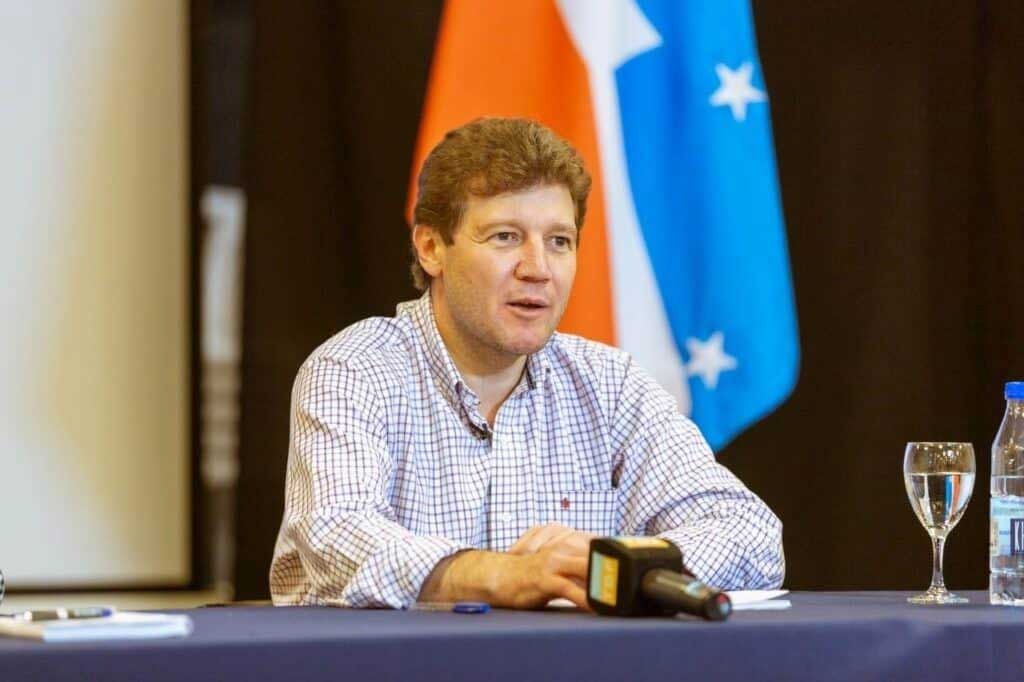
The economic strain has coincided with a significant shake-up in Governor Gustavo Melella’s administration. Effective January 1, 2026, several key officials have departed their posts.
Francisco Devita resigned as Economy Minister after two years, citing the extreme stress of managing the province’s finances during the current crisis.
Additionally, the resignations of Andrea Bianchi (Secretary of Environment) and Ayelén Boryka (Undersecretary of Natural Resource Management) were also accepted. These departures suggest a broader restructuring of the provincial cabinet as it faces fiscal deficits and industrial stagnation.
Despite the local turmoil, Tierra del Fuego’s political leadership has taken a firm stance on the capture of Nicolás Maduro in Venezuela. Governor Melella publicly condemned the US military actions, stating that the lack of democracy must be remedied with more and better democracy. He emphasized that Latin America must remain a territory of peace and sovereignty.
Ushuaia Mayor Walter Vuoto joined the condemnation, repudiating any military action that violates the territorial integrity of a nation. He asserted that no power can claim the right to intervene outside the law.
Tierra del Fuego is the Argentine province technically holding jurisdiction over the Falkland/Malvinas Islands and other BOTs (British Overseas Territories) in the South Atlantic.
We project producing 2.5 million barrels of oil per day throughout this year, Chambriard said
Brazil’s oil and natural gas production totaled 4.921 million barrels of oil equivalent per day (boe/d) in November 2025, with 3.773 million barrels per day (bbl/d) of oil extracted, which represented a 6.4% decrease from the previous month and a 13.9% increase compared to the same month in 2024.
Natural gas production stood at 182.57 million cubic meters per day (m³/d), representing a 6.3% shrinkage compared to October and a 15.7% surge compared to November 2024, the monthly bulletin on oil and natural gas production released on Monday (Jan. 5) by the National Agency of Petroleum, Natural Gas, and Biofuels (ANP) showed.
As for pre-salt numbers, oil and natural gas production in the same month stood at 3.913 million boe/d – representing 79.6% of the amount produced in Brazil.
Production fell by 8.5% compared to the previous month and grew by 15.6% compared to the same month in 2024, the report reads.
Of the total, 3.024 million bbl/d is oil and 141.27 million m³/d is natural gas from 178 wells.
According to the ANP, also in November, natural gas utilization reached 96.9%. A total of 61.87 million m³/d was made available to the market, and 5.71 million m³/d was flared. There was a 5% increase in flaring compared to the previous month and an 8.1% reduction compared to November 2024, the agency added.
Most of the oil (97.7%) and natural gas (85.7%) production is said to have stemmed from offshore fields. ”The fields operated by Petrobras – either alone or in consortium with other companies – accounted for 89.35% of total production,” said the ANP, adding that production came from 6,082 wells – of which 539 offshore and 5,543 onshore.
The field that produced the most oil in November 2025 was Búzios, in the pre-salt layer of the Santos Basin, which recorded 744,300 bbl/d. In natural gas, the Mero field ranked first, also in the Santos Basin, with 40.80 million m³/d.
The facilities with the highest oil production were the FPSO (floating production, storage, and offloading) unit Almirante Tamandaré, in the Búzios Field, with 239,453 bbl/d); and for gas, the Marechal Duque de Caxias FPSO, in the Mero field, with 12.83 million m³/d.
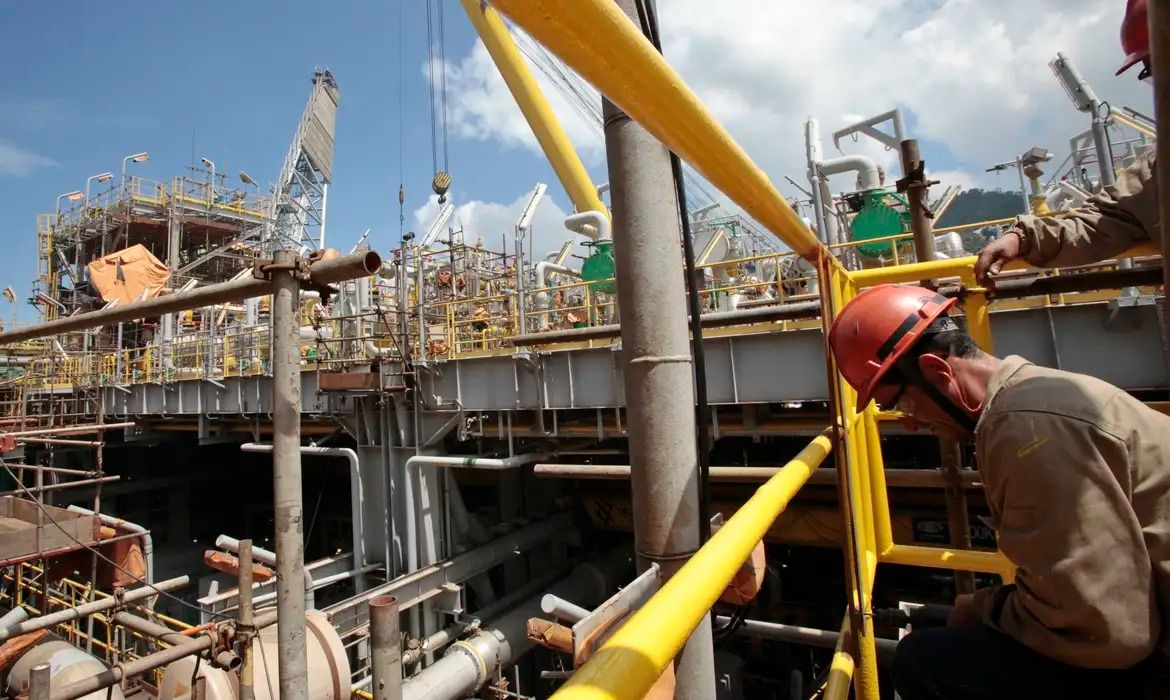
In this scenario, Petrobras is commencing operations on the P-78 platform in the Búzios Field. Production started on December 31 with a capacity of 180,000 barrels of oil and 7.2 million cubic meters of gas per day, thus increasing the field’s installed production capacity to approximately 1.15 million barrels of oil per day.
Furthermore, the operation will allow gas to be exported to the mainland via an interconnection with the Rota 3 gas pipeline in Itaboraí, Rio de Janeiro, expanding Brazil’s gas supply by up to 3 million cubic meters per day.
With the first oil from P-78, we are starting the year by advancing toward our main goal for 2026: increasing Petrobras’ oil and gas production. We project producing 2.5 million barrels of oil per day throughout this year, and a large part of that will come from Búzios, the country’s largest field in terms of reserves and production. In addition, we are expanding the supply of natural gas to the Brazilian market, another goal outlined in our Business Plan, said Petrobras President Magda Chambriard.
According to Petrobras, the platform is equipped with technologies aimed at emissions reduction and greater operational efficiency, including an exhaust gas recovery system, variable-speed drives for pumps and compressors, and energy integration between hot and cold streams in oil and gas processing.
The P-78 is the seventh platform in operation in the Búzios Field, the largest in Brazil in terms of reserves, which surpassed the mark of 1 million barrels per day in October 2025. Discovered in 2010, the field is located 180 kilometers off the coast of the state of Rio de Janeiro, in the ultra-deep waters of the Santos Basin, at a depth of more than 2,000 meters. (Source: Agencia Brasil)
El cineasta cubanoamericano Joe Cardona y sus invitados rompen los muros culturales que han aislado a Cuba por mucho tiempo y tienden un puente musical para conocer la música que una vez fue censurada, prohibida y descartada.
Delcy Rodríguez’s tenure as caretaking President has been deemed feeble
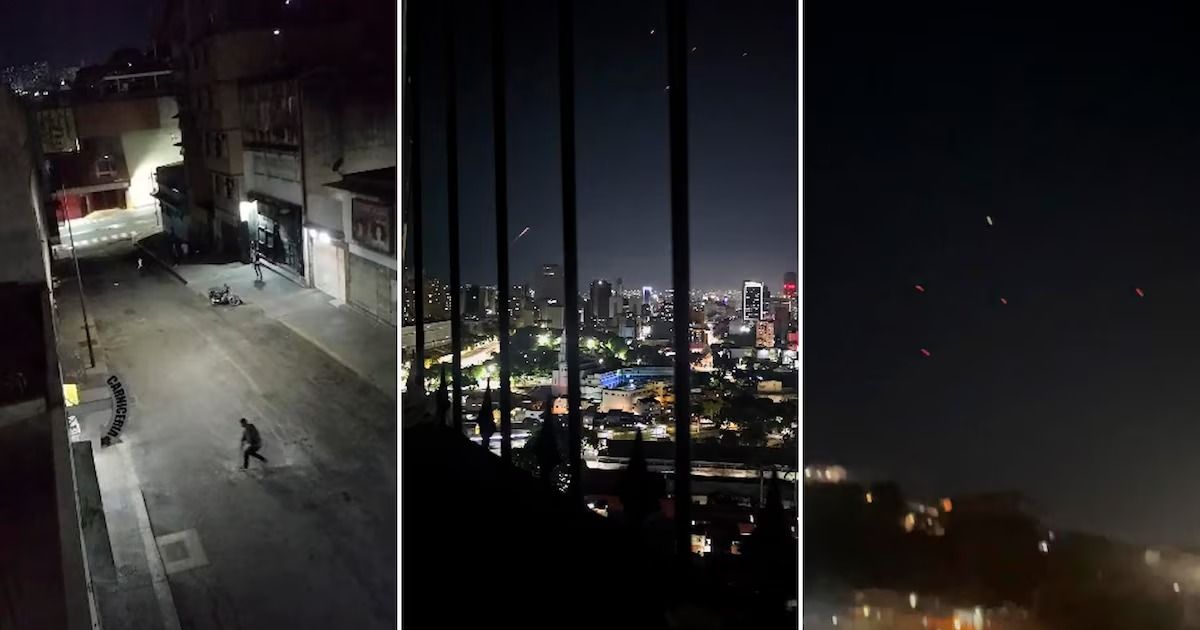
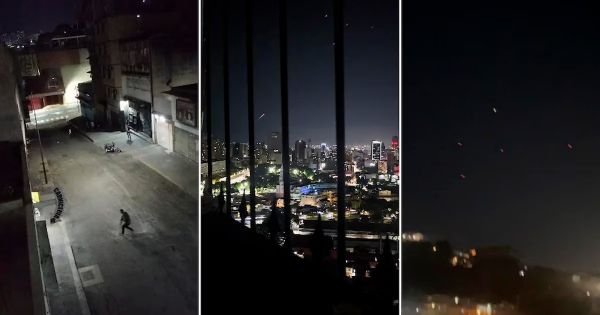
Gunshots were heard in Caracas on Monday at around 8 pm near the Miraflores presidential palace, prompting speculations as to the motives behind the havoc. Later unofficial reports pointed to a succession of misunderstandings resulting in a friendly fire clash.
Amid high tension and volatility, the incident occurred just hours after Nicolás Maduro’s arraignment in New York and the swearing-in of Delcy Rodríguez in his place.
Social media footage captured the activation of anti-aircraft defense systems and the presence of security forces armed with long guns patrolling the perimeter of the presidential headquarters.
Los supuestos drones q sobrevolaron a Caracas no eran de EEUU ni otro país. Eran sus propios drones y se confundieron en las operaciones los militares venezolanos y abrieron fuego. En pocas palabras se estaban atacando ellos mismos por su inoperancia en inteligencia militar. pic.twitter.com/1jElblQHrZ
Reports from the ground indicate the primary engagement lasted approximately one minute, followed by a period of radio silence and heightened military movement after unidentified aircraft or high-altitude drones entered the restricted airspace.
The incident triggered immediate international concern, leading to clarifications from both Washington and Caracas.
The Rodríguez administration issued a late-night statement attempting to downplay the severity of the event, noting that the explosions and gunfire were a police response to unauthorized drones. However, no confrontation took place, given the successful deterrent measure.
The White House distanced itself from these events. A White House official said the US was closely monitoring these reports but ultimately denied any direct involvement in the gunfire or explosions at Miraflores.
The sighting of drones triggered fears within the new Venezuelan leadership of a second lightning strike or a targeted assassination attempt against the interim cabinet. Armed units remain stationed at all primary transit points leading to Miraflores, and a city-wide curfew remains unofficially in effect as residents stay indoors.
Fuente de la imagen, Esteban Vanegas/Bloomberg via Getty Images
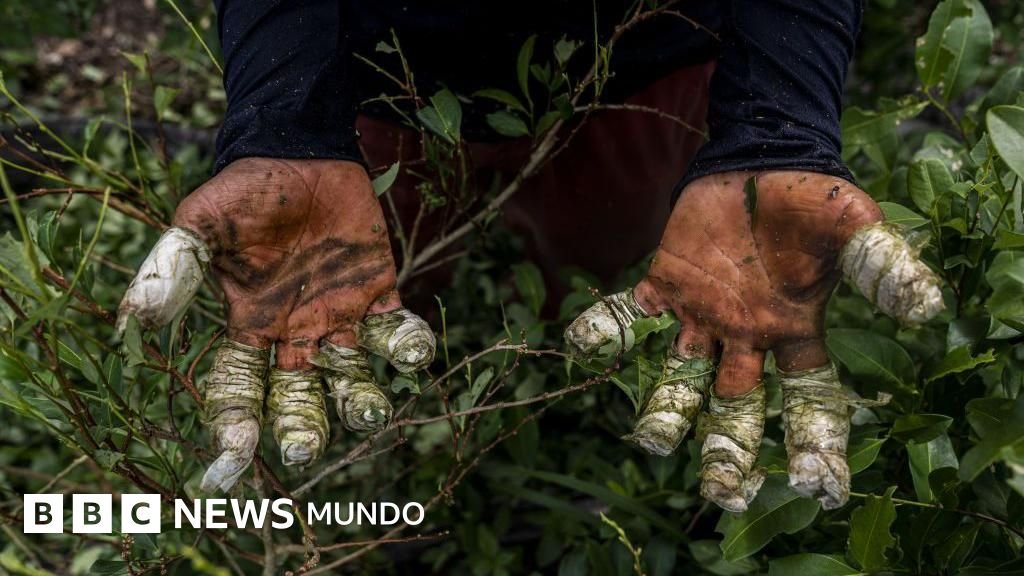
Pie de foto, La producción de cocaína está en números récord en Colombia. Información del artículo
Tiempo de lectura: 9 min
Todavía no había aterrizado Nicolás Maduro en EE.UU. tras su captura en Venezuela cuando Donald Trump advirtió que México y Colombia podrían ser lo siguientes objetivos en su cruzada contra las drogas.
De su vecino fronterizo dijo que “había que hacer algo” y de Gustavo Petro, el presidente colombiano, avisó que “mejor se cuide” tras acusarlo de fabricar cocaína y mandarla a su país.
Las advertencias no caerán en saco roto. El arresto de Maduro, al que EE.UU. acusó de narcoterrorismo y vínculos con guerrillas colombianas y carteles mexicanos, entre otros cargos, muestra que esta administración no se queda solo en amenazas.
EE.UU. lanzó un vasto despliegue militar en el Caribe y alrededor de Venezuela desde agosto pasado para detener -según Washington- el tráfico de drogas procedente del país sudamericano, al que acusa de ser base del Cartel de los Soles, una supuesta “organización narcoterrorista” con implicación de las fuerzas armadas venezolanas y liderada por Maduro.
Militares estadounidenses llevan meses bombardeando presuntas embarcaciones narco en aguas sudamericanos con un saldo de al menos 110 muertos.
Analistas consultados por BBC Mundo refuerzan que Venezuela, sobre todo, sirve de trampolín de la cocaína que fundamentalmente se cultiva en Colombia.
Daniel Rico, economista de la Universidad Nacional, señala que hay mucho laboratorio de cocaína venezolano, aunque no tanto cultivo.
“Venezuela se volvió funcional para ampliar rutas internacionales de la droga sudamericana, fortaleciendo la salida desde el Caribe colombiano al anexar el Caribe venezolano”, dice Francisco Daza, coordinador de la línea de Paz Territorial y Derechos Humanos de la Fundación Pares en Colombia.
Los envíos se producen a mercados europeos, en mayor medida, y también norteamericanos.
Fuente de la imagen, AFP via Getty Images
Pie de foto, La guerilla colombiana ELN opera en la frontera con Venezuela y controla rutas clave de la cocaína.
México y Colombia son pieza clave en ese entramado global y grupos armados y carteles de la droga son una amenaza a sus países y cualquier propósito de EE.UU. en la región.
Pero, ¿cómo se compara su rol en el narcotráfico con el de Venezuela? ¿Puede Trump realmente orquestar una operación similar como contra Maduro? ¿Esto va más allá de las drogas?
Las interrogantes se acumulan en un momento inédito en América Latina.
El caso colombiano
“Venezuela no es productor como tal, sino una suerte de cielos y puertos abiertos de la droga que se consolidó en los últimos 20 años”, describe Jorge Mantilla, doctor en criminología por la Universidad de Illinois en Chicago.
Mantilla apunta al entramado político, institucional y militar de Venezuela, así como la presencia de guerrillas colombianas en ese país, como habilitadores del fenómeno.
El Ejército de Liberación Nacional (ELN), surgido en los 60, es el principal actor armado en vastas zonas de la frontera colombo-venezolana.
Aquí controla rutas de la droga y tanto Daza como Mantilla cuentan que también está activo en diferentes estados venezolanos, donde se alió con integrantes corruptos de las fuerzas armadas bolivarianas.
Además del ELN, disidencias de las FARC (antiguas Fuerzas Armadas de Colombia) operan en la frontera y disputan su control. En los últimos años también se ha reportado la presencia del grupo conocido como Clan del Golfo, la mayor organización criminal de Colombia.
Todos confluyen en un corredor estratégico de la droga y otros negocios como la minería ilegal hacia un país, Venezuela, que parece jugar un rol secundario comparado al de México o Colombia en el narcotráfico mundial.
Fuente de la imagen, Equipo de Periodismo Visual de BBC
Ningún país produce más cocaína que Colombia ni nunca en la historia se había producido tanta cocaína en este país.
En 2024, la oficina de la ONU contra la Droga y el Delito (UNODC) informó que la producción de cocaína se disparó un 53% en 2023 hasta alcanzar un récord de 2.600 toneladas.
Es un récord cimentado en constantes mejoras en la producción y distribución, como la aparición de hojas de coca súper productivas y narcoembarcaciones capaces de recorrer grandes distancias, incluso de forma autónoma y camuflada.
La mitad de toda la cocaína de Colombia se produce en tres enclaves que ocupan alrededor del 15% del territorio de zonas cocaleras. Uno es el Catatumbo, en la frontera con Venezuela en el noreste colombiano, y los otros quedan en el sur: en Putumayo, Cauca y Nariño.
Casi toda la cocaína que se consume no solo en EE.UU., sino también en el resto del mundo, la producen -además de Colombia- Perú y Bolivia.
“La hoja de coca se procesa predominantemente en laboratorios en esas tres naciones para transformarla en el producto de consumo (principalmente clorhidrato de cocaína), o a veces en un producto intermedio, ya que algunas partes del proceso también pueden ocurrir en una etapa posterior de la cadena”, explica Antoine Vella, quien dirige la Sección de Datos, Analíticas y Estadística de UNODC.
De allí se dirige hacia diversos mercados, generalmente de manera indirecta, transitando por uno o varios países.
De las naciones productoras puede cruzar primero a las limítrofes, como Ecuador o Venezuela, y luego ser transportada con algún tipo de embarcación -en lanchas rápidas, botes pesqueros o semisumergibles– a la zona costera de Centroamérica o directamente hasta México, ya sea por el Pacífico o por el Caribe, para continuar por tierra hacia el norte.
Es en el Pacífico sudamericano por donde pasa la gran mayoría de cocaína que llega a EE.UU., según estimaciones de la Administración para el Control de Drogas (DEA).
Por allí transitó aproximadamente el 74% de los envíos dirigidos a EE.UU. en 2019, mientras el 16% lo hizo por el Caribe Occidental, recoge la Evaluación Nacional de las Amenazas de la Droga 2020.
BBC Mundo solicitó recientemente datos actualizados a la DEA, sin obtenerlos, aunque analistas consultados por este medio concuerdan en que los porcentajes seguirían vigentes.
Distintos grupos armados dominan las rutas de la cocaína en Colombia, como el Clan del Golfo, el ELN y distintas disidencias de las FARC.
Los dos primeros y la facción FARC EP son consideradas como organizaciones terroristas extranjeras por EE.UU.
México, fentanilo y acceso a EE.UU.
México y EE.UU. comparten más de 3.000 kilómetros de frontera.
Durante décadas, los carteles mexicanos desarrollaron una sofisticada cadena de transporte y distribución de la cocaína que llega desde Sudamérica para introducirla en su mayoría en su vecino del norte.
Muchas veces ocurre por puertos oficiales de entrada.
Sin embargo, la mayor preocupación para Washington con respecto a México es la producción y distribución de sustancias sintéticas como mentanfetaminas y opioides como el fentanilo, la droga vinculada a una “epidemia de sobredosis” en EE.UU.
El fentanilo es el mayor causante de muertes por esa causa en EE.UU., aunque de 2023 a 2024 el índice cayó a su punto más bajo en cinco años.
Fuente de la imagen, Getty Images
Pie de foto, Según expertos, no hay suficientes evidencias de producción significativa de fentanilo en Sudamérica.
Según la DEA, el Departamento de Justicia y el Servicio de Investigación del Congreso, el fentanilo ilícito se produce casi en su totalidad en México con precursores importados de países de Asia, incluida China, y tanto eso como su tráfico está controlado por carteles mexicanos.
Estos grupos, además, tienen un peso notorio en la formación y exportación de experiencia hacia otros países y mercados.
Se ha reportado presencia de “ingenieros agrónomos” mexicanos en Colombia, involucrados con la mejora de cepas de hoja de coca, así como la participación de carteles como el de Sinaloa en redes europeas que dependen del apoyo logístico, experiencia y preparación de sus integrantes.
Es lo que se conoce como la exportación del “método mexicano”, tal y como describió recientemente a BBC Mundo Laurent Laniel, director de la oficina de Crimen, Precursores y Consumo de Drogas de la Agencia de Drogas de la Unión Europea (EUDA, por sus siglas en inglés).
El centro de pensamiento y medio de comunicación Insight Crime señala a las organizaciones criminales mexicanas como las más grandes, sofisticadas y violentas del hesmisferio occidental.
Surgieron de la larga historia de contrabando y proximidad a EE.UU., la mayor economía mundial, y se convirtieron en una amenaza regional con redes que se extienden de Argentina a Canadá y Europa.
Por qué Trump priorizó Venezuela
Que Trump centrara la primera fase de su guerra contra el narcotráfico en Venezuela, jugando este país un rol menor en la producción y distribución de drogas que México o Colombia, alimenta la teoría de aquellos que defienden que el verdadero propósito del mandatario estadounidense era forzar un cambio político en Caracas.
Sus declaraciones de “controlar” el país hasta que se produzca una transición y su énfasis en que compañías participen del petróleo venezolano dan pistas de un propósito mayor que todavía no se comprende del todo.
El propio Marco Rubio, el secretario de Estado, lo decía así en una entrevista este domingo con NBC: “No se puede convertir a Venezuela en el centro de operaciones de Irán, de Rusia, de Hezbolá, de China y de agentes de inteligencia cubanos que controlan a ese país”.
“Hemos visto que adversarios nuestros de todo el mundo explotan y extraen recursos de África y de cualquier otro país. No van a hacerlo en el Hemisferio Occidental”, agregó Rubio.
México y Colombia quedaron avisados como los posibles próximos objetivos de Trump.
Fuente de la imagen, Joe Raedle/Getty Images
Pie de foto, La impredecibilidad de Trump y su plan de seguridad para América Latina tiene a la región en vilo.
De Petro, el estadounidense reiteró este domingo que era “un hombre enfermo” e insinuó que no le quedaba mucho tiempo en el poder al decir que no fabricaría y vendería cocaína a EE.UU. “por mucho más tiempo”.
Colombia celebrará comicios presidenciales en mayo y Petro no puede presentarse a la reeleción. No quedó claro si Trump se refería a eso a posibles acciones contra el país.
Washington sancionó a Petro a fines de octubre por presuntos vínculos con el narcotráfico, señalando que desde su llegada al poder la producción de cocaína había explotado a las cifras más altas en décadas.
BBC Mundo conoció que en sectores del seno de la política colombiana preocupa un incremento de las acciones marítimas estadounidenses próximas a Colombia y más sanciones contra el país.
Por el momento se muestran incrédulos de que algo similar a lo de Maduro pase con Petro, teniendo en cuenta la proximidad de elecciones.
Sobre México, aunque Trump se muestra más cordial con la presidenta Claudia Sheinbaum que con Petro, el mandatario se ha ofrecido a atacar directamente a los carteles.
Esto parece ser una línea roja para Sheinbaum, quien apuesta por la colaboración con Washington frente a otro tipo de intervención.
La región permanece en vilo hacia los próximos pasos de Trump.
Tras lo ocurrido en Venezuela y sus amenazas a México, Colombia e incluso Cuba, tres países en las antípodas políticas del estadounidense, crece la inquietud de que esto puede tratarse de algo mucho más grande que el narcotráfico.
Con reportería adicional de Leire Ventas, corresponsal de BBC News Mundo en Los Ángeles y Alejandro Millán, desde Londres.
Two Chinese challengers to ChatGPT are set to go public this week.
Zhipu AI and MiniMax will debut on the Hong Kong Stock Exchange on January 8 and 9, respectively, ahead of U.S. giants OpenAI and Anthropic. The two U.S. giants behind ChatGPT and Claude are laying the groundwork to go public this year, Reuters and Financial Times have reported.
Zhipu is seeking $560 million and MiniMax up to $539 million, according to prospectus filings. Both stocks have been oversubscribed, with MiniMax halting orders from institutional investors a day early due to overwhelming demand.
The initial public offerings will test whether investors still have an appetite for AI amid mounting concerns about an industry bubble.
Zhipu, founded in 2019 by Tsinghua University professors and backed by Meituan, Tencent, and Ant Group, claims its technology matches the performance of OpenAI and Anthropic’s flagship products. MiniMax, established in 2021 by former SenseTime executive Yan Junjie, operates the Hailuo AI video generator that competes directly with OpenAI’s Sora.
Their business models differ sharply.
Zhipu generates most of its revenue from Chinese state-owned enterprises and financial institutions, its prospectus shows. The company is also expanding overseas through sovereign AI partnerships. MiniMax draws about two-thirds of its revenue from individual users, with Singapore and the U.S. as its top markets, according to its filings.
Both companies are burning cash at a furious pace. Zhipu posted losses of about $330 million on just $27 million in revenue during the first half of 2025. MiniMax was unprofitable to the tune of $512 million on $53 million of revenue in the first nine months of last year.
The startups face U.S. headwinds. Washington blacklisted Zhipu in January last year, restricting its access to U.S. technology. MiniMax faces a $75 million copyright lawsuit from Disney, Universal, and Warner Bros. Discovery over its video-generating app.
Yet cornerstone investors from Abu Dhabi Investment Authority to Alibaba and Mirae Asset Securities are betting big on MiniMax.
How these stocks perform in their opening days will signal whether public markets are ready to reward China’s AI ambitions or whether the hype has finally outpaced the fundamentals.
There were tensions between Howe and sporting director Paul Mitchell, who left last summer after less than a year in the job.
But Howe has quickly struck up an understanding with Ross Wilson, who replaced Mitchell.
Wilson is the third sporting director Howe has worked with since taking charge, while David Hopkinson is the second chief executive after Darren Eales stood down because of ill health.
Howe said he is content at Newcastle as long as he can “express myself in the best way possible and be the best version of myself”.
Newcastle are ninth in the Premier League – but only two points off fifth – have reached the semi-finals of the Carabao Cup and are on course for a last-16 play-off spot in the Champions League.
Howe continues to enjoy the backing of the club’s majority owners, the Public Investment Fund of Saudi Arabia, as well as minority shareholder Jamie Reuben.
“For any club to be successful, there has to be unity from top to bottom,” Howe said. “There has to be a good feeling between everyone.
“I’ve had an unbelievable relationship with the board. That’s never changed.
“I consider myself very lucky to have that because there are very few managers that have the time to build those relationships.
“To have the confidence and trust within each other is really important. Hopefully that stays for a long time.”
Delcy Rodríguez’s tenure as caretaking President has been deemed feeble
Gunshots were heard in Caracas on Monday at around 8 pm near the Miraflores presidential palace, prompting speculations as to the motives behind the havoc. Later unofficial reports pointed to a succession of misunderstandings resulting in a friendly fire clash.
Amid high tension and volatility, the incident occurred just hours after Nicolás Maduro’s arraignment in New York and the swearing-in of Delcy Rodríguez in his place.
Social media footage captured the activation of anti-aircraft defense systems and the presence of security forces armed with long guns patrolling the perimeter of the presidential headquarters.
Los supuestos drones q sobrevolaron a Caracas no eran de EEUU ni otro país. Eran sus propios drones y se confundieron en las operaciones los militares venezolanos y abrieron fuego. En pocas palabras se estaban atacando ellos mismos por su inoperancia en inteligencia militar. pic.twitter.com/1jElblQHrZ
Reports from the ground indicate the primary engagement lasted approximately one minute, followed by a period of radio silence and heightened military movement after unidentified aircraft or high-altitude drones entered the restricted airspace.
The incident triggered immediate international concern, leading to clarifications from both Washington and Caracas.
The Rodríguez administration issued a late-night statement attempting to downplay the severity of the event, noting that the explosions and gunfire were a police response to unauthorized drones. However, no confrontation took place, given the successful deterrent measure.
The White House distanced itself from these events. A White House official said the US was closely monitoring these reports but ultimately denied any direct involvement in the gunfire or explosions at Miraflores.
The sighting of drones triggered fears within the new Venezuelan leadership of a second lightning strike or a targeted assassination attempt against the interim cabinet. Armed units remain stationed at all primary transit points leading to Miraflores, and a city-wide curfew remains unofficially in effect as residents stay indoors.
Hamm held a high-level meeting with President Milei in September 2025
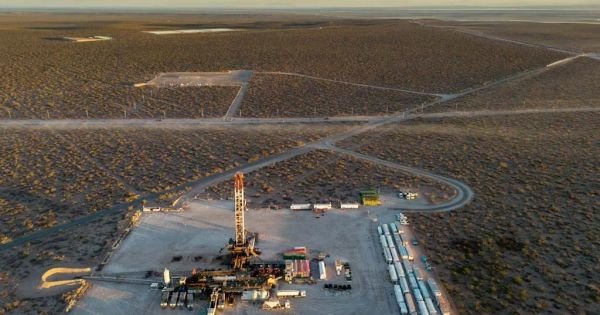
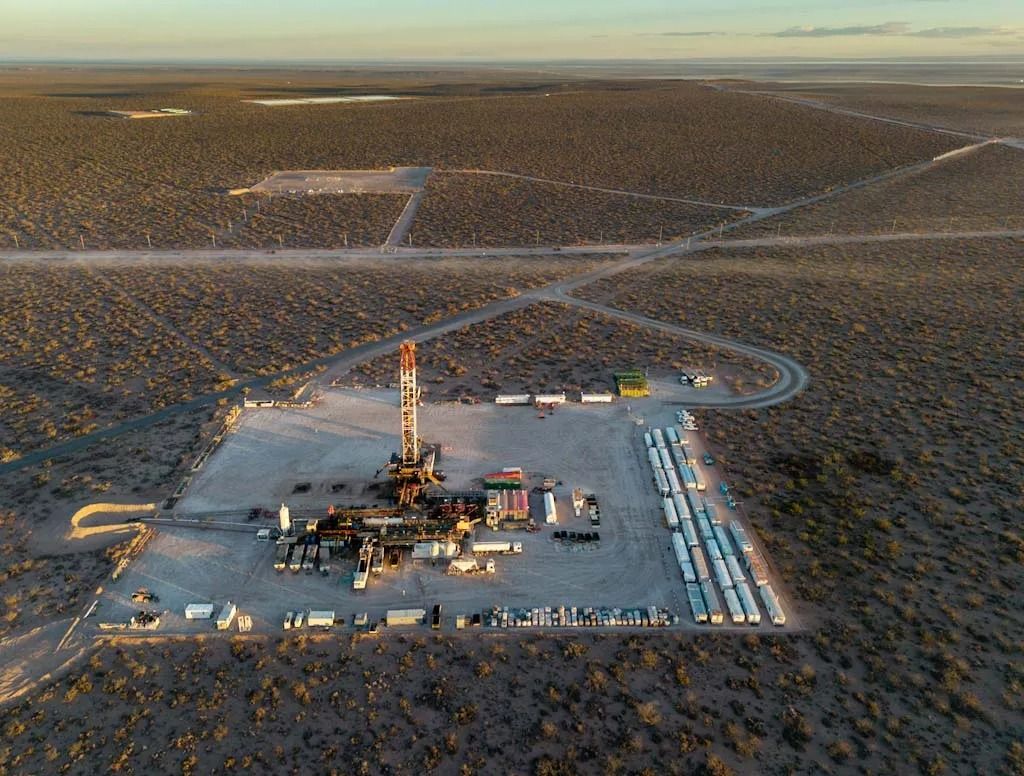
Pan American Energy (PAE) and the US shale giant Continental Resources announced Monday a strategic partnership to accelerate the development of four key blocks in the Vaca Muerta formation.
The deal highlights the deepening involvement of US capital in Argentina’s shale industry and solidifies the presence of billionaire Harold Hamm, often called the King of Fracking, in the Neuquén Basin.
Under the terms of the agreement, Continental Resources will acquire a 20% non-operating stake in four strategic shale oil blocks currently held by PAE.
The blocks include Coirón Amargo Sureste, Bandurria Centro, and Aguada Cánepa in the Neuquén province, as well as Loma Guadalosa in Río Negro. PAE will remain the majority partner and primary operator of all four areas.
The closing of the transaction is pending formal approval of interest transfers by the provincial governments of Neuquén and Río Negro.
Hamm’s Continental Resources is a pioneer of the American shale revolution. The company enters this partnership following its 2025 milestone of producing nearly 500,000 barrels of oil equivalent per day.
This strategic relationship seeks to accelerate the development of the four areas… Continental will contribute its know-how in risk reduction, development, and operational efficiency. PAE CEO Marcos Bulgheroni pointed out.
Hamm, a prominent figure in the US energy sector and a significant supporter of Donald Trump, has shown increasing interest in Argentina following a high-level meeting with President Javier Milei in September 2025. Continental previously signaled its intent in November 2025 by acquiring a 90% stake in the Los Toldos II Oeste block from Pluspetrol.
With over 50 years of history in the region, PAE remains one of the most formidable players in the Neuquén Basin. PAE produces approximately 100,000 barrels of oil equivalent per day (BOED) in the basin, including 12 million cubic meters of gas. The company operates seven areas in the region, with six already in the development stage.