Bolivia’s blockade crisis leaves at least 16 dead as the government calls unions to talks
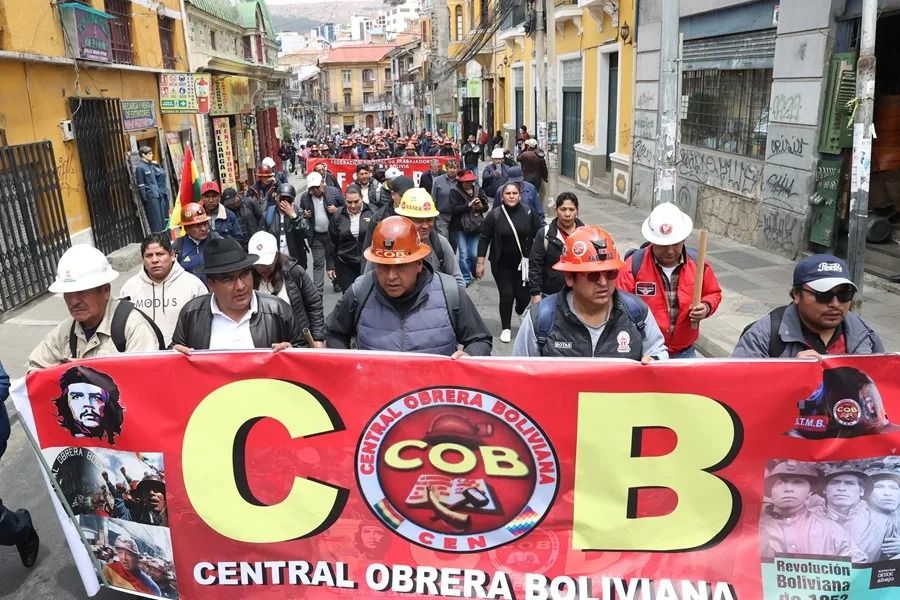
The COB presented a list of demands on Tuesday spread across eight areas, among them ensuring the right to mobilization, that there be no sanctions against the mobilized sectors
The crisis caused by more than seven weeks of road blockades in Bolivia, driven by sectors demanding the resignation of President Rodrigo Paz, has left at least 16 people dead, as the government called the Bolivian Workers’ Center (COB) on Wednesday to a dialogue to seek a way out. By midday, the country’s largest union confederation had not confirmed its attendance.
The meeting was initially set for 9:00 a.m. local time at the Casa de Gobierno in La Paz, but presidential spokesman José Luis Gálvez later confirmed it had been moved to 4:00 p.m. at the Central Bank auditorium. Gálvez held that the dialogue is on and that it would be a frank and direct meeting to restore normality, in which the COB’s demands would be analyzed within the framework of what the Constitution and the laws allow and the conflict’s losses and fatalities would also be addressed.
The COB presented a list of demands on Tuesday spread across eight areas, among them ensuring the right to mobilization, that there be no sanctions against the mobilized sectors, the fulfillment of the government’s electoral promises and a commitment not to privatize state companies. The document, however, no longer includes the demand for Paz’s resignation with which the protests began. The Executive responded that it recognizes the right to peaceful protest but will not accept blockades, violence or impunity as conditions, and called for negotiating without prior conditions. The COB’s executive secretary, Mario Argollo, warned that mobilizations could intensify if there is no immediate response.
For their part, the La Paz Campesino Federation conditioned the dialogue on the fulfillment of five points, such as a presidential amnesty and restitution of guarantees over the criminal proceedings against some protesters and the annulment or modification of recently approved decrees and laws; that meeting remains pending scheduling. The leader of that sector, Vicente Salazar, said the blockades will not be lifted for now and that pacification will depend on the government’s response.
The blockades, led since May 6 by the COB and the La Paz Campesino Federation, later gained the backing of sectors aligned with former president Evo Morales (2006-2019), whom the government accused of financing the protests, allegedly, with drug trafficking money. The conflict has caused shortages of food, fuel and medical oxygen in some cities; of the 16 dead, 13 died from a lack of timely medical attention because of the road closures. The economic losses are estimated at $2.76 billion.