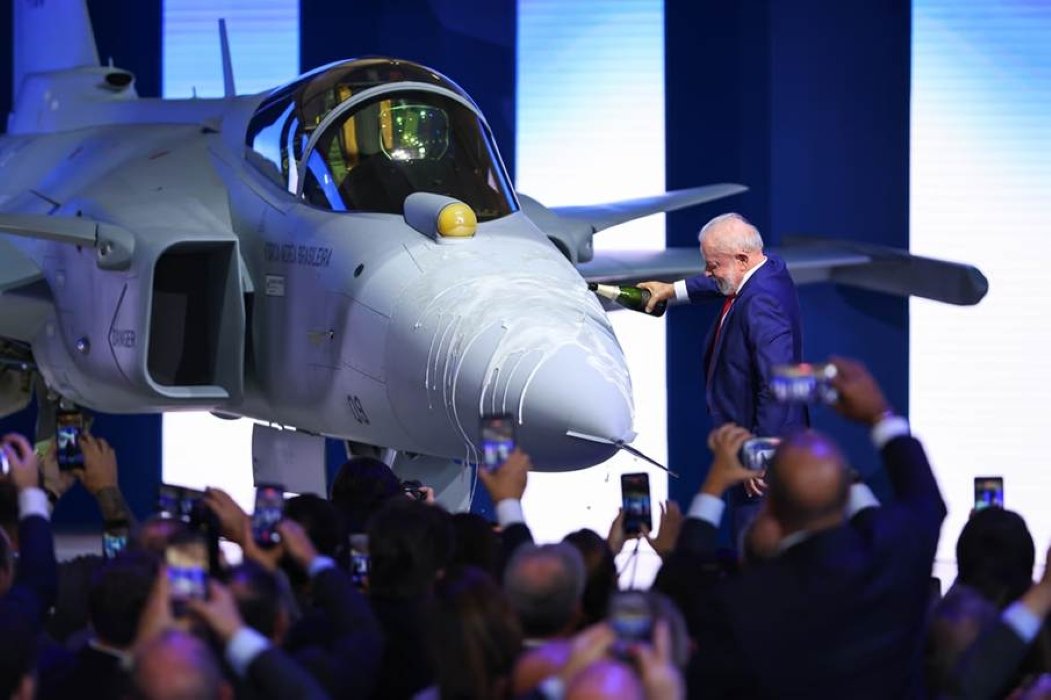
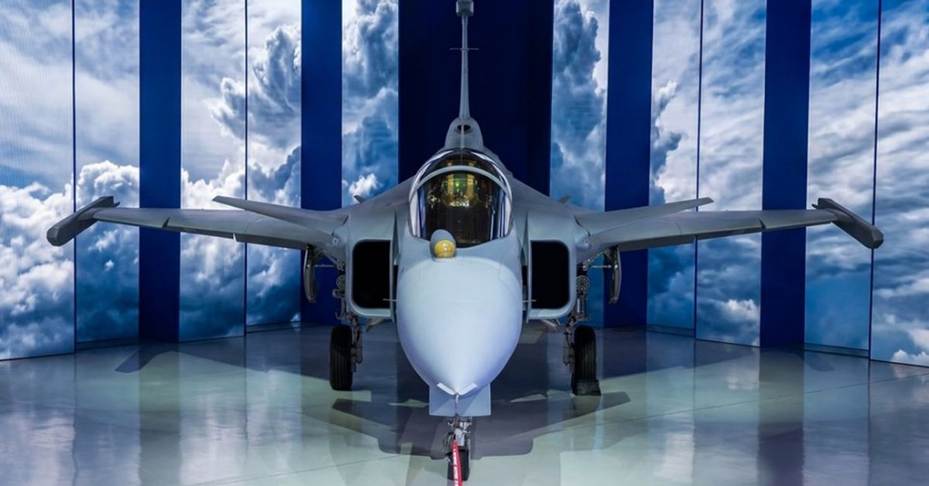
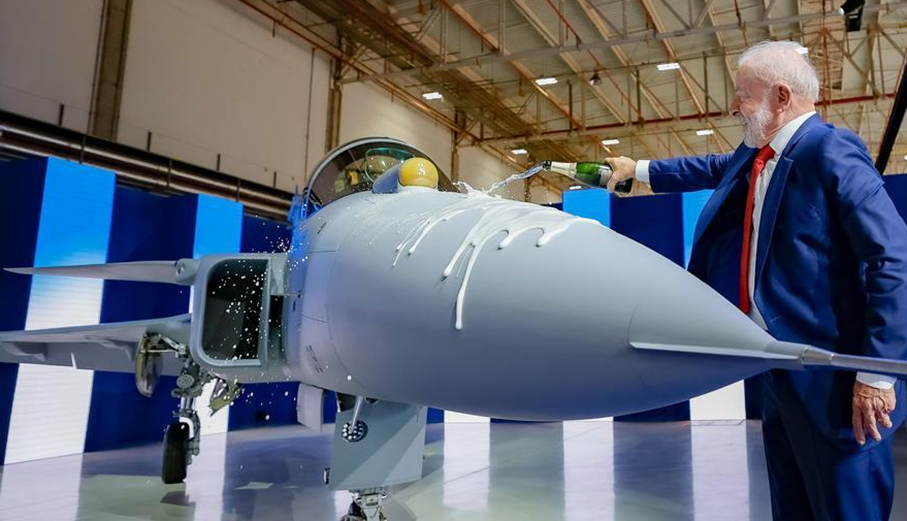
Brazil’s first domestically assembled Gripen, the F-39E, produced in Gavião Peixoto, marks more than an aviation milestone. It signals industrial ambition, defense autonomy, and a shift in regional prestige, reminding Latin America that technological sovereignty involves who writes history, not just hardware.
A Fighter Jet and a National Message
Brazil’s unveiling of its first domestically assembled Gripen, the F-39E, produced in Gavião Peixoto, was more than a defense ceremony; it was a statement of rank, patience, and national ambition. Reuters noted Brazil as the first Latin American country to build a supersonic fighter jet, joining the US, France, Russia, India, China, and Sweden. Regionally, this is significant. Latin America typically buys services and adapts high technology while relying on external suppliers for critical military capabilities. Producing part of that capability domestically alters the political and emotional narrative.
The project began in 2014 when Brazil chose Saab’s Gripen over Boeing’s F-18 Super Hornet and Dassault’s Rafale to replace its aging fleet. The contract included technology transfer and production of 15 of 36 aircraft at Embraer’s Gavião Peixoto plant. This transfer is the core of the story. Beyond the aircraft, it represents years of knowledge transfer, system integration, engineer training, and the development of a production line for an advanced multirole fighter.
This rollout carries political weight beyond aviation or defense circles. Sovereignty is rarely declared; it is earned by mastering the machines that create dependency. In Latin America, where industrial ambitions are often constrained by debt, imported models, and commodity-export mindsets, the Gripen program stands as a clear rebuttal.
However, this rebuttal is not absolute. Brazil joined this club through licensed production and final assembly, not independent fighter design. This distinction matters and should not be overlooked. Still, the milestone is significant because it is tangible. Brazil may not have designed the Gripen, but it can assemble and support one of the world’s most advanced fighters domestically. In politics, such capability often outweighs slogans of autonomy.
The Return of Industrial Statecraft
This moment reflects a familiar Brazilian and Latin American debate: is development bought or built? For decades, this question has shaped factories, shipyards, energy projects, and aircraft hangars. In Brazil’s case, it now centers on a fighter jet fuselage.
Saab CEO Michael Johansson highlighted the symbolism, noting that this is the first fighter to be manufactured outside Sweden since Saab’s founding in 1937. He described the first Brazilian-produced Gripen as more than an aircraft, calling it a symbol of partnership, trust, vision, and cooperation. At the same time, corporate language underscores Brazil’s efforts to gain deeper entry into the defense economy beyond a simple purchase.
This coincides with Embraer’s expanding role in military aviation, highlighted by growing European interest in the C-390 Millennium cargo jet. Together, the cargo jet and Gripen programs reflect Brazil’s broader push to become a serious aerospace manufacturer, moving beyond customer or subcontractor roles. This shift matters because defense manufacturing influences prestige, technical training, supply chains, skilled labor, and national bargaining power.
This also places Brazil in a more complex regional role. Saab plans to use the Brazilian production line as an export hub, reinforced by Colombia’s recent Gripen acquisition. Brazil is not only building for itself but becoming a strategic node in Latin America’s defense landscape. For a region accustomed to external security ties, this is a subtle yet significant shift. Brazil’s production line linked to regional demand signals its growing geopolitical relevance.
This story is not just a celebration of military hardware but of industrial statecraft. Brazil demonstrates its desire to compete in sectors where sophistication, not just scale, defines influence. In Latin America, where sustaining complex manufacturing is challenging, this ambition is notable.
What Brazil’s Gripen Moment Means for the Region
This milestone highlights the tension between dependence and leverage. Latin American states understand the costs of relying on external powers for spare parts, upgrades, financing, and strategic approval. Defense dependence influences diplomacy, procurement, and national self-perception. Brazil’s Gripen program does not end this dependence but rather modifies it, granting greater control over assembly, maintenance, and support, and strengthening its industrial position.
This has regional consequences. Brazil has long been Latin America’s largest country, but size does not equal leadership. Leadership here is fragile and contested. This project strengthens Brazil’s claim to technical and industrial leadership, demonstrating that it can offer advanced manufacturing capabilities few of its neighbors can match.
A subtler lesson is that genuine technology transfer can be a political tool rather than a marketing term. Often, such deals leave only invoices and dependency. Here, years of transfer from Saab to Embraer, domestic line construction, and growing local capability to assemble and support advanced fighters represent accumulated power, if not full independence.
In Latin America, accumulated power often outweighs dramatic breakthroughs. The region’s history includes aborted projects and factories that briefly symbolized modernity before losing momentum. This milestone’s strength lies not in the supersonic jet’s glamour but in Brazil’s ongoing ecosystem development around it.
The rollout prompts a challenging regional question: why is Brazil the first Latin American nation to achieve this? The answer goes beyond money to institutional persistence, industrial memory, and sustaining strategic projects over years—a difficult feat in a region where politics often outpaces the maturity of production lines.
The first Brazilian-assembled Gripen is more than a plane. It is a message forged in metal, software, and patience. It tells Latin America that sovereignty’s future may not come through speeches about independence but through tangible achievements, like this aircraft rolling out of a São Paulo hangar, embodying Brazil’s effort to manufacture not just products but strategic position.
Also Read:
Brazil Writes New Rules as Childhood Battles the Algorithmic State