A Rio samba school bet its debut on praising President Lula and mocking his rivals. Judges sent it to last place, relegating Acadêmicos de Niterói for 2027. The trouble is what that score says about politics, art, and survival today.
When a Parade Becomes a Political Stage
Rio de Janeiro’s annual carnival parade competition kept its familiar promises of vibrant dance and color, with Viradouro taking the crown for a tribute to its legendary drum director. The avenue still delivered its usual procession of spectacle, including giant lions, dancing books, and rainbow-colored plumes that delighted the crowds.
But this year, the entertainment carried an extra charge. The controversy did not arise as a side conversation after the confetti. It showed up early, even during rehearsals, and followed one school all the way through the final point tally.
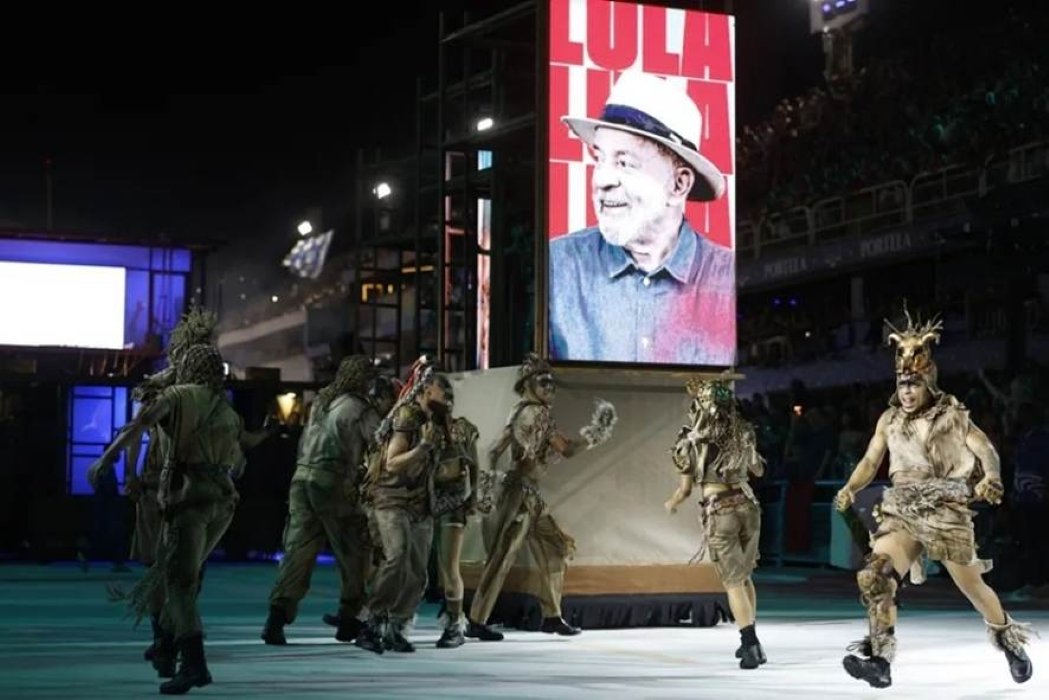
Acadêmicos de Niterói, the samba school from Niterói that parades in Rio, paid homage to the life of Brazil’s President Luiz Inácio Lula da Silva and finished in last place. The result meant relegation from the top tier of samba schools. In 2027, it will have to parade in Série Ouro, the Gold Series.
This was not a quiet fall from the scoreboard. Niterói’s performance charted Lula’s path from poverty as a shoeshine boy to the highest post in the country, framing it as a story that, in some sense, belonged to the community itself. Tiago Martins, a carnival parade designer at the school, described the choice as personal, telling Reuters that the samba spoke of “children of the poor becoming doctors,” and of him, “a child of the poor,” becoming a carnival designer. He told Reuters the school wanted to tell “the story of a man who did a lot for the poor and for Brazil.”
In the Sambadrome, where thousands watched from the stands, the sensory world did what it always does. Drums pressed against the ribs. Costumes flashed under the lights. Bodies moved in tight formations that ask for breath, stamina, and trust. And then, layered over all of it, came the argument about what a parade is allowed to say when the country is polarized, and an election is on the horizon.
Opposition critics attacked the decision to spotlight a sitting president as early campaigning ahead of the October elections, with Lula seeking a fourth term. Lawsuits were filed alleging Lula could gain a political advantage from the tribute. Courts rejected those efforts, even as opposition parties asked for the parade to be blocked.
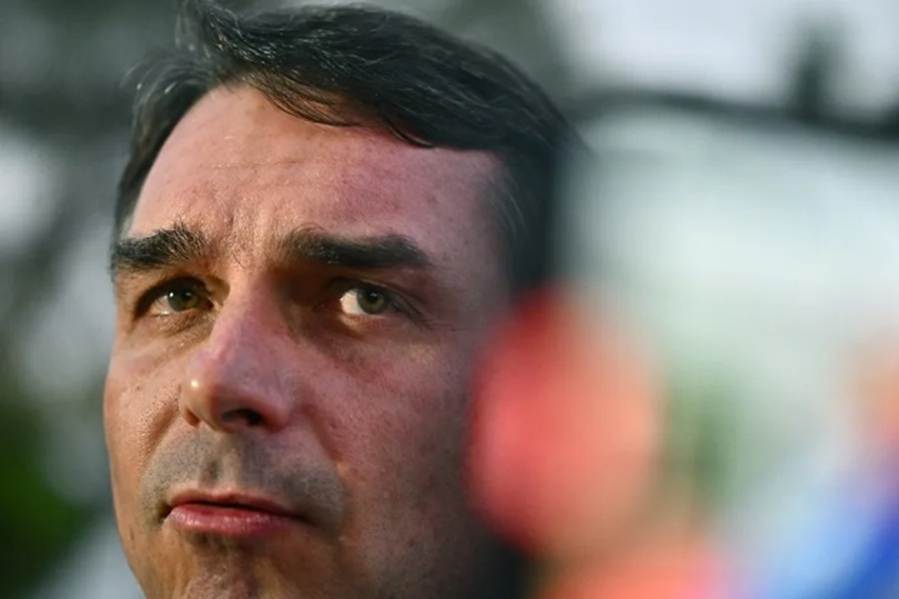
Senator Flávio Bolsonaro, a possible right-wing candidate in Brazil’s October presidential election, said on Wednesday that after the samba school that paid tribute to President Luiz Inácio Lula da Silva finished last in its Carnival parade, the next to be relegated will be the progressive leader himself.
“After that school, the next relegation is Lula’s and that of the (ruling) Workers’ Party (PT),” said the eldest son of former president Jair Bolsonaro, who was chosen by the far-right leader as his successor and as the Liberal Party’s (PL) presidential candidate.
Lula himself gave his blessing to the performance and watched it with the crowd, seated in the city’s giant Sambadrome arena. That detail matters because it collapses the distance between spectacle and state. A president does not have to speak for a parade to feel like a statement. Sometimes presence is the message.
Judges, Lawsuits, and the Price of Ousadia
Carnival competitions are built to turn art into numbers. In Rio’s top tier, performances are judged across 10 categories by 40 judges, with the top 12 samba schools competing for the title. That structure is supposed to make the outcome legible, even when taste and politics are messy.
Still, when a school takes last place after weeks of political backlash and legal skirmishes, the technical language of judging struggles to contain the interpretation. The trouble is not simply whether Acadêmicos de Niterói deserved relegation on the merits. The trouble is what the relegation means once everyone reads it as a signal.
In the school’s case, the story of ascent and sudden drop had an extra twist. Acadêmicos de Niterói is new. Registered in 2018, it entered Rio’s Série Ouro, the second division, and won it in 2025, earning promotion to the elite Grupo Especial. It arrived in the top tier with the energy of a young institution, and it chose to debut with a political biography of the country’s sitting president.
Within the notes surrounding the parade, the logic of survival sits close to the logic of daring. One reflection points out that a parade costs money, and schools often make choices with an eye on staying alive. That is an everyday reality in carnival that rarely makes it into the shiny highlights. It is not just creativity. It is fundraising, logistics, labor, deadlines, and the pressure to prove that a community can still build something enormous out of limited resources.
This is also where the emotional vocabulary of carnival emerges. The Portuguese commentary describes feeling deeply moved by seeing a worker celebrated on the avenue and by seeing criticism of those “who always governed against labor and social rights.” It frames carnival as the product of communities formed by people who survive state neglect, lack of health and education, and security policies described there as designed to kill them. The wager here is that carnival is not merely entertainment for those communities. It is representation, and sometimes it is defiance.
That same commentary anticipates consequences. It says the school would not have an easy life, and that was confirmed in the judges’ notes. In that telling, unfavorable scores function as a message that daring has limits. Even in a competition that expects schools to rise and fall as part of tradition, relegation can sound like discipline.
Acadêmicos de Niterói responded publicly with a line posted on Instagram that became a small slogan in the aftermath: “a arte não é para covardes” (art is not for cowards). It is a sentence that turns the scoreboard into a moral argument. It also turns the act of parading into a kind of testimony, especially if you believe the punishment was political.
The school’s parade carried pointed political imagery beyond the Lula narrative. It included a depiction of former far-right leader Jair Bolsonaro as Bozo the Clown sitting behind bars. Flávio Bolsonaro, the ex-president’s son, vowed to appeal a decision by the electoral court after it rejected requests by two opposition parties to prevent the parade. On social media, some also objected to dancers dressed as a traditional family preserved in a tin can, titled “preserved neoconservatives,” seen by critics as mocking Christian values.
Even if you view those choices as satire, they underline the same risk. When carnival becomes explicit about contemporary politics, it invites contemporary retaliation, even if the retaliation arrives wearing the neutral face of procedure.

A Relegation That Traveled Further Than the Trophy
In the simplest version of the week, Viradouro won, and Acadêmicos de Niterói lost. Carnival delivered a champion and a relegated school, and the machinery of points moved on.
But in the version that echoed, the defeat grew louder than the victory. The Portuguese text states it plainly: the relegation of the Niterói group reverberated more than Viradouro’s title as champion of Carnival 2026. That is not an accident. The spectacle of a school punished after praising a president and mocking his enemies is a cleaner headline than a tribute to a legendary drum director, even if the tribute was brilliant.
Some conservatives celebrated the result, according to that reflection, as if the scoreboard had canceled the message. Yet the point made there is that the message had already been transmitted nationwide. In other words, the parade already happened. The costumes already walked. The drums already thundered. The story already reached the country.
That is the strange arithmetic of carnival politics. Blocking a parade is hard, and courts rejected attempts to do it in this case. But once a parade goes through, punishment can shift from stopping speech to disciplining the speaker. A relegation does not erase what was shown. It reframes the cost of showing it.
The notes also suggest a second question that hung over the performance: given the expected backlash, would the school have the courage to maintain its proposal? The answer, in that telling, was yes. That insistence becomes the emotional core of the story, a stubborn continuity between Lula’s own defeats and persistence and the school’s decision to proceed even when the ending looked bleak.
Acadêmicos de Niterói will now return to Série Ouro in 2027. In the cold language of competition, it is a demotion. In the warmer language of community narratives, it can be read as a legacy: a refusal to abandon origin, values, and a sense of who carnival is supposed to represent.
Carnival always claims to be the people’s party. The trouble is that “the people” is not a neutral category in Brazil, not when politics is this polarized, and not when a parade chooses to praise one living politician while mocking another. What this does is force everyone to admit that the avenue is not outside the country. It is inside it.
And sometimes, the loudest moment is not the trophy. Sometimes it is the fall.
Also Read:
Willie Colón: Architect of Latin America’s Salsa Soundtrack for Decades