The legal dispute over Rio de Janeiro’s blocked Sugarloaf zipline raises a broader question for Latin America: When public landmarks become business ventures, who benefits, who assumes the risks, and what is sacrificed?
When a Postcard Becomes a Product
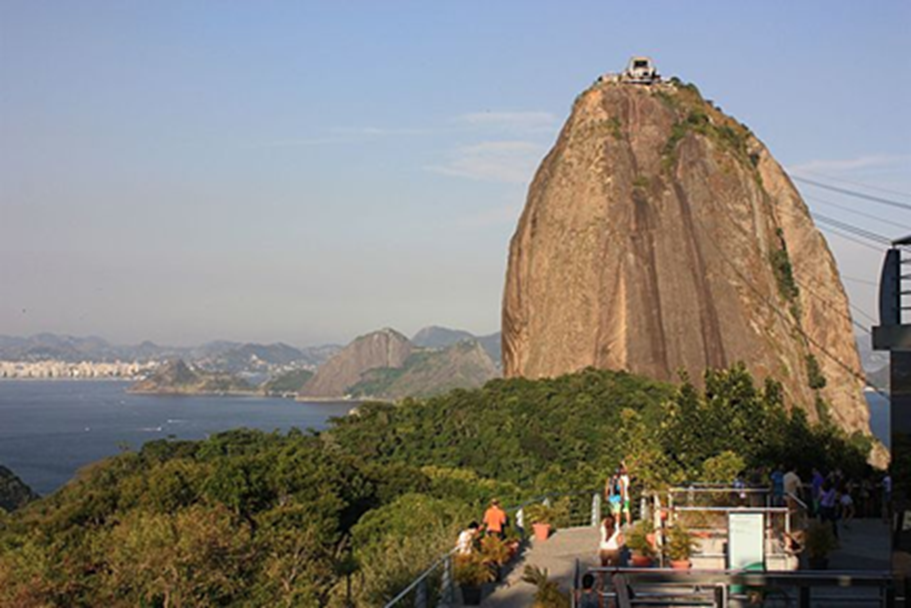
On the surface, the Sugarloaf Mountain dispute appears straightforward. A developer proposed a zipline from the peak to Morro da Urca, reaching nearly 100 kilometers per hour over four lines spanning 755 meters. In a tourism-driven economy, such attractions promise increased activity and revenue, further commercializing an already popular site.
However, the court’s decision shows this issue extends beyond engineering or recreation. It concerns the impact of further commercializing a landscape with significant symbolic value. Sugarloaf Mountain is not a vacant asset; it is a site rich in memory, prestige, and visual significance, which makes it attractive to business interests.
The attraction had been in the works. The project had been under development for four years, with support from the Rio City Council and IPHAN, the National Historical and Artistic Heritage Institute. This is not a case of an unauthorized private venture, but rather an example of public authorities and commercial interests aligning to believe that development and preservation can coexist through managed tourism. It is ensured that excavation will be kept to a minimum by using areas with existing construction. That is also familiar. Commercial expansion in historic or shared spaces is often presented not as a rupture but as an adjustment. Just a platform here. Just a modified access point there. Just one more layer added to what already exists. It is the grammar of minimal intervention, the soothing phrase that helps a business enter a place without appearing to conquer it.
Opponents argued that constructing the zipline platforms would require excavating the summit of Sugarloaf Mountain, causing irreversible harm to a UNESCO World Heritage Site. Activist Gricel Osorio Hor-Meyll described the court’s decision as a significant victory, highlighting the broader issue: determining the appropriate limits of commercial activity in invaluable public spaces.

Approval, Capital, and the Logic of Completion
A key aspect of the case was the legal reasoning that emerged as the project neared completion. In January, construction resumed after a high court ruled that halting the project would cause more harm than completing it, given that it was already 95% complete.
This reflects a common business argument: once significant investment has been made, delays appear unreasonable, and the progress itself becomes justification for completion. The further the investment, the more difficult it is to reverse course.
The Sugarloaf case illustrates a broader trend in Brazil and Latin America: major commercial projects often succeed not by demonstrating minimal impact, but by advancing to a point where stopping them would be more disruptive than completing them. This approach is both a legal strategy and a business model.
Supporters cited city council and IPHAN approvals, existing infrastructure, and the site’s established role in tourism. Opponents argued that the landmark’s value extends beyond visitor experience or profitability, and that increased commercialization can itself cause harm.
Socioeconomic factors also play a role, even when the debate centers on heritage and procedure. In unequal societies, the commercialization of public spaces often benefits those already advantaged, while those who rely on public access may be excluded through pricing, restricted access, or changes in the site’s purpose.
No outside case is needed to see the pattern. Take a site already rich in common meaning. Add a paid experience with high promotional value. Describe it as modernization. Assure the public that the intervention is limited. Then, when resistance comes, point to sunk costs, approvals, and near-completion. It is a very efficient script.
What the Ruling Says About Value
The judge’s ruling cut through that script in unusually direct terms. It not only blocked the project. It also ordered IPHAN and the developer to pay thirty million reals in damages, stressing the inestimable value of Sugarloaf Mountain, not only for Brazilians but for people worldwide.
That phrase, inestimable value, is doing heavy work. It rejects the idea that a landmark’s ‘inestimable value’ is defined by commercial use. It asserts that increased monetization can diminish a site’s true value, even if it generates revenue. The second layer of extraction simply exists because demand exists. Not every spectacular view needs a faster, louder, more marketable way to be consumed. The business case may be coherent on paper. It may even look inevitable once approvals are secured and construction is far along. But that still does not settle the deeper political question of what a city owes to its own symbols.
The legal process continues, as the company is expected to appeal after years of litigation and delays. The debate now centers on whether the most prominent parts of shared landscapes should remain open to commercial development.
For now, the court in Rio has established limits on commercialization. In Brazil, where natural beauty is frequently commercialized, this decision has broader significance.
Also Read:
How Online Slots Are Connecting With Latino Players Around the World