By Keith Bernard
News Americas, NEW YORK, NY, Mon. Feb. 16, 2026: The appearance of athletes from the Caribbean at the 2026 Winter Olympics carries meaning far beyond competition. When representatives from places such as Jamaica and Trinidad and Tobago step onto snow and ice, they quietly challenge the idea that destiny is determined by geography. They come from landscapes without winters, yet they choose disciplines shaped by cold climates, long traditions, and formidable barriers to entry. Their journeys require them to train far from home, to adapt to unfamiliar environments, and to persist in spaces where few expect to see them. In doing so, they affirm that identity is not confined to place and that ambition can travel just as surely as people do.
For the wider Caribbean, their presence becomes a metaphor for possibility. It reflects the experience of a region that has always had to navigate beyond its immediate circumstances – historically, economically, and culturally – while carrying its character intact. These athletes show that entering unfamiliar arenas is not a loss of identity but an expansion of it. They remind fellow citizens that progress often begins with the courage to attempt what seems improbable, to learn new languages of skill and knowledge, and to stand confidently even when tradition offers little precedent.
Their stories suggest that resilience is one of the Caribbean’s greatest inheritances: the ability to adapt without surrendering authenticity, to meet the world on new terrain, and to transform limitation into motivation. From tropical shores to alpine slopes, the lesson is enduring and universal—that the boundaries people inherit need not be the boundaries they accept.
In the context of global sport, Caribbean participation in winter disciplines has become an important symbol of diversity and inclusion within the Winter Olympics. Audiences accustomed to associating snow sports with traditionally cold-weather nations are reminded that excellence is not owned by climate but cultivated through determination, access, and vision. As athletes from warm-weather countries enter events such as bobsleigh, alpine skiing, luge, and skeleton, they reshape perceptions of who belongs in these arenas and encourage sporting institutions to think more expansively about talent development worldwide.
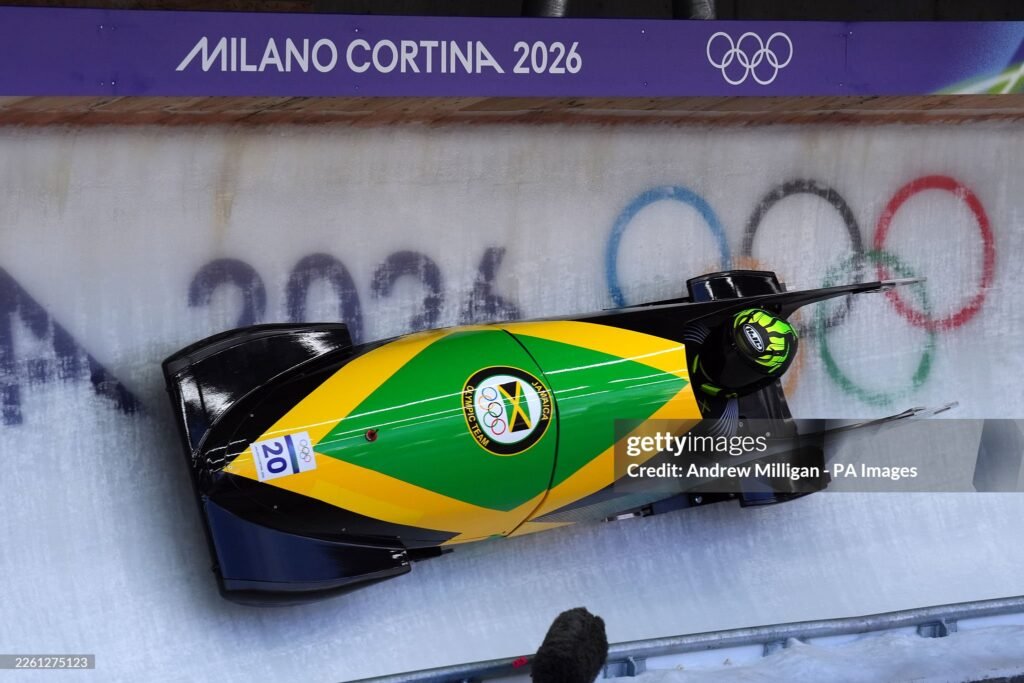
The pioneering efforts of teams like the Jamaica national bobsleigh team helped ignite this shift decades ago. Their determination captured global imagination and was later immortalized in the film Cool Runnings, which introduced millions to the unlikely yet inspiring journey of tropical athletes competing on ice. Beyond the cinematic narrative, however, lies a deeper reality marked by rigorous off-island training, complex logistics, and the constant challenge of securing funding for specialized equipment, coaching, and international travel.
Modern Caribbean winter athletes continue to build on that foundation through collaboration with governing bodies such as the International Olympic Committee and national associations including the Trinidad and Tobago Olympic Committee. These partnerships create pathways for athletes to access world-class facilities in North America and Europe while maintaining national representation. Training abroad has become a practical necessity, enabling competitors to gain exposure to snow conditions, sports science resources, and elite competition schedules that cannot be replicated in tropical environments.
A new generation of competitors has further expanded what Caribbean participation in winter sports looks like. Athletes such as Benjamin Alexander demonstrate how diaspora connections, global education, and cross-cultural experiences can open doors to unconventional sporting careers. Many of these athletes discover winter sports later in life, often while studying or working overseas, and must accelerate their development to reach international standards. Their unconventional pathways resonate strongly in digital searches and storytelling, aligning with high-interest topics like “diversity in winter sports,” “athletes from tropical countries,” and “nontraditional Olympic journeys.”
Events such as the Beijing 2022 Winter Olympics showcased this growing inclusivity, highlighting competitors whose backgrounds reflect migration, multicultural identity, and global interconnectedness. For Caribbean nations, participation in such events is not only about medals but also about representation, visibility, and national pride. Each appearance reinforces the idea that global platforms are accessible to all nations willing to invest in talent, perseverance, and international cooperation.
From a socioeconomic perspective, the rise of Caribbean winter athletes also supports conversations about globalization, tourism, and branding. Countries better known for beaches and sunshine gain a new dimension of international recognition when their flags appear in alpine arenas. This dual identity – tropical heritage combined with winter sport ambition—strengthens national storytelling, attracts media attention, and inspires young people to think beyond conventional boundaries. It underscores how sport can function as cultural diplomacy, linking regions with vastly different climates through shared values of discipline, teamwork, and excellence.
Search engine trends increasingly reflect curiosity about how athletes train for snow sports without natural snowfall, how federations finance these programs, and how climate diversity enriches international competition. As a result, Caribbean participation has become a compelling case study in adaptability, innovation, and global athletic development. These narratives perform strongly in digital spaces because they blend human-interest storytelling with themes of perseverance, representation, and breaking stereotypes – key drivers of engagement in modern sports journalism and content marketing.
Ultimately, Caribbean winter athletes symbolize far more than participation in seasonal competition. They embody a philosophy of possibility: that geography influences experience but does not dictate destiny. Their journeys from sunlit coastlines to frozen tracks remind the world that ambition can cross oceans, cultures can thrive in unfamiliar terrain, and identity grows stronger when it is carried into new environments rather than confined to old ones.
In this way, the Caribbean’s presence on snow and ice becomes both a sporting achievement and a universal message. It tells aspiring athletes, students, and innovators everywhere that limitations are often assumptions waiting to be challenged. Whether on tropical fields or alpine slopes, the enduring truth remains the same – courage to attempt the unexpected is often the first step toward redefining what is possible.
Support NewsAmericas